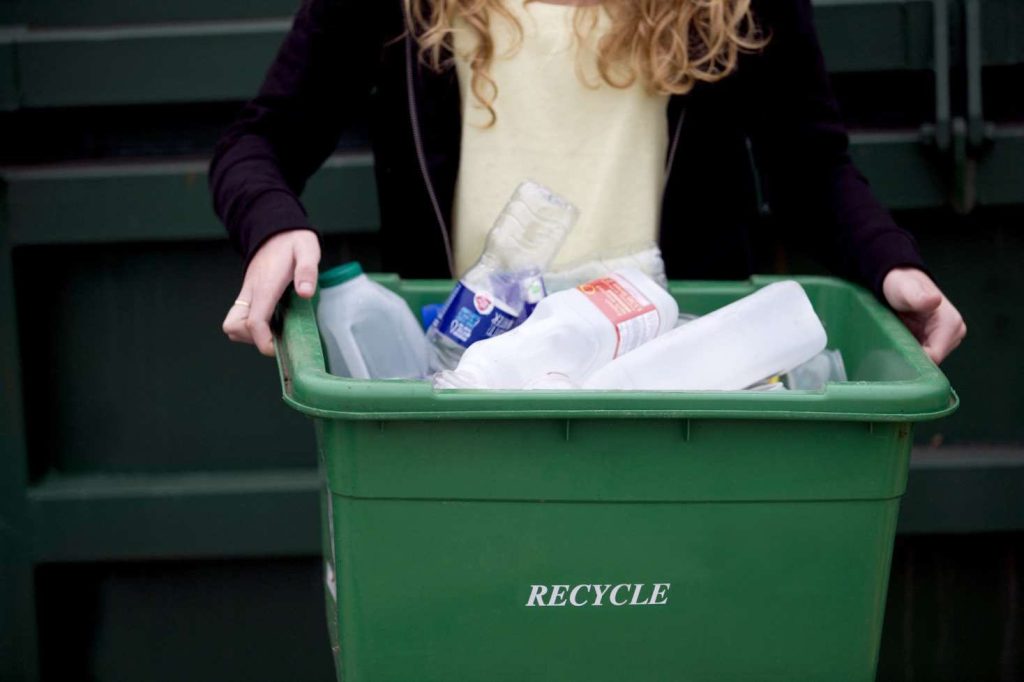

I stood in my Venice Beach kitchen one Tuesday morning, staring at a yogurt container. Clean, rinsed, the little triangle stamped right there on the bottom.
I'd been dutifully sorting my recycling for years, separating plastics from glass from paper, feeling virtuous every time the blue bin went to the curb. But lately, I'd been wondering something most of us don't want to think about. Where does this stuff actually go? So I decided to find out. I bought a four-pack of Apple AirTags, super-glued them inside plastic containers, and sent them on their journey through America's recycling system. What I discovered over the next month made me question everything I thought I knew about those little triangular arrows.
The myth we've been sold
For decades, we've been told a comforting story about recycling. You sort your waste, put it in the right bin, and somehow, through the magic of modern infrastructure, that plastic bottle gets melted down and becomes a park bench or a fleece jacket.
The system works. Your conscience is clear.
Except it doesn't really work that way. Not anymore, and maybe it never did. Recycling rates in the United States paint a sobering picture. We recycle only about 67.2 million tons of a possible 267.8 million tons of waste — less than a quarter of total municipal solid waste.
The EPA estimates that around 75% of all waste is actually recyclable, but we're nowhere close to hitting that potential. For plastic specifically, the numbers are even worse. In 2021, the U.S. managed to recycle just five to six percent of the 40 million tons of plastic waste we generated. About 85% went to landfills, and 10% was incinerated.
That's a dramatic decline from 2014, when plastic recycling peaked at 9.5%. The three-arrow symbol on packaging has become one of the most successful pieces of misleading marketing in modern history. It suggests a closed loop, but for most plastics, that loop doesn't exist.
Following the trail
I tagged four containers: a water bottle, an orange juice jug, a yogurt container, and a cleaning product bottle. Each got an AirTag carefully glued to the inside bottom.
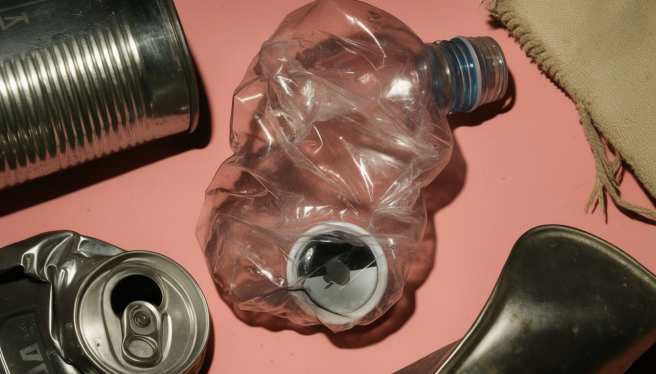

Then I distributed them across different parts of Los Angeles County, dropping them in blue bins in neighborhoods ranging from affluent beach communities to working-class suburbs. The technology was simple. AirTags ping nearby Apple devices and report their location. As long as someone with an iPhone walks past, you get an update. In a dense urban area like LA, that meant pretty reliable tracking.
Within hours of the first pickup, things got weird.
One tracker, placed in a bin in a neighborhood near mine, stopped moving about a block from where it started. Not at a recycling facility. Not at a sorting center. Just stopped. Dead signal.
My best guess? It got crushed in the truck almost immediately, which tells you something about how gently our recyclables get handled.
Two others made it to what appeared to be transfer stations — massive warehouses where trucks dump their loads before materials get sorted. Both sat there for days before their signals went dark.
I drove to one of these locations, a sprawling industrial complex surrounded by chain-link fencing. Mountains of loose materials sat in open-air piles, no sorting equipment in sight. Similar investigations in Florida found that waste taken to these transfer stations often goes straight to landfills without ever being recycled.
My fourth tracker, the water bottle, made it the furthest. It traveled to what Google Maps identified as a Materials Recovery Facility in the San Fernando Valley. This was promising. These facilities, known as MRFs, are where the actual sorting happens. Conveyor belts, optical scanners, workers in safety gear pulling out contaminants. The tracker transmitted from inside the building for about six hours before going silent, presumably destroyed in the sorting machinery.
But here's the thing. Even making it to a MRF doesn't guarantee recycling.
The contamination problem
The average recycling contamination rate in the United States hovers around 22 to 25 percent. That means one in four items in your recycling bin isn't actually recyclable.
When contamination levels get too high, entire loads get rejected and sent to landfills. All of it. The clean plastic bottles mixed in with the greasy pizza boxes and plastic bags — everything diverted to the dump. At the MRF where my water bottle ended up, the facility manager told me they process about 15% of incoming materials as trash. That's the official number. The reality is probably higher. Republic Services, one of the largest waste management companies in the country, reports a company-wide contamination rate of 22%. What counts as contamination? Pretty much everything people wish was recyclable but isn't. Plastic bags that tangle in sorting machinery. Food containers that weren't rinsed clean. Mixed materials like juice boxes. Tanglers like garden hoses. Pizza boxes soaked with grease. That cute takeout container that feels like heavy cardboard but is actually lined with plastic. All of it gums up the system.

I've mentioned this before but single-stream recycling — where you throw everything into one bin — was supposed to make our lives easier. And it did. But it also made contamination rates skyrocket.
When people had to separate materials, they paid more attention. Now we're essentially asking every household to become an expert in materials science, and most of us are getting it wrong. The strict contamination standards have gotten even stricter since China changed everything in 2018.
When China closed the door
For nearly three decades, America's recycling system ran on a simple premise. Collect materials domestically, ship them to China, let Chinese processors deal with it.
Out of sight, out of mind.
China was taking nearly half the world's recyclable waste, processing it in factories that turned our trash into raw materials for manufacturing. It seemed like a perfect arrangement. We got to feel good about recycling, they got cheap inputs for their booming economy.
But China was drowning. The waste kept coming, increasingly contaminated, increasingly difficult to process. Entire villages became surrounded by mountains of foreign garbage.
Air and water pollution from recycling facilities was making people sick. The country was accepting contamination levels of 5 to 10 percent, meaning tons of actual trash mixed in with recyclables. So in January 2018, China implemented its National Sword policy. They banned 24 categories of solid waste, including most plastics and mixed paper.
For the materials they still accepted, they dropped the allowable contamination level to 0.5 percent. That's basically impossible to meet for most municipal recycling programs.
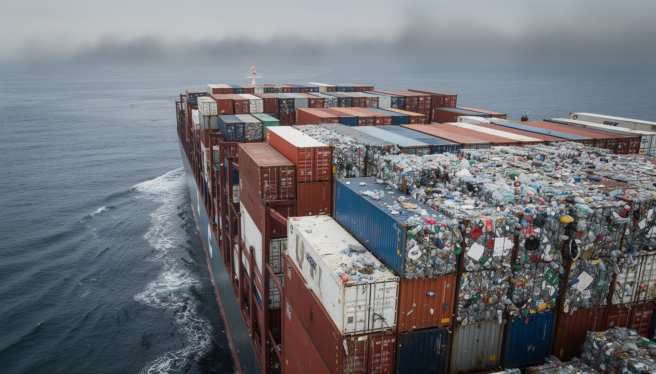
The impact was immediate and catastrophic. China's plastic imports plummeted by 99 percent. An estimated 111 million metric tons of plastic waste would be displaced globally by 2030 because of the ban. After the policy took effect, the amount of plastic landfilled in the U.S. increased by 23.2 percent.
Some of that waste got diverted to other Southeast Asian countries like Malaysia, Thailand, Vietnam, and Indonesia. But these nations lack the infrastructure to handle the volume, and many have started imposing their own restrictions.
In Malaysia, illegal plastic processing plants popped up in residential areas, pumping toxic fumes that gave residents respiratory problems. By mid-2018, activists had identified about 40 plants in one town alone, most operating without licenses. America suddenly had to confront a truth we'd been avoiding. We generate massive amounts of plastic waste, and we have almost no domestic capacity to recycle it. For decades, we counted waste sent to China as recycled, even though much of it ended up in Chinese landfills. Now that fiction was exposed.

Where it really goes
Major investigations using tracking devices have found that plastic dropped off at store recycling programs often ends up in incinerators or landfills. ABC News tracked 46 bundles of plastic bags left at Walmart and Target locations. Only four ended up at facilities that actually recycle plastic bags. Half the trackers pinged from landfills or trash incinerators. Three ended up thousands of miles away in Asia.
The industry response? The American Chemistry Council, which had promoted these drop-off programs for years, admitted the store collection concept "doesn't work to the scale that we want."
The national directory listing 18,000 drop-off locations was taken offline after the investigation aired.
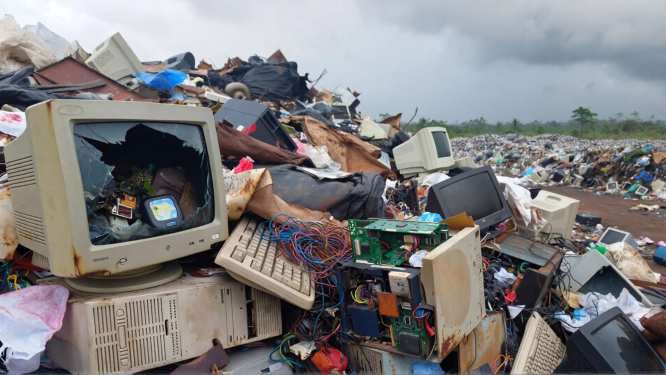
For e-waste, the picture is even grimmer. A two-year investigation by the Basel Action Network placed 200 GPS trackers inside old computers and electronics, then dropped them at donation centers and electronics take-back programs advertising themselves as green and sustainable.
About a third of the tracked devices ended up exported to Hong Kong, China, Taiwan, and Thailand — often ending up in unregulated scrapyards where workers dismantle electronics by hand, exposing themselves to toxic materials like lead and mercury.
Even legitimate recycling programs struggle with the economics. Recyclables are commodities, subject to market forces. When virgin plastic is cheaper than recycled plastic — which is most of the time — manufacturers have little incentive to buy recycled materials. Processing facilities can go from profitable to losing money based on fluctuating oil prices and demand. What's recyclable one year might not be economical the next, leading to constantly shifting rules that confuse consumers.
Waste-to-energy facilities burn trash to generate electricity, which at least captures some value from materials that can't be recycled. About 10% of U.S. waste goes through these plants, though they remain controversial due to air pollution concerns.
The more I researched, the clearer it became. The vast majority of plastic I've dutifully sorted over the years probably ended up in a landfill anyway — taking up space for the next 1,000 years while slowly breaking down into microplastics that end up in the ocean and eventually, in our bodies.
The real solutions
So what do we do with this information?
Giving up on recycling entirely feels wrong, even if the system is broken. The answer isn't to stop trying. It's to recognize that recycling alone was never going to solve our waste problem.
The most effective strategy is reduction. I've started really examining what I buy. Does this need to come in plastic? Can I find an alternative? That's not always possible or practical, especially on a writer's budget, but it's worth considering.
When I do recycle, I'm more careful now. I rinse containers thoroughly. I check my local guidelines obsessively, because what's accepted varies wildly between cities.
Paper recycling actually works relatively well, with rates around 68%, so I prioritize that. Glass is infinitely recyclable. Aluminum cans are valuable enough that they almost always get recycled. Plastics, especially anything beyond bottles and jugs, I view with deep skepticism.
The bigger solutions require systemic change. Extended Producer Responsibility policies that make manufacturers responsible for end-of-life disposal of their packaging. Better funding for municipal recycling programs. Investment in domestic processing infrastructure so we're not dependent on shipping waste overseas. Standardized rules across municipalities so people aren't constantly confused about what's recyclable. Some European countries have achieved paper recycling rates above 79% through strict contamination management and better public education. It's possible to do this right. We're just not doing it.
Conclusion
My tracking experiment ended with three dead AirTags and one that might have made it through a recycling facility but probably ended up as landfill residue anyway.
Not exactly the virtuous journey I'd imagined when I first started sorting my recycling years ago.
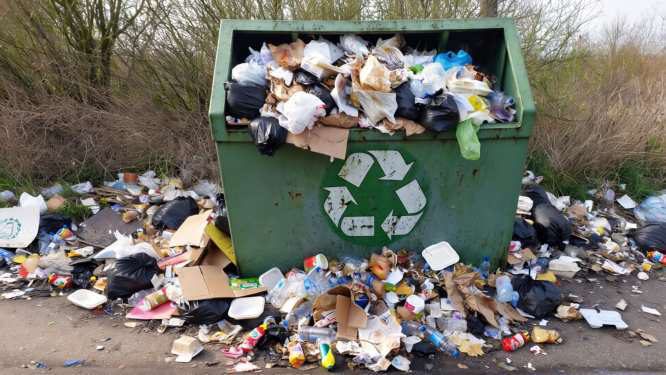

But here's what I learned. The recycling symbol is not a promise. It's permission for companies to keep producing plastic while making consumers feel responsible for the waste.
We've been sold a myth of individual responsibility when what we really need is structural change.
I still recycle. But I do it with clear eyes now, knowing that my carefully rinsed yogurt container has maybe a one-in-four chance of actually becoming something new.
The real solution isn't better sorting. It's less plastic in the first place.
Next time you're standing in your kitchen holding that container, wondering if it goes in the blue bin or the trash, remember this. The question isn't really where you put it. The question is why it exists at all.