
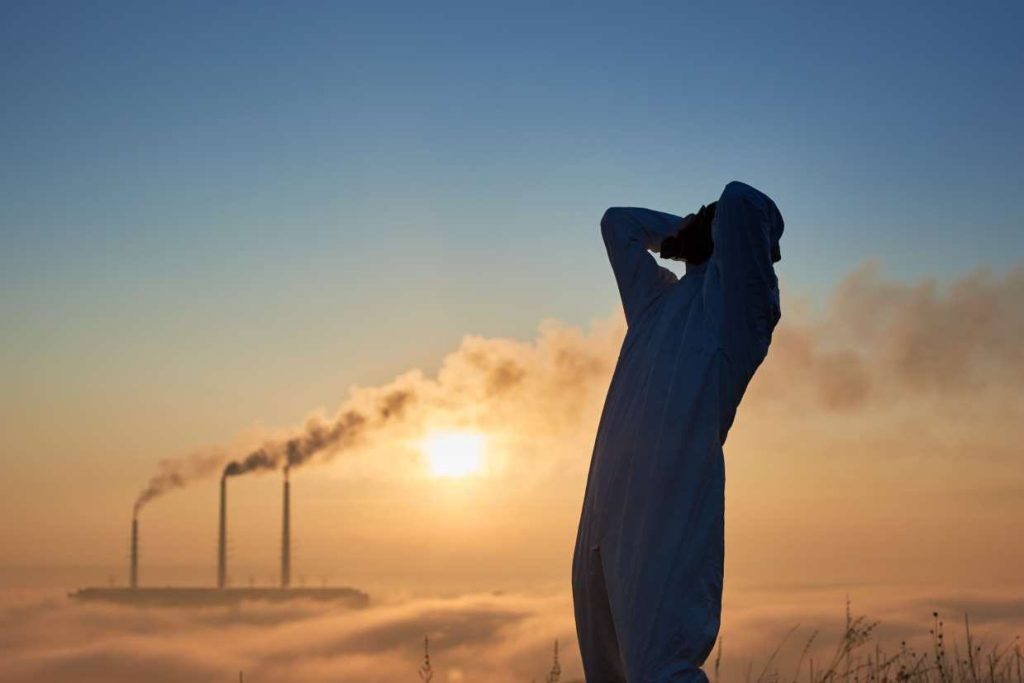
We call it stress. Fatigue. Overwhelm. We diagnose burnout as if it lives inside individual bodies — something private, psychological, fixable with the right habits.
I didn't understand that for a long time. I thought burnout was a private failure. I thought I was simply bad at being a functional adult. But burnout doesn't behave like a personal problem. It behaves like an environmental one. It spreads. It accumulates. And it appears most aggressively where extraction is highest and recovery is lowest. So the question isn't, Why can't people cope anymore? It's, What kind of environment are we asking them to survive in?
When burnout feels like topsoil loss
Sometimes the clearest truth about burnout doesn't show up in crisis — it shows up in how an ordinary day feels in the body. One of the most honest burnout days I've lived through wasn't dramatic. It wasn't an elegant collapse. It was a Tuesday that felt like wet concrete.
I had coffee. I answered messages. I did the "right" things. And yet everything in me moved as if it were wading through deep water. Even small tasks carried an emotional price, like each email required a coin I didn't have.
I remember staring at a blank document and realizing my mind wasn't empty. It was overfarmed. Not "unmotivated." Not "undisciplined." Just stripped. Burnout doesn't always arrive like a breakdown. Sometimes it arrives like topsoil loss. You can still stand there. You can still smile in meetings and keep your calendar looking respectable. But something essential has already been taken.
The body is an ecosystem, not a machine
The most helpful shift for me came when I stopped thinking of myself as a device with a low battery and saw myself as a living system. Machines run until they stop. Ecosystems degrade slowly, then suddenly. A machine can be optimized. An ecosystem has seasons. It needs diversity. It needs recovery built into the rhythm, not added later as a reward.

Your nervous system is part of that ecology. And it mirrors your environment. Not mystically, biologically.
When your days are built on constant demand, your nervous system adapts. Just not for comfort. It adapts for survival.
The illusion of "capacity"
We use the word capacity as if it's a personality trait.
"She has so much capacity." "I don't have the capacity right now."
As if some people were born with bigger emotional lungs, and others just need to train harder.
That's the story burnout has been sold under for years: an individual malfunction. A motivation issue. A mindset problem. But that narrative is cracking. The World Health Organization has been blunt in recent guidance: widespread burnout isn't a character flaw—it's a normal reaction to broken conditions like staff shortages, low pay, unsafe environments, and missing safeguards. When exhaustion becomes the norm, the system is the problem, not the individual.
Capacity isn't a character. It's conditions.

It grows where limits are respected, recovery is protected, and life has margins. But the modern world is excellent at creating the illusion of choice. "If you're overwhelmed," it whispers, "adjust your attitude. Streamline your routine. Try harder." When an environment is built for constant responsiveness and constant throughput, "personal responsibility" becomes a polite way of hiding the real problem. And when people say, "I just need to be more resilient," I often hear the subtext: "I need to become someone who can be extracted from without consequence."
The body keeps the receipts
Here is where the metaphor becomes literal. Burnout isn't just an idea. It's a physiological pattern.
When stress becomes chronic, the body pays in small, easy-to-ignore ways: sleep that doesn't restore, brain fog, irritability, lowered immunity. Physiology has a name for this slow accumulation: allostatic load— the long-term 'wear and tear' that builds when your stress response stays switched on.
The body can adapt. That's not the problem. The problem is adaptation without recovery, like revving an engine for hours without letting it cool.
This is why burnout can feel like betrayal. "My mind wants to keep going, but my body won't cooperate." So people try to override it with caffeine, discipline, strategy. But what if the body isn't betraying you? What if it's refusing extraction? We don't call a forest lazy when it stops regrowing after repeated fires and clear-cutting. We call it depleted. And depletion requires protection and time. If your nervous system has to be "resilient" all the time, something around you is unsustainable.
Why does the always-on world feel like light pollution?
It's impossible to talk about burnout today without talking about digitization.
Work used to have a door. A commute. A threshold that told your body: we're done. Now the boundary is mostly psychological—and that's the easiest border to cross. Your phone is a workplace in your pocket. Slack makes urgency contagious. Email turns quiet moments into requests. Metrics make even creative work feel watched. The nervous system doesn't experience this as convenience. It experiences it as unfinishedness. Open loops. The pressure of being reachable. Digitization didn't just speed work up, it changed the stress equation. Research shows digital work can amplify demands while reshaping or eroding the resources that keep people well. Boundaries blur. Recovery time gets invaded.
It works like light pollution: no single bulb does the damage, but constant illumination disrupts restoration. Humans aren't meant to live under permanent daylight.
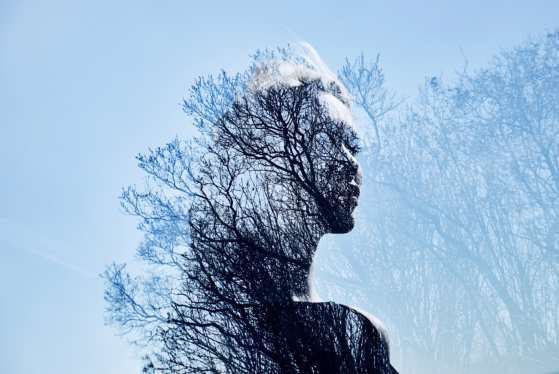
Burnout isn't anti-work. It's pro-life
Burnout isn't proof that work is evil. Work can be meaningful. Structuring. Even healing, sometimes.
The issue is not effort. The issue is extraction without reciprocity. Effort without protection. In environmental terms, it's the difference between harvesting and stripping. Harvesting assumes there's a next season. Stripping acts like there's only this quarter, this deadline, this immediate return. Burnout is what happens when life is treated like it has no next year. And that's why "be more resilient" is such a haunting cultural demand. Resilience becomes code for endure the unlivable. Become someone who can be mined.
Direction, not perfection
The most dangerous thing about burnout is how quietly it recruits shame. People don't just say, "I'm exhausted." They say, "What's wrong with me?" They turn depletion into a personality defect: lazy, weak, ungrateful, not resilient enough. That story keeps the system clean. It keeps the culture innocent.
Underneath it is a fear most people don't say out loud: "If I slow down, I'll lose my life." Not literally. Socially. Economically. Identity-wise. People fear what rest will reveal—that they were only valued for their output, that their relationships were built around availability.
This is why burnout isn't solved by a weekend off. Burnout is what happens when a living system is treated like a machine—when recovery is framed as inefficiency and rest becomes something you earn.
I don't believe the answer is a perfect balance. Balance is static. Life isn't. What we need is direction: away from extraction and toward regeneration. Away from treating human energy as endlessly available, and toward treating it as something worth protecting. Burnout is not a personal failure. It's an environmental signal. A climate report from inside your own skin. And signals, when we stop dismissing them, still have the power to guide us somewhere more livable.