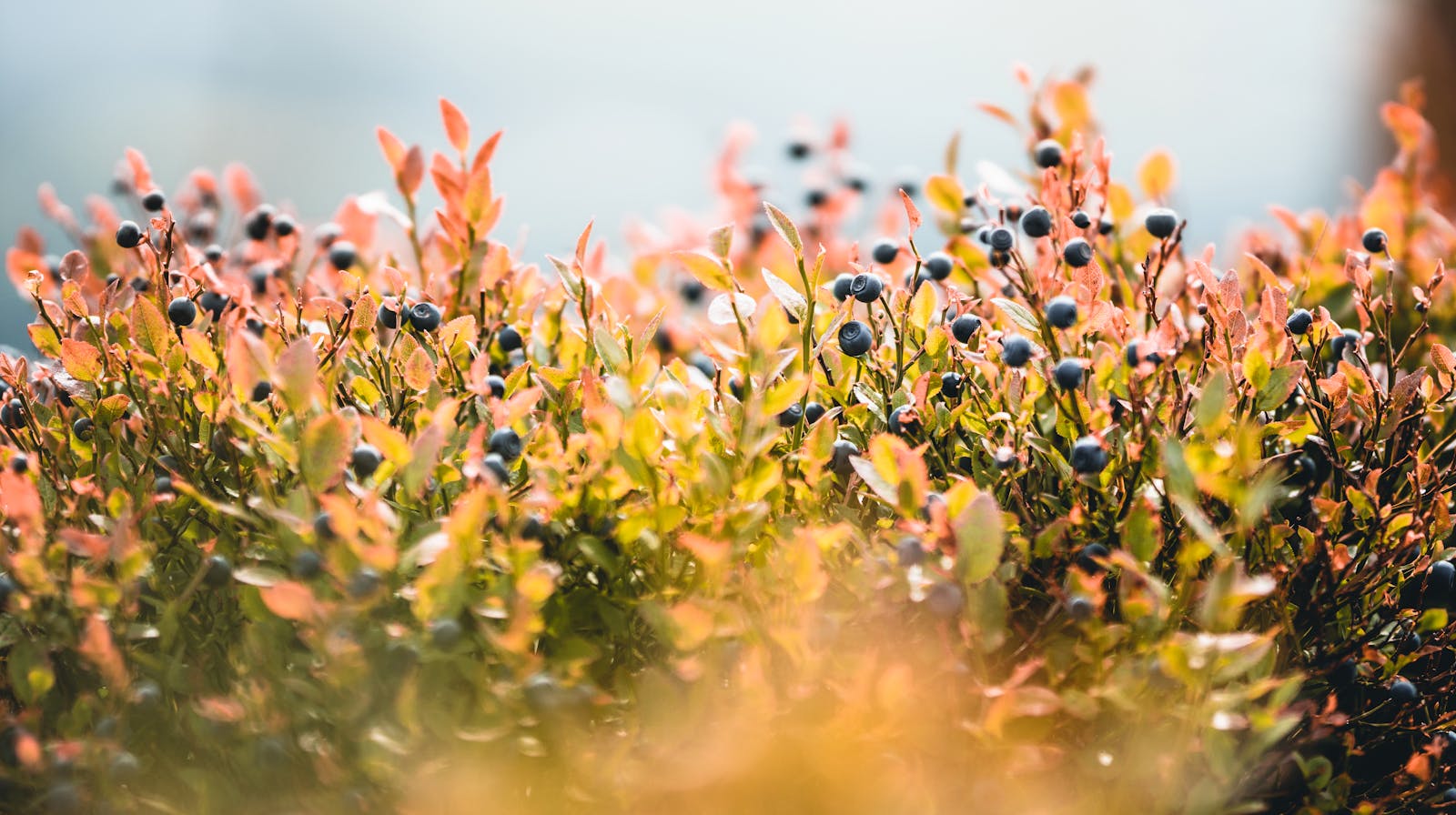
Wild blueberries were supposed to be one of climate change's safer bets. Native to Maine, hardy enough to thrive in the thin, acidic soil of glacial barrens, and adapted to centuries of New England weather swings, they were the kind of crop sustainable agriculture advocates have long pointed to as a model: low-input, regionally rooted, climate-resilient by design.
That bet is failing spectacularly. Inside Climate News reports that farmers across the state have watched harvests collapse with growing frequency, with some operations losing nearly an entire year's crop to drought, heat, and unpredictable frosts. Maine's wild blueberry industry is buckling under a climate it no longer recognizes — and with it, a foundational assumption about how regional food systems will weather what's coming.
At Crystal Spring Farm in Brunswick, owner Seth Kroeck harvested roughly 7 percent of his expected yield in 2025 after severe drought stressed the plants until the leaves turned red and the berries shriveled on the stem. In the last seven years, the farm has lost the crop three times, almost completely.
The 72-acre farm isn't an outlier. The Maine Wild Blueberry Commission estimates the industry lost $30 million in 2025, with many growers reporting losses of a third to half of their yields and entire fields left unharvested because the fruit had dehydrated before pickers could reach them.
The scale matters. The state harvested nearly 88 million pounds of wild blueberries in 2023, generating $361 million in revenue. Maine farms supply almost the entirety of the country's commercially sold wild blueberries.
And the barrens themselves are warming faster than the surrounding state. A 2021 study found that Maine's blueberry-growing regions, particularly those closer to the coast, are heating more quickly than inland areas — a hotspot effect linked partly to the rapidly warming Gulf of Maine.
The result is a harvest window that keeps shifting earlier. Lily Calderwood, a wild blueberry specialist at the University of Maine Cooperative Extension, noted that fruit traditionally ready in early or mid-August is now ripening by late July. Higher heat also compresses the picking window, forcing farmers to hire more labor and buy more equipment to finish in time.
Rachel Schattman, a professor of sustainable agriculture at the University of Maine, described the cultural stakes plainly. Wild blueberries hold a special place in the culture of Maine.
Wild blueberries only fruit every other year, which means a single drought ripples across two seasons: shrinking this year's berries while stunting next year's vegetative growth. Combine that with surprise late frosts, fall re-flowering after warm autumns, and the 2023 deluge that brought disease pressure, and the math for small farms gets brutal.
Crop insurance softens the blow but doesn't solve it. Kroeck noted that payouts are based partly on previous yields, so repeated losses drag down the baseline farmers can claim against.
Researchers at the Wyman's Research Center farm in Old Town are halfway through a four-year study testing irrigation, mulching, plant clustering, and simulated end-of-century climate scenarios. Early results suggest irrigation helps most, while mulch lowers soil temperatures and slows weed growth but can't substitute for water during a severe drought. The irony is hard to miss: a crop marketed for needing almost nothing is now being kept alive by intensive intervention.
Here's the part worth sitting with: wild blueberries are exactly the kind of crop the food system was supposed to lean on. Native, low-input, suited to soil where nothing else thrives. If that crop is in trouble, the entire framework of "plant what already belongs here" as a climate adaptation strategy needs to be re-examined. The premise — that millennia of local evolution would buffer native species against the disruptions ahead — assumes a climate changing within historical bounds. That's not the climate Maine is getting.
The people who profit from a stable wild blueberry supply (frozen-fruit brands, snack manufacturers, the broader natural foods category) have largely treated Maine's barrens as a reliable backdrop. Farmers like Kroeck are now carrying the cost of keeping that backdrop in place, one drought at a time.
And Maine's barrens are a preview, not an anomaly. Pecans in the Southeast, wild rice in the Upper Midwest, cranberries in Massachusetts, salmon runs in the Pacific Northwest — every regional food system in the country has its own version of the "climate-safe native crop," and every one of them is being tested against conditions their evolutionary history didn't prepare them for. If the answer to a destabilized food system isn't simply "grow what's local," then the harder conversation — about what we actively invest in, irrigate, breed, and protect — is one the rest of the country is going to have to start having too.