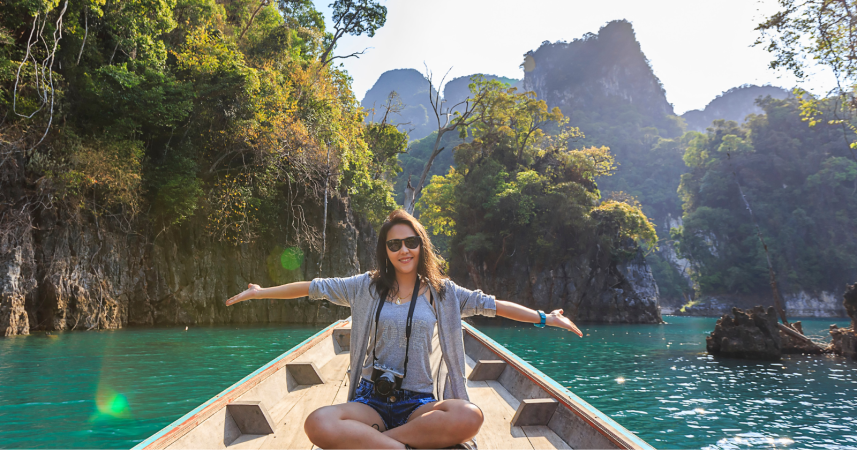
After years of exploring everything from remote hiking trails to vibrant city centers on my own, I've noticed something interesting: people who travel alone without feeling self-conscious tend to share certain distinctive traits.
Have you ever noticed a tourist sitting alone at a café, completely at ease while reading a book or people-watching? Or maybe you've spotted a solo traveler confidently navigating a bustling market, striking up conversations with locals without a hint of awkwardness?
I've been that person countless times over the years, and I've also been the observer, fascinated by what separates confident solo travelers from those who seem uncomfortable in their own company.
After years of exploring everything from remote hiking trails to vibrant city centers on my own, I've noticed something interesting: people who travel alone without feeling self-conscious tend to share certain distinctive traits. These aren't just travel skills—they're deeper psychological patterns that show up in how they approach uncertainty, connect with others, and view themselves.
Are you curious about what sets these confident solo adventurers apart? Through my observations and experiences, I've identified five key traits that seem to make all the difference.
1. Curiosity about the world around them
Think about the last time you were somewhere new. Did you find yourself wondering about the stories behind the buildings, the locals hurrying past, or the way the morning light hit the streets?
Solo travelers who seem completely comfortable in their own skin almost always share this trait: insatiable curiosity. They're the ones who strike up conversations with the barista about the best neighborhood spots, or who spend an hour wandering through a local market just to see what catches their eye.
This curiosity acts as a natural shield against self-consciousness. When you're genuinely fascinated by your surroundings, there's no mental space left for worrying about what others might think of you eating dinner alone or exploring a museum solo.
2. A strong sense of self-reliance
Ever watched someone confidently navigate a train system in a country where they don't speak the language? There's something almost magnetic about that level of self-assurance.
People who travel alone without feeling awkward have usually cultivated deep trust in their own problem-solving abilities. They know that if they get lost, they'll figure out how to get back. If their original dinner plans fall through, they'll discover something even better.
This isn't about being stubborn or refusing help—it's about having a quiet confidence that you can handle whatever comes your way. I remember my first solo trip to Thailand when my flight got delayed and I missed my connecting bus. Instead of panicking, I found myself oddly excited about the unexpected detour.
When you genuinely believe in your ability to adapt and overcome challenges, sitting alone at a restaurant or exploring a new city becomes less about potential judgment and more about the adventure itself.
3. Comfort with their own company
Here's a question that might surprise you: when was the last time you genuinely enjoyed spending time alone, without any distractions or entertainment?
These travelers who exude confidence have mastered something many people struggle with—they actually like themselves. They don't need constant external stimulation or validation to feel content. You'll see them sitting peacefully in a park, savoring a meal without scrolling their phone, or taking long walks without headphones.
This comfort with solitude runs much deeper than just being able to entertain yourself. It's about having developed an inner dialogue that's supportive rather than critical. When you're not constantly battling negative self-talk, you're free to be present in the moment.
I've noticed this in myself over the years—the more comfortable I became with my own thoughts and company, the less I worried about appearing lonely or out of place. Instead of feeling like I was missing something by being alone, I started appreciating the freedom it gave me.
4. A willingness to embrace uncertainty
What's your first reaction when plans fall apart? Do you feel that familiar knot in your stomach, or do you find yourself thinking, "Well, this should be interesting"?
Confident lone travelers tend to fall into the second category. They've learned to see unexpected twists not as problems to be solved, but as opportunities for discovery. When their train gets cancelled or a restaurant is unexpectedly closed, they don't spiral into anxiety about what others might think of them standing there looking confused.
Instead, they treat these moments like plot twists in their own personal adventure story. I once ended up spending an entire afternoon in a tiny Portuguese village because I got on the wrong bus. Rather than feeling embarrassed about my mistake, I discovered an incredible family-run restaurant that became the highlight of my trip.
This mindset shift is huge. When you stop viewing uncertainty as a threat to your image and start seeing it as potential for serendipity, you naturally become less self-conscious about the inevitable bumps that come with solo travel.
5. Strong emotional intelligence
Have you ever watched someone effortlessly read a room and adjust their behavior accordingly? These folks often have this skill down to an art form.
They can quickly pick up on social cues, understand cultural nuances, and adapt their communication style to connect with people from different backgrounds. This isn't about being fake or changing who they are—it's about being genuinely attuned to the people and situations around them.
When you can accurately read social dynamics, you're less likely to feel self-conscious because you actually understand what's happening around you. That awkward uncertainty of "Am I doing this right?" gets replaced with genuine confidence in your ability to navigate social situations.
I've found this particularly useful in cultures very different from my own. Being able to sense when I should be more reserved or when it's appropriate to be more outgoing has helped me connect authentically with people, rather than worrying about whether I'm coming across as the weird tourist eating alone at the corner table.
Final thoughts
Looking back on all my solo adventures—from getting wonderfully lost in narrow European alleyways to sharing meals with strangers who became friends—I realize these traits didn't develop overnight.
They grew gradually, shaped by each experience where I chose to step outside my comfort zone and trust myself a little more. The woman who nervously checked into her first solo hotel room years ago feels like a different person entirely.
What strikes me most is that these qualities don't just make solo travel more enjoyable—they spill over into everyday life. When you've learned to trust your instincts in unfamiliar places, making decisions at work feels easier. When you're comfortable with your own company on the road, spending a quiet evening at home becomes genuinely restorative rather than lonely.
Maybe you recognize some of these traits in yourself, or perhaps you're wondering how to develop them. Either way, remember that confidence isn't something you're born with—it's something you build, one small brave choice at a time.
The world is full of incredible experiences waiting to be discovered. Why not start exploring them on your own terms?
Just launched: Laughing in the Face of Chaos by Rudá Iandê
Exhausted from trying to hold it all together?
You show up. You smile. You say the right things. But under the surface, something’s tightening. Maybe you don’t want to “stay positive” anymore. Maybe you’re done pretending everything’s fine.
This book is your permission slip to stop performing. To understand chaos at its root and all of your emotional layers.
In Laughing in the Face of Chaos, Brazilian shaman Rudá Iandê brings over 30 years of deep, one-on-one work helping people untangle from the roles they’ve been stuck in—so they can return to something real. He exposes the quiet pressure to be good, be successful, be spiritual—and shows how freedom often lives on the other side of that pressure.
This isn’t a book about becoming your best self. It’s about becoming your real self.