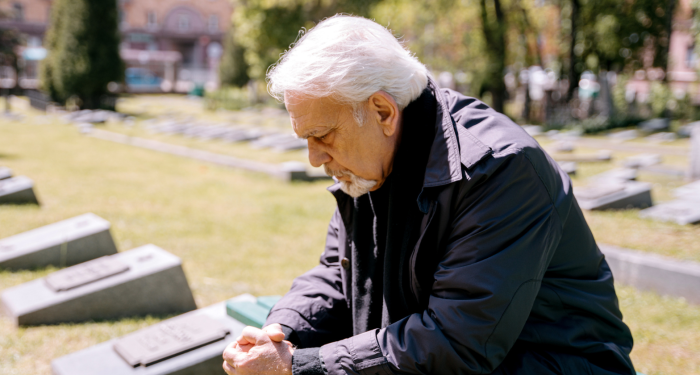
Some choices don’t just shape your 30s — they quietly build the strength, peace, and purpose you’ll be grateful for in your 60s.
In your 30s, it’s easy to feel like the future is still a distant horizon. You’re busy building things — a career, a home, maybe a sense of who you are.
But somewhere in the middle of all that progress, it’s worth asking: What am I building inside myself?
I’ve come to see that the best pursuits aren’t just hobbies or distractions — they’re investments in the kind of person you’ll be decades from now.
The small, consistent choices that keep your mind flexible, your body capable, and your spirit open.
As I move through my own forties, I’ve noticed something: the people who age beautifully aren’t necessarily the luckiest or healthiest.
They’re the ones who started paying attention early — who cultivated the habits that would one day carry them.
Here are eight pursuits that your 60-year-old self will silently thank you for starting today.
1. Learning a new language
Ever noticed how kids pick up new languages like sponges, while adults tend to overthink every word?
The truth is, our brains are still wired for learning — we’ve just forgotten how to be bad at something.
Learning a new language rewires your brain in remarkable ways. It boosts memory, focus, and even emotional awareness, because language isn’t just words — it’s culture, rhythm, and empathy.
Bilingual adults show slower cognitive decline in later life, meaning the benefits can literally extend how long your mind stays sharp.
But beyond the science, language learning humbles you. You start to listen more closely, to notice patterns, to become curious again. You stop assuming everyone sees the world the same way.
And one day, whether you’re traveling, volunteering, or just chatting with your grandkids about their Spanish homework, you’ll realize how much this pursuit expanded your world — both inside and out.
2. Practicing mindfulness through art
When was the last time you made something with your hands — not to achieve perfection, but to feel alive in the process?
Sketching, pottery, journaling, watercolor — it doesn’t matter which form it takes. Artistic expression is a form of meditation in motion.
You slow down, breathe, and let color or texture pull you into the moment. Over time, it becomes a practice in patience and self-trust.
I remember reading Laughing in the Face of Chaos by Rudá Iandê, and one line hit me like a soft wake-up call: “When we stop resisting ourselves, we become whole. And in that wholeness, we discover a reservoir of strength, creativity, and resilience we never knew we had.”
That insight changed how I approached creativity — not as a test, but as a teacher.
Now, whenever I’m stuck or overwhelmed, I reach for a pencil or a lump of clay. The act itself becomes therapy — a way of grounding the chaos.
And I can’t help but think: if this practice keeps me calm and centered now, imagine the kind of peace it’ll bring when life slows down later.
3. Strength or resistance training
There’s a saying I love: “Strong now, steady later.” Because what you build in your 30s — muscle, stability, bone density — is what keeps you moving freely in your 60s and beyond.
According to the Centers for Disease Control and Prevention, “Physical activity is essential for healthy aging. It helps prevent or manage chronic conditions, reduces the risk of falls, and improves mental health in older adults.”
But strength training isn’t just about future-proofing your body — it’s also about building self-trust.
You start realizing you’re capable of more than you thought. That you can lift a little heavier, stretch a little deeper, or come back stronger after a tough day.
And as the years go by, that mindset — that quiet resilience — becomes its own kind of muscle memory.
4. Learning to dance
Few things make time disappear the way dancing does. You start awkwardly counting steps, then suddenly an hour’s gone and your cheeks hurt from smiling.
Beyond the joy, dance is a full-brain, full-body workout. It trains balance, coordination, and rhythm — the very skills that protect you from falls and cognitive decline later in life. But more than that, it’s community.
In a world where it’s easy to feel isolated, especially as we age, dancing gives us a way to connect — through laughter, movement, and shared imperfection.
No one cares if you miss a beat. What matters is that you showed up, let go, and remembered what play feels like.
When you’re 60, you might not remember every step — but you’ll remember the feeling of being fully alive in your own body.
5. Cooking for connection
If I could give one universal prescription for aging well, it would be this: cook with love and eat with people.
Food is medicine — not just for the body, but for the soul. And the kind of cooking that nourishes most isn’t complicated or trendy. It’s rooted in fresh ingredients, slow preparation, and conversation.
As noted by medical researchers, “Adherence to the Mediterranean diet has been shown to improve health outcomes across many diseases, including cognitive decline and neurodegeneration.”
But there’s another kind of nourishment hidden in this way of eating: social connection.
Cooking becomes a ritual — a reason to gather, to experiment, to share stories around a table. It’s a pursuit that keeps you creative, curious, and connected for life.
6. Cultivating emotional literacy
If there’s one thing I wish we all learned earlier in life, it’s how to name what we feel. Not analyze it to death — just notice it, sit with it, and understand what it’s trying to say.
Emotional literacy is the ability to identify, interpret, and express your emotions clearly — and to listen when others do the same.
It sounds simple, but it’s a skill that takes practice, especially in a world that still rewards “holding it together” over being honest.
Now that I'm in my 40s, I’ve realized that so much of emotional maturity isn’t about control — it’s about curiosity. When you stop labeling feelings as good or bad, you start learning from them.
Frustration might point to a boundary that’s been crossed. Anxiety might be a sign that something in your life needs more attention, not avoidance.
As noted by Rudá Iandê in Laughing in the Face of Chaos, “Our emotions are not barriers, but profound gateways to the soul—portals to the vast, uncharted landscapes of our inner being.”
That idea changed how I relate to my own inner world — less like a battlefield, more like a map.
When you strengthen this kind of emotional awareness in your 30s or 40s, it doesn’t just make you a better communicator.
It helps you stay grounded and open-hearted well into your later years — no matter what life brings.
7. Mentoring or teaching others
We tend to think of teaching as something that happens in classrooms. But mentorship — in any form — is one of the most rewarding pursuits you can take on in midlife.
It’s not about being an “expert.” It’s about turning your experiences, even the messy ones, into something useful for someone else.
Every time you share what you’ve learned — through work, volunteering, or even helping a younger neighbor figure out their finances — you reinforce your own sense of purpose.
Staying mentally and socially engaged through teaching or mentoring keeps your mind active and your heart open.
It reminds you that wisdom isn’t about having all the answers — it’s about continuing to learn, side by side with others.
I’ve mentored a few younger colleagues over the years, and what surprised me most wasn’t how much they grew — it was how much I did.
Seeing life through someone else’s fresh perspective reminds you that growth doesn’t end at 40. It just evolves.
8. Designing a slower life
This one’s been a personal work in progress for me. I used to think slowing down meant falling behind — until I realized it’s the opposite. It’s actually a form of strategy.
Designing a slower life isn’t about doing nothing; it’s about doing what matters — deliberately.
It’s saying no to the noise so you can say yes to the right things: rest, reflection, connection, nature.
As I’ve gotten older, I’ve started paying attention to how I spend my energy, not just my time.
And I’ve noticed something interesting: the people in their 60s and 70s who radiate calm all have one thing in common — they learned how to pace their lives early.
The truth is, slowness isn’t about changing your speed — it’s about changing your focus.
When you stop rushing through life, you start noticing it. You find meaning in the pauses, the morning rituals, the conversations that don’t have to end quickly.
This pursuit is really about crafting a life that feels like yours, not a checklist.
Slowness isn’t a reward for retirement — it’s a mindset that turns ordinary days into something richer, deeper, and more your own.
Final thoughts
You don’t need to overhaul your life to start investing in your future self.
Most of these pursuits begin quietly — a few minutes a day, a small class, a decision to do something differently.
But over time, they add up to something remarkable: a version of you that’s more capable, grounded, and free.
I’m only in my forties, but I can already feel how these choices ripple forward — in the way I handle stress, connect with others, and recover from the unexpected.
They’re not about chasing longevity for its own sake; they’re about creating a life that feels rich enough to grow old in.
Start one pursuit now. Your 60-year-old self is already smiling about it.
What’s Your Plant-Powered Archetype?
Ever wonder what your everyday habits say about your deeper purpose—and how they ripple out to impact the planet?
This 90-second quiz reveals the plant-powered role you’re here to play, and the tiny shift that makes it even more powerful.
12 fun questions. Instant results. Surprisingly accurate.