New Orleans wants to fix its Mardi Gras mess. So why is the trash pile still growing?
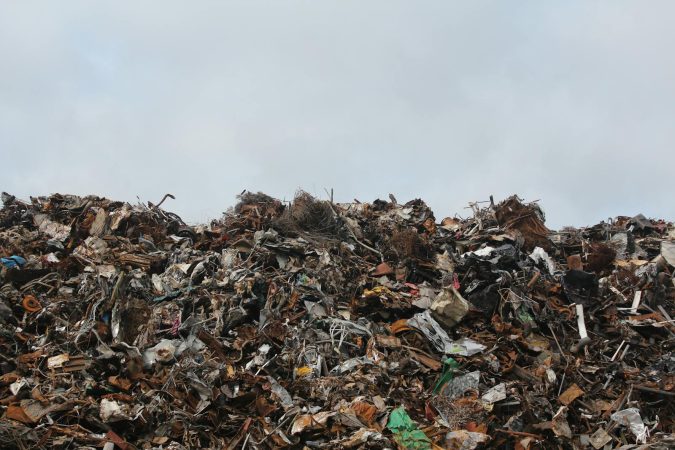
New Orleans collected a record 1,363 tons of trash along its Mardi Gras parade routes during the 2026 Carnival season, a 24 percent jump from the previous year and the highest total the city has logged. City officials pointed to bigger crowds. But the deeper story is less about how many people came than what people brought with them, and what they decided to leave behind.
The conventional explanation is intuitive: more revelers, more refuse. City sanitation officials attributed the spike to larger crowds. But a Verite News analysis of attendance and cleanup records found no clear relationship between turnout and tonnage. The 2020 Carnival drew about 2.4 million visitors and produced roughly 241 fewer tons of garbage than 2026, while 2026 drew an estimated 2.2 million downtown visits.
Something else is driving the pile.
A decade of rising tonnage, regardless of crowd size
In the early 2010s, Mardi Gras trash tonnage hovered around 880 tons per season. It spiked above 1,320 tons in 2017 and has not dipped below 1,000 tons since, with the exception of 2021, when parades were canceled during the pandemic. Downtown attendance, meanwhile, has stayed in a much narrower band since 2020.
The waste line keeps climbing. The attendance line does not. That single fact undermines the easy narrative city officials have leaned on for years and forces a harder question about what New Orleans is actually cleaning up after.
The defining moment for public awareness came in 2018, when crews pulled more than 46 tons of beaded necklaces from clogged storm drains along a five-block stretch of St. Charles Avenue. City officials acknowledged then that the city needed to do better.
The story isn't really about beads anymore
Bead culture, the long-standing target of waste reform, has started to shift. Many krewes have cut back on cheap plastic trinkets and moved toward higher-value items like socks, wooden spoons, metal cups, and baseball caps. Rising input costs have also pushed prices up, and some parade-goers have noticed thinner hauls.
The plastic strands that drew so much scorn still matter. The Ecology Center has reported that some Mardi Gras beads contained lead above the limit allowed in children's products, along with other chemicals of concern. But the newest waste problem does not appear to be beads alone.
Recycling has expanded too. The RecycleDAT! coalition, led by Grounds Krewe and partner organizations, said its 2026 Carnival effort diverted 61,219 pounds of recyclable materials from landfills. That is meaningful, but still small next to a 1,363-ton trash haul.
So if the throws are getting better and the recycling is getting bigger, what is getting heavier?
The rise of the "Chadders"
The new culprit, according to city leaders and cleanup organizers, is the gear. Parade-goers are arriving earlier, staying longer, and bringing more of their living rooms with them: folding chairs, canopy tents, coolers, grills, scaffolding, portable toilets, generators, and old sofas.
By the end of the season, much of it is broken, soiled, or simply not worth dragging home. A folding chair can weigh a few pounds. A couch can weigh hundreds. Multiply that across a parade route and the tonnage curve starts to make sense.
City Council President JP Morrell has been blunt about the dynamic, describing how some people get their use out of equipment and then abandon it, leaving city workers to handle the debris.
Locals and commentators have used names like Krewe of Chad and Chadders for the revelers who turn public space into private encampments. They rope off sidewalks, spread tarps across medians, and chain ladders into makeshift grandstands. Officially, encampment rules exist to limit early setup and large installations. The rules exist. The enforcement has not kept pace.
How enforcement collapsed
A 2024 crackdown briefly worked, according to the Verite reporting. Trucks hauled away encampment gear, and behavior appeared to shift. Then the New Year's Day 2025 attack on Bourbon Street redirected city resources toward security. The current budget crisis added another constraint. City officials acknowledged that enforcement of encampment rules would be limited.
City sanitation crews had capacity for one major large-item sweep before the final Fat Tuesday cleanup. On Mardi Gras Day, sanitation workers started at 8 a.m. and finished at 1 a.m. the next morning, hauling away ladders, tents, coolers, grills, tarps, and the rest of the encampment economy.
The mayor's office and the sanitation department did not respond to Verite News' requests for comment.
What the trash pile actually reveals
The Mardi Gras waste story is a case study in how easy it is to misdiagnose an environmental problem when the diagnosis lets institutions off the hook. Blaming attendance is convenient. It frames the trash as a side effect of success, something to be managed rather than addressed. The numbers do not fully support it.
The behavioral story is harder. It points to a slow shift in how people use public space during Carnival, from a pass-through event to a multi-day occupation. It also points to the city's choice to let that shift happen because enforcement is expensive, politically thankless, and competing with security needs.
The voluntary reforms by krewes and nonprofits are real and worth supporting. They are also being swamped by a larger structural change in revelry itself.
For parade-goers who care about the impact of the season they love, the leverage point is no longer just the beads. It is the chair, the tent, the cooler, the wagon. The stuff that gets used for one weekend and abandoned for someone else to drag away.
Grounds Krewe and other groups are pushing the cultural needle, but cultural change without enforcement tends to drift back to baseline. What happens next depends less on krewes and more on city hall. If New Orleans wants the trash line to bend, it will have to decide that cleanup and rule enforcement are not afterthoughts to security and tourism revenue, but part of the same civic ledger.
Until then, the workers will keep hauling, the storm drains will keep clogging, and the gap between intention and outcome will keep widening one folding chair at a time.