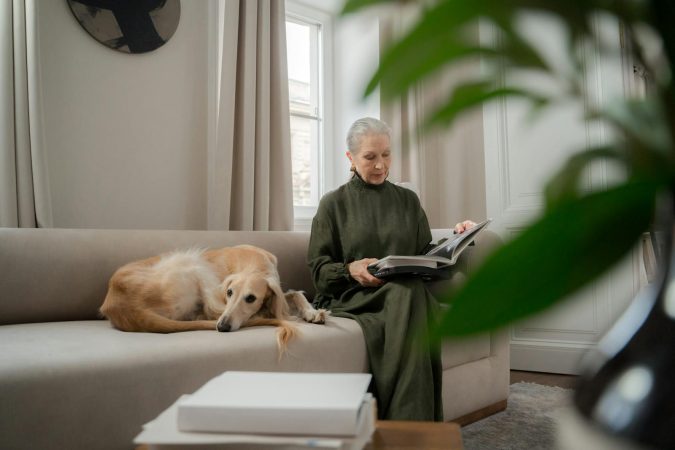
The secret to contentment in your seventies isn't a jam-packed schedule—it's something happening inside you. Research reveals that psychological resilience, not exciting hobbies or wealth, determines who truly flourishes later in life.
The most quietly satisfied people in their seventies are not always the ones with the fullest calendars.
Some are. Some love a weekly class, a choir group, a walking club, a ceramics studio, or a trip they spent months planning. Staying active and socially connected can matter a great deal in later life.
But there is another kind of satisfaction that gets less attention because it is harder to photograph for a retirement brochure. It looks less like reinvention and more like permission.
A long walk before the day gets crowded. A cup of coffee held slowly instead of swallowed on the way to something else. A book actually finished, not abandoned in the middle because the phone won again. A simple meal made from what was already in the kitchen. A day that does not need to be impressive in order to feel complete.
That quieter version of later life can sound almost too small until it is seen clearly. It is not withdrawal. It is not giving up. It is the gradual discovery that a full day does not always require a dramatic one.
The research nobody puts on a retirement brochure
A 2025 PLOS One study by Mabel Ho and Esme Fuller-Thomson looked at 8,332 Canadians aged 60 and older who were not in optimal well-being at baseline. Nearly one-quarter regained optimal well-being within about three years. The researchers found that several factors mattered, including income, marital status, chronic conditions, physical activity, sleep, and social support.
One of the strongest predictors was baseline psychological and emotional well-being. Older adults who began the study with stronger emotional wellness were much more likely to recover a sense of flourishing later.
That finding does not prove that coffee, walking, and books are the secret to aging well. It does suggest something more useful: the internal life matters. The way a person meets a day, steadies themselves inside it, and notices what still gives them meaning can shape how later life feels.
That complicates the louder version of aging that has become popular in wellness culture. The version that says a vibrant seventies must involve pickleball tournaments, language apps, river cruises, volunteer committees, strength training challenges, and a calendar full enough to prove that a person is still living.
That model is not wrong. It is just incomplete. For some people, it is also exhausting.
Why smaller pleasures can start to matter more
Stanford psychologist Laura Carstensen’s socioemotional selectivity theory offers one way to understand the shift. As people sense that time ahead is more limited than time behind, priorities often change. Novelty, status, and information-gathering can become less compelling. Emotionally meaningful, present-focused experiences can become more valuable.
In ordinary language, people start pruning.
Not out of defeat. Out of clarity.
The lunch that is more obligation than pleasure becomes easier to decline. The hobby that looks good from the outside but drains the person doing it becomes easier to release. The walk that reliably settles the nervous system, clears the head, and returns a person to themselves becomes harder to dismiss as “just a walk.”
By the seventies, many people have spent decades learning the difference between activities that feed them and activities that merely decorate their identity. A new hobby can feed a person. So can a weekly choir, a garden, or a dance class. But the value is not in how exciting it sounds. It is in whether it actually makes the day feel more inhabitable.
Erik Erikson’s final stage of psychosocial development, often described as integrity versus despair, points in a similar direction. The later-life task is not endless accumulation. It is looking back at the life that happened and finding some way to say, “It was enough. It counted. I was here.”
People who can move toward that kind of acceptance may need less spectacle from the present day. A quiet morning can matter because it is not competing with an unlived fantasy. It is simply part of the life they are actually in.
Why the “exciting hobby” model can mislead
There is nothing wrong with exciting hobbies. A new passion can bring structure, friendship, confidence, and joy. For some older adults, a class or club becomes the thing that pulls them out of isolation.
The problem begins when excitement becomes the measurement.
Human beings adapt. The thrilling thing, repeated often enough, becomes ordinary. The new road bike becomes equipment to maintain. The cruise becomes the trip that needs to be topped next year. The activity that once felt like freedom can become one more obligation with fees, logistics, and expectations attached.
This does not mean pleasure disappears. It means that intensity is a poor foundation for contentment.
Simple pleasures work differently. A cup of coffee in morning light does not promise transformation. It promises coffee, light, and morning. A familiar walk does not need to become a peak experience. It only needs to give the day a little shape. A book does not need to change a life to be worth finishing. It can simply hold attention from one page to the next.
There is a kind of relief in pleasures that do not oversell themselves.
What “enough” actually looks like
The walk is often first. Not a fitness performance. Not a step-count competition. Just a body moving through a familiar route while the world is still quiet enough to notice.
For many people in their seventies, walking offers more than exercise. It creates rhythm. It marks the day as begun. It gives the mind a place to loosen without demanding conversation, speed, or achievement.
Then there is the morning ritual. Coffee ground by hand. Tea steeped slowly. A mug warmed before the first sip. A chair by the window. These things can sound sentimental until a person understands what they are really doing. They are drawing a border around the beginning of the day. They are saying, before the phone, before errands, before other people’s needs, this hour belongs to the person living it.
The meal matters too. Not because every meal has to be beautiful, local, seasonal, or plant-forward in some polished lifestyle sense. A bowl of lentils, a tomato sandwich, roasted squash, soup made from leftovers, greens from the crisper before they wilt. These are not status symbols. They are small acts of care.
And then the book. Not skimmed. Not performed online. Not bought because everyone else was reading it. Finished.
Adult life is full of open loops: unanswered messages, half-finished tasks, unresolved family tensions, appointments to book, bills to check, decisions to revisit. A finished book offers something rare. A beginning, middle, and end. A private act of follow-through that does not require applause.

The counterargument worth taking seriously
The case for staying active and socially engaged in later life is real. It should not be waved away in praise of solitude.
A recent systematic review and meta-analysis led by Elizabeth Quinn at Queen Mary University of London, published in Nature Mental Health, found that group arts interventions such as painting, dance, and music were associated with reductions in depression and anxiety symptoms among older adults. The review included 39 studies in its meta-analysis and pointed to the value of shared creative activity, especially in settings where isolation can be high.
Two University of Eastern Finland studies released in 2025 also highlighted the importance of social support for health, longevity, and quality of life among older adults.
So the answer is not withdrawal. It is not “quiet life equals good life, end of story.”
Connection matters. Movement matters. Shared activity matters. For many people, a weekly group, class, club, or meal is not extra decoration on life. It is one of the things that keeps life emotionally intact.
The point is narrower: “exciting” is often the wrong adjective to chase.
A weekly choir practice with the same six people for nine years may do more for someone’s life than a series of impressive trips. A standing Sunday dinner where someone always makes soup may matter more than a hobby that sounds better in conversation. A daily walk with a neighbor may be less glamorous than a bucket-list adventure and more important to the actual texture of the week.
The difference between filling time and inhabiting it
A lot of retirement advice treats time as a problem to solve.
It assumes an empty calendar is a danger. A vacancy. A void. Something that must be filled quickly before it turns into loneliness, regret, or decline.
Sometimes that is true. Too much isolation can be damaging. Too little structure can make the days blur. Some people need more contact, not less.
But people who arrive at their seventies with quiet satisfaction often seem to have stopped treating time as an enemy. They are not always trying to fill the day. They are trying to inhabit it.
Inhabiting is slower. It involves noticing that the light at 7 a.m. in May is different from the light at 7 a.m. in February. It involves recognizing the neighbor’s dog by sound. It involves taking the long way home not because an app suggested it, but because that stretch of road still feels like one’s own. It involves cooking with what is in season because it tastes better, not because a magazine turned it into an identity.
The day becomes less of a container to stuff and more of a place to live.
What it took to get here
The people who land in this version of their seventies did not necessarily begin there.
Many spent decades doing the opposite. Running households. Holding jobs. Raising children. Managing marriages, divorces, caregiving, grief, bills, deadlines, aging parents, difficult relatives, and the constant performance of usefulness.
For years, their own preferences may have been the first thing negotiated away.
That is why the settled quality of later life can be so moving. It is not laziness. It is not lack of imagination. It is what can happen when a person has finally stopped asking every day to justify itself to someone else.
By seventy, some negotiations are over. Not all of them, but enough. The person knows what kind of chair they like. Which friend leaves them lighter. Which invitation will cost more than it gives. Which meal is worth making. Which route is worth walking. Which book deserves another chapter.
Preference, given air, can become a surprisingly reliable guide.
The systems that make this harder than it should be
It is important to say that this version of a satisfied seventies is more accessible to some people than others.
The walk requires safe streets. The coffee requires a kitchen. The simple meal requires access to fresh food. The book requires time, eyesight, attention, and enough cognitive space not to be living in constant financial or medical triage.
The same 2025 PLOS One study that found many older adults regained optimal well-being also pointed to conditions that make flourishing more likely. People with more stability, better health, adequate income, social support, and fewer untreated burdens have an easier path toward recovery.
None of this is a moral failure on the part of people who cannot access it. It is a structural reality.
The wellness industry often packages late-life contentment as a mindset problem. That framing is convenient because it ignores the housing, healthcare, food access, transport, pension, and caregiving systems that shape whether older adults have the conditions for a quiet life in the first place.
A small day can be beautiful. It can also be a privilege.
The internal architecture of a small day
For people who do have the conditions, the question becomes how to build a day that holds.
The architecture is often simple. There is an anchor in the morning, usually involving warmth, light, and quiet. There is some form of movement that does not require a gym membership or a dramatic goal. There is an unhurried meal taken sitting down. There is one piece of culture engaged with attention rather than half-watched while scrolling. There is some form of connection, even if it is modest: a phone call, a neighbor, a familiar cashier, a friend who expects to hear from them on Thursdays.
And there is usually a predictable ending. The same lamp. The same cup. The same bedtime. The same small signal that the day is allowed to close.
That can sound boring until it is understood properly. A predictable evening can be a form of self-loyalty. A life does not become smaller because it has rhythm. Sometimes rhythm is what lets a person feel safe enough to enjoy it.
The architecture is not impressive. That is the point.
Impressive days are often subject to the same treadmill that wears down impressive vacations and impressive purchases. Small days, repeated with care, ask for less and return more steadily.
What younger people might take from this
The temptation, reading about quietly satisfied people in their seventies, is to file the whole thing under “later.”
Later, there will be time for walks. Later, there will be time to finish the book. Later, there will be time to sit with coffee instead of carrying it between obligations. Later, there will be time to figure out what kind of day actually feels good.
But there is no guarantee that a person becomes skilled at ordinary pleasure simply because they get older.
The people who arrive at seventy already knowing how to enjoy a walk, a warm drink, a simple meal, and a book often practiced earlier. Not because they were old souls. Because somewhere along the way, they noticed that the bar for a good day was lower than the culture had told them.
That does not mean giving up ambition. The hobbies can stay. The travel can stay. The work can stay. The plans can stay. The appetite for novelty can stay.
But underneath all of it, ideally, sits a baseline life that does not require much to be considered enough.
That baseline is what holds when the hobby gets hard, the trip gets tiring, the calendar thins, the body changes, and the old forms of identity lose some of their grip.
The walk remains. The meal remains. The book remains. The morning light remains.
And for some people, by the time they reach their seventies, that is not a consolation prize.
It is the point.