From dusty boxes of National Geographic magazines to walls of alphabetized DVDs, millions of Boomers are sitting on collections they're certain will fund their retirement—while their kids are secretly googling "how to decline an inheritance politely."

Add VegOut to your Google News feed. 
Picture this: Last summer, I spent three days helping my parents downsize their four-bedroom house into a two-bedroom condo.
As we sorted through decades of accumulated possessions, my mother clutched a dusty box of National Geographic magazines from the 1970s like they were gold bars.
"These could be worth something!" she insisted, even though I'd just shown her listings of the same magazines selling for 50 cents each at garage sales.
That weekend revealed something fascinating.
My parents, like many in their generation, have spent decades accumulating collections they genuinely believe are valuable investments, when in reality, younger generations wouldn't take them if they were free.
After talking with friends who've had similar experiences and doing some research into estate sale trends, I've identified the most common collections that Boomers treasure but nobody actually wants.
If you're wondering why your kids keep dodging your offers to inherit certain items, this might explain it.
1) China sets and formal dinnerware
Remember when having a complete china set was the ultimate symbol of adulthood?
My mother has not one but two full sets of fine china, each piece carefully wrapped in tissue paper and stored in quilted bags.
She pulls them out exactly twice a year for Thanksgiving and Christmas.
When I mentioned I eat most of my meals from the same four mismatched bowls I bought at Target, she looked at me like I'd announced I was living in a cave.
The disconnect is real.
Most millennials and Gen Zers live in smaller spaces without formal dining rooms.
We prefer minimalist, multifunctional items that can go from freezer to microwave to dishwasher without a second thought.
The harsh truth?
Estate sales are flooded with china sets selling for a fraction of their original price.
That Wedgwood collection that cost thousands?
You'd be lucky to get $200 for it today.
2) Collectible plates and figurines
Franklin Mint plates. Precious Moments figurines. Hummel collections.
If these words trigger memories of glass cabinets filled with items you weren't allowed to touch as a kid, you understand exactly what I'm talking about.
These "limited edition" collectibles were marketed as investments that would appreciate over time.
The reality couldn't be more different.
The secondary market for these items has completely collapsed.
Those plates commemorating royal weddings or historic events that cost $50 each in the 1980s?
They're selling for $5 at thrift stores, if they sell at all.
What's particularly sad is how genuinely convinced many Boomers remain about their value.
A friend recently told me her father still insures his plate collection for thousands of dollars, completely unaware that insurance value and actual market value are two very different things.
3) Encyclopedias and reference books
When I was helping my parents pack, we uncovered a complete set of Encyclopedia Britannica from 1985.
My father, the engineer who emphasized education above all else, couldn't believe I didn't want them.
"But these cost over $1,000!" he protested.
I gently pulled out my phone and showed him how I could access infinitely more information, updated in real-time, with a few taps.
The look on his face was a mixture of understanding and loss.
Physical reference books have become perhaps the most obsolete collection of all.
Not only is the information outdated the moment it's printed, but the physical space they require is completely impractical for modern living.
Libraries don't even want donated encyclopedias anymore.
Most end up in recycling bins.
4) DVDs and CDs
This one hits differently because it's a collection that spans multiple generations, but Boomers seem particularly attached to their physical media.
My parents have an entire wall dedicated to DVDs, alphabetized and categorized by genre.
They've spent thousands building this library.
Meanwhile, I haven't owned a DVD player in five years.
Everything I watch streams directly to my TV or laptop.
The thought of storing, organizing, and maintaining hundreds of plastic discs seems like a burden rather than a pleasure.
The resale value of DVDs and CDs has plummeted to almost nothing.
Most secondhand stores won't even accept them as donations anymore.
Yet many Boomers continue to believe their carefully curated collections represent significant value.
5) Stamps and coins
Unless you have genuinely rare pieces, that stamp or coin collection is probably worth less than the album it's stored in.
The market for common stamps and coins has been devastated by both decreased interest from younger collectors and the ease of buying specific pieces online.
My father spent decades collecting state quarters, convinced they'd be valuable someday.
The complete set he painstakingly assembled? Worth exactly $12.50 in quarters.
The special display cases he bought to house them cost more than the collection itself.
Professional coin dealers tell the same story over and over: adult children bringing in inherited collections, expecting thousands, walking away with maybe a hundred dollars if they're lucky.
6) Department store jewelry
Those jewelry boxes full of costume jewelry and department store pieces?
The ones that were carefully saved because "jewelry always holds its value"?
Unfortunately, that's only true for high-quality pieces with precious metals and genuine stones.
The market is flooded with mass-produced jewelry from decades past.
That sapphire tennis bracelet from JCPenney might have cost $300 in 1990, but today it might fetch $20 at a consignment shop.
The emotional value far exceeds the monetary value, which makes these conversations particularly difficult.
7) Crystal and glassware
Waterford crystal was once the height of sophistication.
Wedding registries weren't complete without crystal wine glasses, serving bowls, and decorative pieces.
Today? Young people are drinking wine from stemless glasses they can throw in the dishwasher.
The formal entertaining that required specialized glassware has largely disappeared from modern life.
We're more likely to have friends over for takeout and board games than five-course dinner parties.
Those delicate crystal pieces that require hand-washing and careful storage?
They're viewed as impractical relics rather than treasures.
8) Antique furniture (that's not actually antique)
Here's where things get really interesting.
Many Boomers have "antique" furniture they're convinced is valuable, but most of it is actually mass-produced furniture from the mid-20th century that doesn't qualify as truly antique or have any particular design significance.
That heavy oak entertainment center built for a 32-inch tube TV?
The formal dining set that seats twelve?
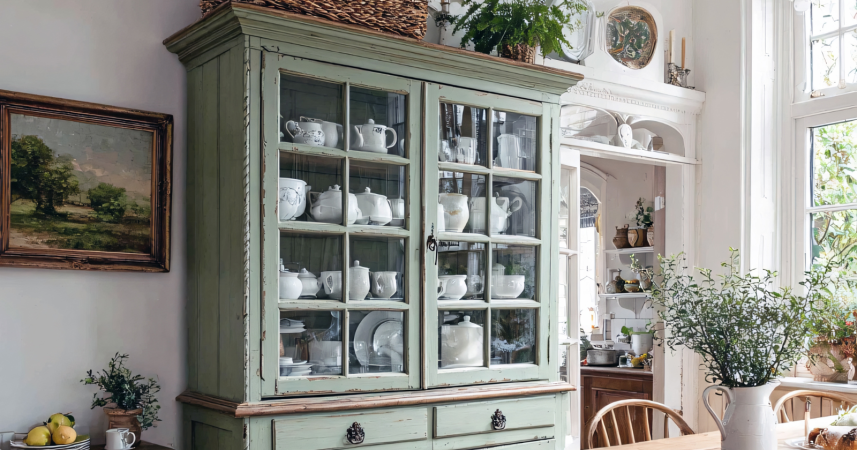
The china cabinet designed specifically to display the china nobody wants?
These pieces are difficult to sell, expensive to move, and don't fit the lifestyle or aesthetic preferences of younger generations who prefer lighter, more flexible furniture options.
Final thoughts
Writing this article brought up complicated feelings about my own parents and their collections.
There's something deeply poignant about watching a generation realize that the things they valued and saved might not have the legacy they imagined.
But here's what I've learned: the real value in these collections isn't monetary.
When my mother shows me her china, she's not really talking about plates.
She's sharing memories of dinner parties with friends who've passed, celebrations that marked life's milestones, and a time when gathering around a formally set table was how people showed love and respect.
If you're dealing with these collections in your own family, approach the conversation with compassion.
Acknowledge the memories and meaning behind the objects, even if you don't want to inherit them.
Sometimes the best gift we can give our parents isn't taking their collections, but listening to the stories they represent.
And if you're a Boomer reading this, wondering what to do with your treasures?
Consider that their greatest value might be in the joy they've already brought you, not in what they might sell for tomorrow.
Maybe it's time to use that good china for random Tuesday dinners, display those collectibles where you can enjoy them daily, and stop saving things for a someday that might never come.
After all, the real inheritance we leave isn't in objects but in memories, values, and the stories we share across the kitchen table, whether it's set with fine china or paper plates.