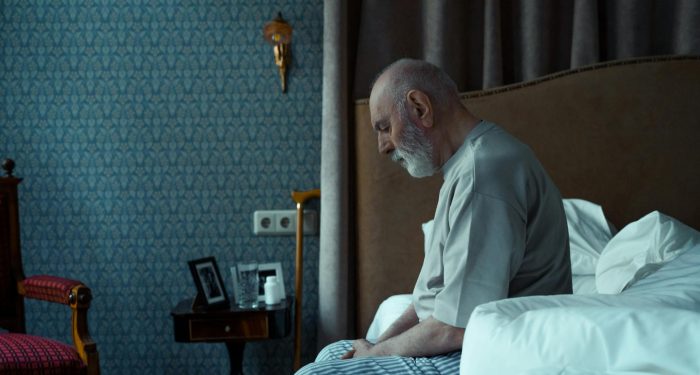


The cultural script calls it "keeping busy" or "staying sharp." The research describes something quieter: a meeting between an older adult and a younger version of themselves, who has been waiting, patiently, for several decades.
The story is so common it has become almost invisible. A woman in her late sixties signs up for a poetry workshop and surprises herself by being good at it. A retired engineer enrolls in a master's program in art history at sixty-eight. A grandmother in her seventies takes up Italian, not for travel, but because she once started learning it in her early twenties and never finished. A retired nurse begins a degree in philosophy at seventy-one, the same one she had thought about pursuing before she got pregnant with her first child.
The cultural narrative around these stories tends to land in the same place. Good for them. Staying active. Keeping the mind sharp. Avoiding boredom. The phrase that comes up most often, in conversations and in the media, is some version of "they're keeping busy."
The phrase is not wrong, exactly. It is just embarrassingly insufficient. What is actually happening, on the available research, is something quieter and more interesting. The person enrolling in the course is not running away from boredom. They are walking back toward someone they once were.
The self that got set aside
For most adults, the long middle of life involves a kind of triage. There are children to be raised, careers to be built, parents to be cared for, mortgages to be paid, partners to be supported. The hours fit into the days only if certain things get postponed. The first things to go, almost universally, are the parts of the self that did not produce visible value for someone else. The interests that were hobbies. The ambitions that did not fit the household budget. The questions that had no immediate practical answer. The languages, the instruments, the unfinished degrees, the books that were going to be written, the studio that was going to be set up.
None of these losses are, on the day they happen, dramatic. The person does not stop in the doorway and announce that they are setting down a piece of themselves. They simply stop signing up for the class. They put the half-finished manuscript in a drawer. They tell themselves they will get back to it when things calm down. Things do not calm down for thirty years.
By the time the children have left, the career has wound down, and the household has finally quieted, a particular shelf in the inner life is full of objects the person has not picked up since their twenties or thirties. Most of them are still recognizable. Some of them, surprisingly, are still alive.
What the research actually finds
Researchers studying older adult learners have found something that does not match the "keeping busy" narrative at all. Cecilia Bjursell, working at the National Centre for Lifelong Learning at Jönköping University in Sweden, examined the written narratives of fifty-three Senior University participants and reported her findings in a 2019 paper in Frontiers in Sociology. The participants in her study did not describe their education merely as a way to fill time. Their stories pointed to growth, continued development, identity, and the expansion of mental and social space in later life.
A separate body of research, conducted within the Osher Lifelong Learning Institute network in the United States, has reached complementary conclusions. As a 2018 paper in The Journals of Gerontology describes, older adults engaged in lifelong learning institutes engage in what the researchers call identity work. They are actively constructing a self that is not defined by the roles they spent their middle years performing. They describe themselves as lifelong learners, often with some pride. They are doing something more substantial than passing the time. They are, on the language the researchers used, embracing a mature love of learning that the demands of midlife had crowded out.
What the return looks like from inside
The adult version of this is recognizable. The person sits down for the first session of a course they have signed up for, often with some self-consciousness. They expect to feel out of place. Instead, they feel something they have not felt in decades, which is the small electric pleasure of being interested in a thing for its own sake. Not because the thing is going to advance their career. Not because it will benefit their family. Not because it ticks any external box. Because they themselves are interested.
The feeling is often surprising in its specificity. They recognize it. They remember the last time they felt it, and they realize, with some emotion, how long it has been. The recognition is what most "keeping busy" framings miss. The older learner is not discovering a new self. They are reuniting with a person they used to be, who has been waiting, more or less patiently, for several decades.
Why this kind of learning is different
Lifelong learning research distinguishes carefully between learning aimed at external goals (qualifications, employability, family obligations) and learning pursued for what scholars call intrinsic or self-directed reasons. As researchers writing in a recent paper from the Age-It Research Program describe, learning in later life is fundamentally different from earlier-life education. It is learning on the person's own terms. It is shaped less by what they need to achieve and more by what they need to integrate. Coping with vulnerability. Building a new identity after retirement. Maintaining agency. Recovering meaning. Finding a self that fits the new shape of the life.
The course curriculum is almost incidental to this work. What matters is that the person is asking, often for the first time in decades, what they themselves want to learn, rather than what someone else wants them to learn.
The reframe
Adults who keep learning into their 60s and 70s are rarely doing it because they are afraid of getting bored. They are doing it because there is finally room. The household has quieted. The career has finished. The shelf full of postponed selves is finally accessible, and the person, often surprised by their own appetite, has started taking the objects down one at a time and dusting them off.
The poetry workshop is not a hobby. It is a meeting between a woman in her late sixties and a younger version of herself who once thought she might be a poet, and who has been waiting, patiently, in a corner of her interior, for permission to come back. The Italian course is not a way to fill time. It is the resumption of an interrupted conversation. The philosophy degree is not a quirk. It is the answer to a question the person set down at twenty-three and has not, despite everything, ever quite forgotten.
Most of these students would not put it this way. They would say they are taking a class. But what they are actually doing, on the research and on closer inspection, is reclaiming the parts of themselves that the demands of life made them set aside. The reclaiming is its own quiet work. It is one of the most genuinely hopeful things a human being can do. And it is, almost universally, mistaken from the outside for keeping busy.