My generation discovered that the empty house after school wasn't abandonment—it was an unintentional masterclass in self-reliance that shaped every risk we'd take for the rest of their lives.
I was eleven, standing in my parents' empty kitchen at 3:30 PM, staring at a note that said "leftovers in fridge" and realizing nobody was coming home until after seven. The phone rang. It was the dentist's office confirming tomorrow's appointment that nobody had told me about. I wrote it on the calendar, heated up yesterday's leftover casserole, and started my homework at the kitchen table.
This was normal. This was every day.
Looking back now, that empty house taught me more about resilience than any self-help book ever could. We didn't have a word for it then. We just called it getting home from school.
The empty house as teacher
There's a particular quality to the silence of an empty house when you're eleven. It's not peaceful or terrifying. It's just there, like weather. You learn to fill it with your own decisions, your own mistakes, your own small victories that nobody witnesses.
But independence is too clean a word for what actually happened. We learned to burn grilled cheese, to lie convincingly when teachers asked if someone was home, to forge signatures with the dedication of Renaissance artists.
The thing about coming home to nobody is that you become your own witness. You see yourself handle the broken window from the baseball that went astray. You watch yourself figure out which neighbors might help if something went really wrong. You observe your own small competencies building like sediment, layer by invisible layer.
My friend's kid recently had a panic attack because his phone died and he couldn't reach his parents for forty minutes. Forty minutes. We went forty days without our parents knowing exactly where we were, and somehow that built something in us that no amount of constant connection can replicate.
Nobody asked if you were okay
The absence of constant emotional check-ins wasn't neglect. It was Tuesday. Your parents assumed if something was really wrong, you'd say something. Meanwhile, you were navigating your first heartbreak by listening to the same record over and over in your room, developing your own internal compass for what mattered and what didn't.
Researchers of a 2019 study noted that,"performing chores in early elementary school was associated with later development of self-competence, prosocial behavior, and self-efficacy." Makes total sense. For us, that self-efficacy came from figuring out that the weird noise in the basement was just the water heater, not a burglar. It came from solving the problem of forgotten lunch money with charm and negotiation skills you didn't know you had.
A 2023 study essentially made the case in reverse: that the decades-long decline in opportunities for children to roam, play, and act independently of adult oversight is a primary driver of today's record rates of anxiety and depression in young people. Which is another way of saying what we already knew in our bones — that all those empty afternoons weren't wasted. They were doing something to us.
When I worked in restaurants later, I watched younger staff crumble under criticism that would have been considered gentle in 1975. We'd learned early that not every feeling needed immediate attention, that you could be upset and still function, that the world kept spinning whether you were okay or not.
This wasn't about being tough. It was about developing an internal regulatory system that didn't require external validation every few hours. You learned to comfort yourself, entertain yourself, and pull yourself together because there wasn't another option.
The art of figuring things out
Before Google, before YouTube tutorials, before texting your parents from the grocery store to ask which milk to buy, we had trial and error. Mostly error. The washing machine that turned everything pink taught you about sorting colors. The smoke alarm going off taught you about oven temperatures. The dog getting into the garbage taught you about consequences you had to clean up yourself.
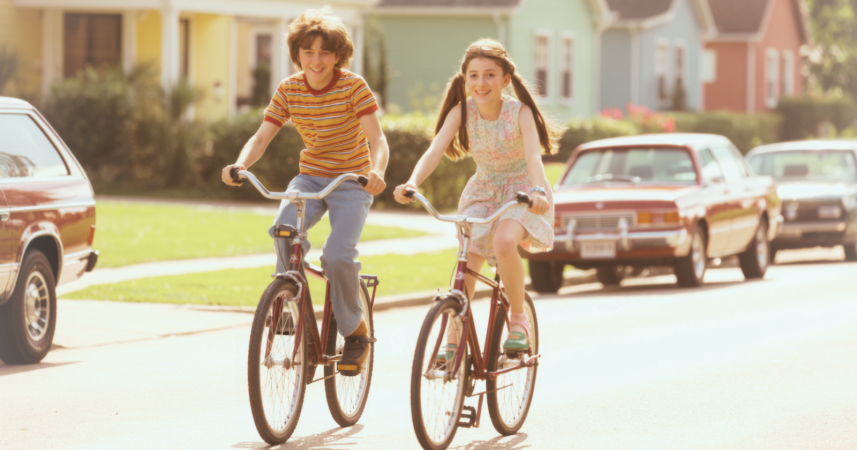
My generation fixed bicycles with butter knives and duct tape. We programmed VCRs through pure determination and random button pressing. We got ourselves to practices, appointments, and friends' houses through a combination of bicycles, memorized bus routes, and strategic lying about who was driving.
I think this constant problem-solving without a safety net created neural pathways that expected obstacles. When something broke, you didn't immediately call for help. You poked at it, took it apart, made it worse, then sometimes fixed it. That relationship with failure as a teaching tool, not a catastrophe, shaped everything that came after.
Learning not to expect the net
Here's what that childhood really gave us: the knowledge that you could fall and nobody would catch you, so you'd better learn to land. Not expecting rescue became our superpower and our curse.
When you grow up not expecting anyone to solve your problems, you develop a particular relationship with risk. You jump because standing still isn't safer. You start businesses, leave marriages, change careers at fifty because you've always known that security is an illusion anyway.
The downside? We're terrible at asking for help. We'll reorganize our entire lives to avoid appearing needy. We'll work ourselves into the ground rather than admit we're overwhelmed. That same independence that saved us as kids can isolate us as adults.
Final words
That empty house of my childhood echoes through everything. It taught me that boredom won't kill you, that loneliness is survivable, that you can figure out most things if you're willing to mess up first. These weren't conscious lessons. They were absorbed through the skin, through the hours of silence, through the small victories nobody celebrated.
My generation's resilience isn't about being stronger or better. It's about knowing in your bones that nobody's coming to save you, so you might as well save yourself. We jump without checking for nets because we learned early that the net was never there anyway, and we survived.
Maybe that's what we need to remember: not that those empty houses made us tough, but that they taught us we were capable of more than anyone thought to tell us. We became our own witnesses, our own comfort, our own rescue. And maybe that's not trauma or strength. Maybe it's just what happens when you come home to an empty house enough times to realize you can fill it yourself.