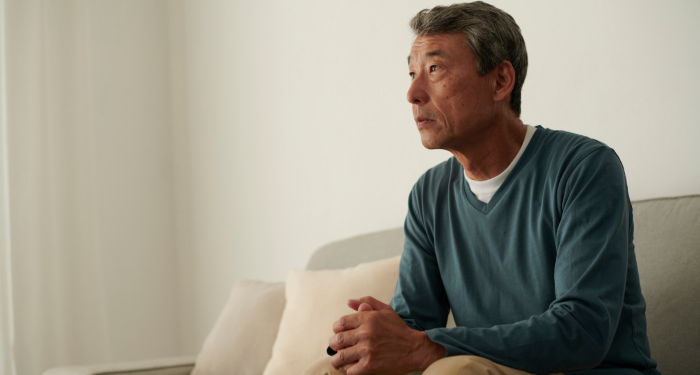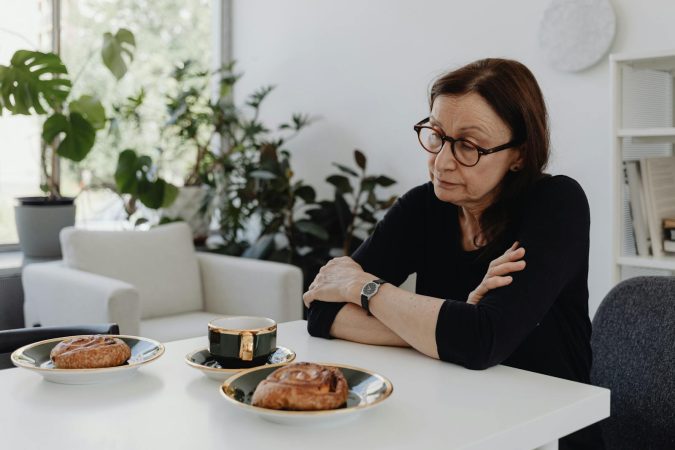
The secret to aging well isn't diet or money—it's whether you update your self-image as life changes or spend decades defending who you used to be.
The people who age well are the ones who let their self-image keep moving. That's it. Not the ones with the best genes, not the ones with the biggest retirement accounts, not even the ones who took up pickleball at sixty. The ones who age well are the ones who, when the world changed under them or their body changed on them or their role in a family changed without asking, updated the picture they carried of themselves instead of spending the next thirty years defending an outdated version.
I know because I had to do a smaller version of it at thirty-two, and I watched how badly it could have gone.
The conventional wisdom is that aging well is a matter of inputs. Eat the Mediterranean diet. Lift weights. Sleep eight hours. Keep your LDL down and your social circle up. All of that matters, and I'm not here to argue with a cardiologist. But if you've ever watched someone do everything right and still curdle into a bitter version of themselves by seventy, you've seen the limits of the input model. And if you've ever met an eighty-year-old who lights up a room despite a stent and a walker, you've seen what actually does the work.
The work is identity maintenance. And most people are terrible at it because nobody taught them it was a job.
What defending an old self-image actually looks like
It looks like the former athlete who won't walk into a gym because he can't lift what he used to, so he doesn't lift at all. It looks like the woman who was the pretty one in her friend group and now avoids photographs. It looks like the executive who retired six years ago and still introduces himself by the title on his old business card. It looks like the dad whose kids are grown and who cannot, for the life of him, figure out what to talk to them about now that he's not solving their problems.
None of these people are failing at life. They're just holding very tightly to a version of themselves that no longer matches the facts. And holding tight is expensive. It costs flexibility, curiosity, and the willingness to try things badly, which happens to be the exact skill set aging well requires.
I wrote recently about the grief of becoming someone your younger self wouldn't recognize, and the response I got was louder than almost anything I've written. People are carrying a lot of unmetabolized identity loss. A lot of ghosts of who they used to be.
The research is catching up to what we can already see
Gerontologists have been circling this for a while. Research suggests that cognitive flexibility — the capacity to update mental models when reality shifts — is among the stronger predictors of healthy aging, and it shows up in places you wouldn't expect. Research on aging and cognition points out that the trajectory of cognitive and language function in later life is shaped heavily by social environments, support networks, and the person's ability to adapt, not just by the underlying biology they started with.
Translation: two people with similar brains can age very differently depending on how rigidly they hold onto an old self-concept.
Other work on sensory and cognitive function in older adults suggests the same thing from a different angle. Analysis of older adults with mild cognitive impairment found that people who engaged in combined cognitive and physical training preserved function better than those who didn't, but the kicker is that the people who benefited most were the ones willing to keep learning new patterns. Willing to be beginners. Willing to update.
That's not a pharmacological intervention. That's a personality intervention.
Why updating is so hard
Because the old self-image was earned. That's the part nobody acknowledges.
When I left kitchen work at thirty-two, I didn't leave because I was bored. I left because my back was done, my wrists were done, and standing for fourteen hours a day had stopped being a badge and started being a medical event. I had trained for a decade to do that work. I had Culinary Institute of America loans. I had a reputation in Portland and San Francisco. I had a picture of myself as a chef that had cost me real money and real time, and when my body said no, the first thing I had to do wasn't find a new job. It was grieve the old picture.
I didn't do it well at first. I called myself a former chef for about a year, which is a deeply pathetic category to live in. It was a way of thinking I used to be someone, and that whoever I was now was defined by absence. My partner James called me on it one night (gently, because he's a gentler person than I am) and asked when I was going to let the old version go.
The answer turned out to be: when I stopped needing the old version to prove I was worth something.
The tell is in the language
You can usually hear whether someone has updated their self-image by how they talk about what they do now. People who've updated use present-tense verbs. People who haven't use past-tense nouns.
People who haven't updated might say they were a surgeon, while those who've updated focus on what they're learning now.
The first person is still defending. The second person is still becoming. It's not about how impressive the current activity is — gardening is not more noble than surgery. It's about whether the self-concept is a live thing or a fossil.
The brutal version of this shows up in retirement research. Studies have suggested that the loneliest thing about aging isn't losing people, it's losing the social role that made people need you. When your identity was built around being the person others came to for something specific, and X is no longer your job, you have to build a new reason to be in the room. People who can do that thrive. People who can't spend their seventies feeling invisible and blaming everyone else for it.
The system makes this harder than it needs to be
There's a structural piece here worth naming. Western culture, and American culture in particular, sells identity as an achievement rather than a practice. You become a lawyer, a mother, a homeowner, a founder. These are presented as destinations, which means the implicit message is that once you arrive, you stop. The whole marketing economy around the concept of a dream life is built on the idea that identity is something you lock in, not something you keep building.
So when life does what life does (you get injured, the kids leave, the industry collapses, your spouse dies, your body changes), the culture has given you no practice at being a person who updates. You've been trained as a person who arrives.
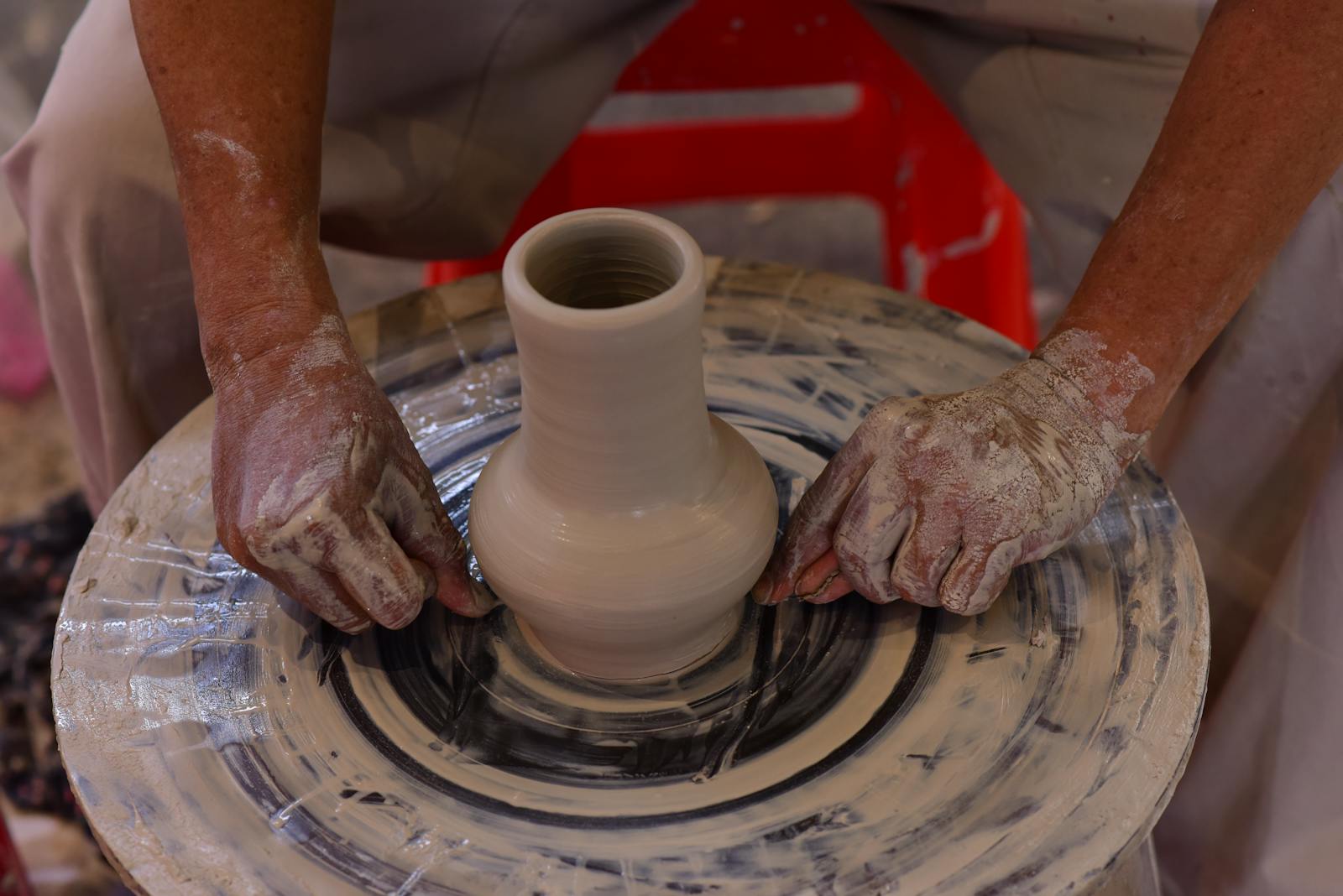
The people who age well tend to have, by temperament or accident, rejected this frame early. They treat identity as something they're always halfway through. It's less comfortable, but it's more durable.
What updating actually looks like in practice
It's smaller than you'd think. It's not a reinvention montage. It's a series of tiny admissions, most of them private.
Admitting that you're slower now, and planning around it instead of pretending. Admitting that the thing you were known for isn't what you want to be known for anymore. Admitting that an opinion you held for thirty years doesn't actually match what you've observed. Admitting that you are no longer the youngest person in any room and that this is, somehow, fine. Admitting that a friendship has run its course. Admitting you'd like to learn something you'd be embarrassed to be bad at.
Each of these admissions is an update. Each one costs a little ego. And each one buys you a version of yourself that's still in motion.
There's a piece we ran recently about how the person you become while chasing something matters more than whether you get it. The corollary is that the person you become after the chasing is over matters just as much. Maybe more. You've got a lot of years on the other side of the thing you were aiming at.
The kitchen taught me this, badly, at thirty-two
I'm thirty-five now. Three years into writing full-time. I still miss service: the adrenaline, the callouts, the specific camaraderie of people covered in the same grease. I don't think that will ever fully go away. But I've stopped treating the miss as evidence that I'm in the wrong life. It's just the residue of a previous self.
What changed wasn't the feeling. It was my relationship to the feeling. I stopped defining myself by my former career and started describing myself as a writer who cooks. It sounds small. It's not. It's the difference between carrying a photograph and living in a house.
If you want a single practice to take from this, it's that one: pay attention to how you describe yourself when no one's grading the answer. If the description is mostly past-tense, you're defending. If it's mostly present-tense, you're updating.
The people who age well are the ones who keep writing the sentence. The people who don't are the ones who printed it out in 1994 and have been laminating it ever since.
Health matters. Money matters. Genes matter. I'm not going to pretend otherwise. But of all the variables, the one that seems most available to ordinary people and most neglected by the self-improvement industry is this quiet, unglamorous willingness to let the picture move. It doesn't require a gym membership or a retirement account. It requires being a little less attached to who you were last decade. Which, depending on the decade, can be the hardest ask in the world.
Worth it, though. The alternative is spending your last thirty years as a museum exhibit of a person you used to be.