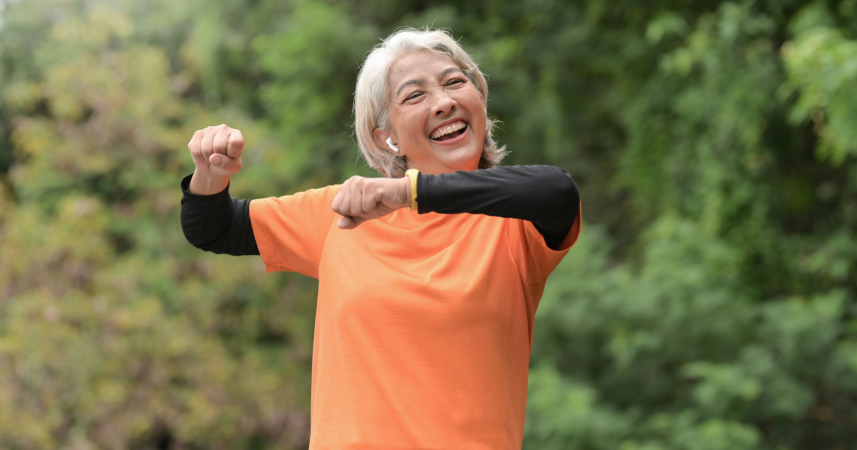
None of these tasks require a gym membership, a specialist, or a complicated plan. That is precisely the point. Longevity research keeps circling back to the same conclusion: the daily, small, unremarkable actions accumulate into a life.
Nobody warned me that turning 70 would feel like getting a complete physical from the universe. Not the kind with a stethoscope and a paper gown, but the quiet, daily kind — where life starts asking questions through your body instead of your calendar. Can you carry those grocery bags from the car in one trip? Do you sleep through the night anymore? Did you call anyone this week just to hear their voice?
I retired from teaching English at 64, and what I thought I knew about reading — really reading between the lines — turned out to apply just as much to aging as it did to Faulkner. The most important signals are rarely the loudest ones. In a 32-year classroom career, I learned that the student who sat quietly in the back corner was often the one with the most to say. The body in its seventies operates on a similar principle. The small things are telling you everything.
Here are nine daily tasks that most of us shrug off as nothing much — but science says otherwise.
The Physical Ones That Speak Volumes
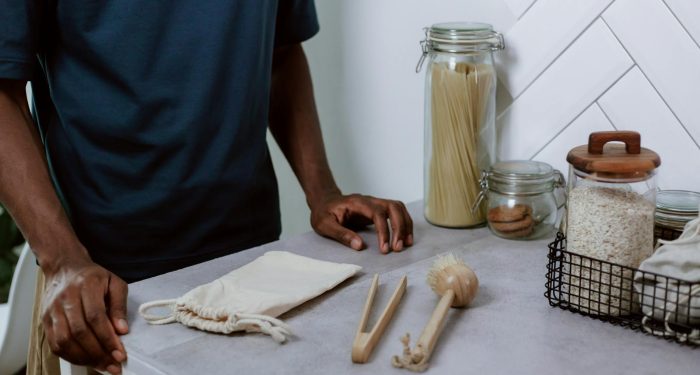
1. Opening a jar of pickles. I know it sounds almost comical. But your grip strength is one of the most studied biomarkers in all of aging science. Research published in PMC found that weak grip strength is associated with higher all-cause mortality, cardiovascular disease, and a cascade of functional decline. It's not that a weak grip causes any of those things directly — it's that grip strength reflects the health of your entire musculoskeletal and nervous system. Think of it as the body's quiet report card. If you're struggling with jars, doorknobs, or carrying bags, it's worth paying attention. Squeeze things. Use your hands. Garden, cook, do resistance work. Your grip is trying to tell you something.
2. The pace at which you walk across a parking lot. Doctors in geriatric medicine have been quietly using walking speed as a clinical vital sign for years now. A landmark pooled study of over 34,000 older adults found that gait speed was as accurate a predictor of survival as far more complex medical assessments involving chronic conditions, blood pressure, and hospitalization history. Walking requires coordination from your heart, lungs, nervous system, and musculoskeletal system all at once. A slowing pace is often the body's first whisper that something in that complex system deserves attention. I don't think of my morning walk as exercise anymore. I think of it as maintenance — the same way I deadhead the roses so they keep blooming.
3. Getting up from the floor without using your hands. Try it sometime. It is humbling and also deeply informative. The sit-to-stand test is used by clinicians worldwide as a measure of lower body strength, balance, and core stability. If you need both hands and a piece of furniture to get back up, your functional independence is at more risk than you may realize. Practice it. Lower yourself down. Get back up. A few times a week is enough. Yoga, stretching, swimming — anything that keeps those pathways open.
4. How you sleep. Not just whether you sleep, but how. According to the National Institute on Aging, older adults need roughly seven to nine hours of sleep each night, but the quality of that sleep matters as much as the quantity. Poor sleep in older adults has been linked to cognitive decline, increased fall risk, depression, and higher rates of cardiovascular disease. I used to think my 5:30 AM wake-up was something to brag about. Now I understand it's only a virtue if what came before it was real, restorative rest. A consistent sleep schedule, dark room, no screens an hour before bed — these aren't luxuries. At 70, they are medicine.
The Social Ones We Underestimate
5. Whether you called a friend this week. I mean a real call. Not a thumbs-up on a photo, not a forwarded article. A conversation where you asked how someone was and actually waited for the answer. Harvard Health reports that in a study of more than 28,000 older adults, those who socialized most frequently lived the longest — and even occasional socializing offered meaningful protection compared to none at all. My second husband and I used to joke that our best health intervention was our Sunday supper table. He wasn't wrong. After I lost him, those phone calls became something I protect the way I protect my garden in the first frost. You cover what matters before it's too late.
6. Whether you have something to look forward to. A lunch, a book club, a volunteer shift, a grandchild's soccer game. Purpose is not a soft, philosophical concept at 70 — it is a physiological one. People who feel connected to something beyond themselves show measurably lower inflammation markers, better immune function, and longer lives. I volunteer at a women's shelter teaching resume writing, and I promise you, those two hours a week do more for my health than any supplement I've ever taken. Meaning keeps the engine running.
The Daily Habits Nobody Talks About
7. What you eat — and whether you eat it sitting down. At 70, nutrition is not a diet. It is a long-term conversation with your body about what you owe it. Eating sufficient protein matters enormously for muscle preservation. Hydration, which most of us chronically underdo, affects everything from cognition to joint health. But there is also the slower truth: how we eat. Rushing through meals, eating standing over the sink, barely tasting what's in front of us — these habits speak to our relationship with our own nourishment. Sit down. Eat slowly. Taste the soup.
8. Whether you're still learning something new. I started writing personal essays at 66. I was terrified, and the terror was the point. Cognitive engagement — truly novel learning, not just familiar crossword puzzles — keeps neural pathways flexible and growing. Learning a language, taking a class, figuring out how to use your phone's camera properly (which I am still, bless it, attempting) — these are not pastimes. They are investments in your brain's long-term health. The brain, like a garden, needs to be asked to do new things or it quietly retreats.
9. How often you spend time outdoors. Not necessarily exercising. Just outside. Light exposure regulates your circadian rhythm, which governs sleep, mood, hormone production, and immune function. Nature has a measurable calming effect on the nervous system. And there is something harder to quantify but no less real: the way that fresh air and changing light remind the body that it is still part of something larger than the inside of a house. A study tracking total daily physical activity and longevity in older adults found that an active lifestyle including non-exercise activity — puttering in the garden, walking to the mailbox, sitting on the porch — was meaningfully linked to survival. Not everything that counts has to be counted.
What All Nine Have in Common
None of these tasks require a gym membership, a specialist, or a complicated plan. That is precisely the point. Longevity research keeps circling back to the same conclusion: the daily, small, unremarkable actions accumulate into a life. The jar you wrestled open. The walk you took in the cool morning. The call you made to your oldest friend. The good night's sleep. The tomato you ate slowly over the kitchen sink because the sun was coming through the window just right.
I have four grandchildren and one great-grandchild, and the gift I most want to give them is not money or advice but time. My presence. My stories. Myself, showing up and still curious. These nine tasks are how I work toward that — not dramatically, not perfectly, but daily.
The question worth sitting with is not whether you're doing everything right. It's whether you're paying attention to the small things at all. They are not small. They never were.
What’s Your Plant-Powered Archetype?
Ever wonder what your everyday habits say about your deeper purpose—and how they ripple out to impact the planet?
This 90-second quiz reveals the plant-powered role you’re here to play, and the tiny shift that makes it even more powerful.
12 fun questions. Instant results. Surprisingly accurate.