The people who stay calm under pressure aren't using breathing tricks—they're drawing on hard-won experience from surviving something worse, often something nobody else knows about.
For decades, the dominant advice on staying calm under pressure was to manage the stress in the moment: breathe deeper, think positive, visualize success. That framing turned out to be mostly wrong. The people who actually keep their composure when things go sideways aren't running some clever in-the-moment protocol. They're drawing on something older. Something they already paid for.
You can spot them in kitchens, in ERs, in boardrooms, in the middle of a family crisis. Someone is falling apart. Someone else is not. The calm person usually isn't the most confident in the room. Often they're the quietest. And if you know their history, you usually understand why.
This isn't a mystery, and it isn't magic. It's neuroscience. The growing body of research on post-traumatic growth explains why people who've already survived something terrible often carry a particular kind of steadiness — not because they're unafraid, but because their nervous system has been fundamentally recalibrated by what they've already endured.
The myth of the unshakeable person
We tend to romanticize calm. We assume the person who doesn't flinch is somehow wired differently, born with a more regulated nervous system, blessed with a natural optimism the rest of us weren't handed. The research says otherwise.
Psychologists who study resilience have been gradually dismantling the idea that it's a trait you either have or don't. Research suggests that resilience is better understood as a process shaped by experience, relationships, and context, not a fixed personality feature. The implication is unglamorous but honest: calm under pressure is usually earned, not inherited.
That aligns with what clinicians have been saying for a while. A recent Psychology Today piece on resilience makes the point plainly: resilience isn't something you're born with, it's built in the moments life doesn't go your way. The struggle is the curriculum.
Why prior adversity quiets the alarm
There's a mechanism behind this, and it's not mystical. When you've already lived through something worse than what's currently in front of you, your threat-detection system recalibrates. The brain stops sounding the fire alarm for every burned pan.
Researchers have documented what they call post-traumatic growth, the observation that people who survive difficult events often come out with stronger emotional regulation, clearer priorities, and a more stable relationship with uncertainty. A 2024 analysis on growth after trauma describes this as a shift in how people relate to vulnerability itself. They stop treating discomfort as a signal to panic and start treating it as information.
The construct is measurable. A study validating the Post-Traumatic Growth Inventory through cognitive interviews found that survivors consistently describe specific domains of change: a stronger sense of personal capability, deeper relationships, a different relationship with what matters. These aren't vibes. They're documented shifts in self-concept that follow hardship, not precede it.
Which reframes the calm person entirely. They're not unshaken. They've been shaken before, hard enough that this particular thing doesn't qualify.
Stress inoculation, minus the jargon
There's a body of work in sports psychology on the idea that controlled exposure to manageable stressors builds tolerance for bigger ones later. Combat sport and team sport researchers have been studying this dynamic for years, examining how athletes learn to regulate arousal and aggression under pressure. A current Frontiers research topic on emotional and cognitive processes in sport frames this as central to performance under pressure: athletes who've repeatedly failed, recovered, and returned develop regulation skills that athletes who've only won don't have access to.
The ugly inverse also shows up in the clinical literature. Research suggests that acute stress can impair emotional regulation in people with distress disorders like depression and anxiety. This means stress doesn't sharpen everyone. For people whose nervous systems are already dysregulated, pressure makes things worse, not better. Exposure isn't automatically therapeutic. Context matters.
Which is the honest version of the story. Surviving something hard doesn't guarantee you come out calmer. Some people come out more fragile, more reactive, more easily flooded. The difference is whether the experience was metabolized or just endured.
What metabolizing actually looks like
The people who carry their past as a source of steadiness, rather than a source of ongoing injury, tend to have done something with it. They talked to someone. They wrote about it. They rebuilt a life around what they learned instead of pretending it hadn't happened.
A 13-month longitudinal study on character strengths during COVID-19 found that specific character traits, particularly what the researchers called goodness, interpersonal strengths, and fortitude, predicted better mental health outcomes over time, mediated mostly by positive affect. Put simply: people who leaned on connection and grit during the pandemic didn't just survive it, they came out with more stable well-being than people who white-knuckled their way through alone.
That finding matters because it separates two groups who, from the outside, look identical. Both survived the same event. Only one processed it into something usable.
This is the crucial distinction the research keeps circling back to. Post-traumatic growth doesn't happen passively. It requires what psychologists sometimes call deliberate rumination — the active work of making meaning from suffering, rather than simply replaying it. The person who processes a bankruptcy by rebuilding their relationship with risk is doing different cognitive work than the person who processes it by never taking a financial risk again. Same event, opposite trajectories.
Why the calm person rarely tells you
Here's the part that makes this unfair. The person staying composed in the crisis almost never explains where the composure came from. They don't mention the miscarriage, the bankruptcy, the year they spent as their mother's caregiver, the addiction they quietly got out of. They just show up steady.
Part of that is privacy. Part of it is that trauma, once metabolized, stops being a headline in your own life. It becomes context. You don't introduce yourself by your worst year.
And part of it, honestly, is that talking about it invites a response most survivors don't want: pity, curiosity, the slight recalibration in how people look at you. There's a reason the quietest person in the room often reads as the most powerful. The absence of a need to be understood often reads as authority. Survivors often have that absence naturally. They've already been through the thing that would have required someone to understand, and nobody did, and they got through it anyway.
The trap of mistaking calm for invulnerability
This is where I want to push back on my own argument. Because the person who always stays calm is also, frequently, the person everyone leans on. The one who gets called when things go wrong. The one whose steadiness becomes a public utility other people draw from.
There's a specific exhaustion that comes from being that person. It looks like competence from the outside and feels like slow depletion from the inside. Having survived something worse doesn't mean you have infinite bandwidth for everyone else's current problems. It just means you're better at hiding the cost.
The healthiest version of earned calm is the one that includes a boundary. The unhealthiest version is the one where you become the emotional infrastructure for people who never ask what it took to build you.
What this means if you're the person who gets rattled
If you're reading this and thinking you're the one who flinches while other people hold steady, the useful takeaway isn't that you need to manufacture hardship. You don't. Life will supply enough without your help.
The useful takeaway is that calm under pressure is not a personality defect you were born with on the wrong side of. It's a skill built through exposure, processing, and time. The people you admire for their steadiness aren't a different species. They're just further along a path you may already be on without realizing it.
The other takeaway is to stop performing composure you don't actually have. The research on stress and emotional regulation is clear that suppressing distress tends to make it worse, not better. Pretending to be calm is not the same as being calm, and your nervous system knows the difference.
The quiet recalibration
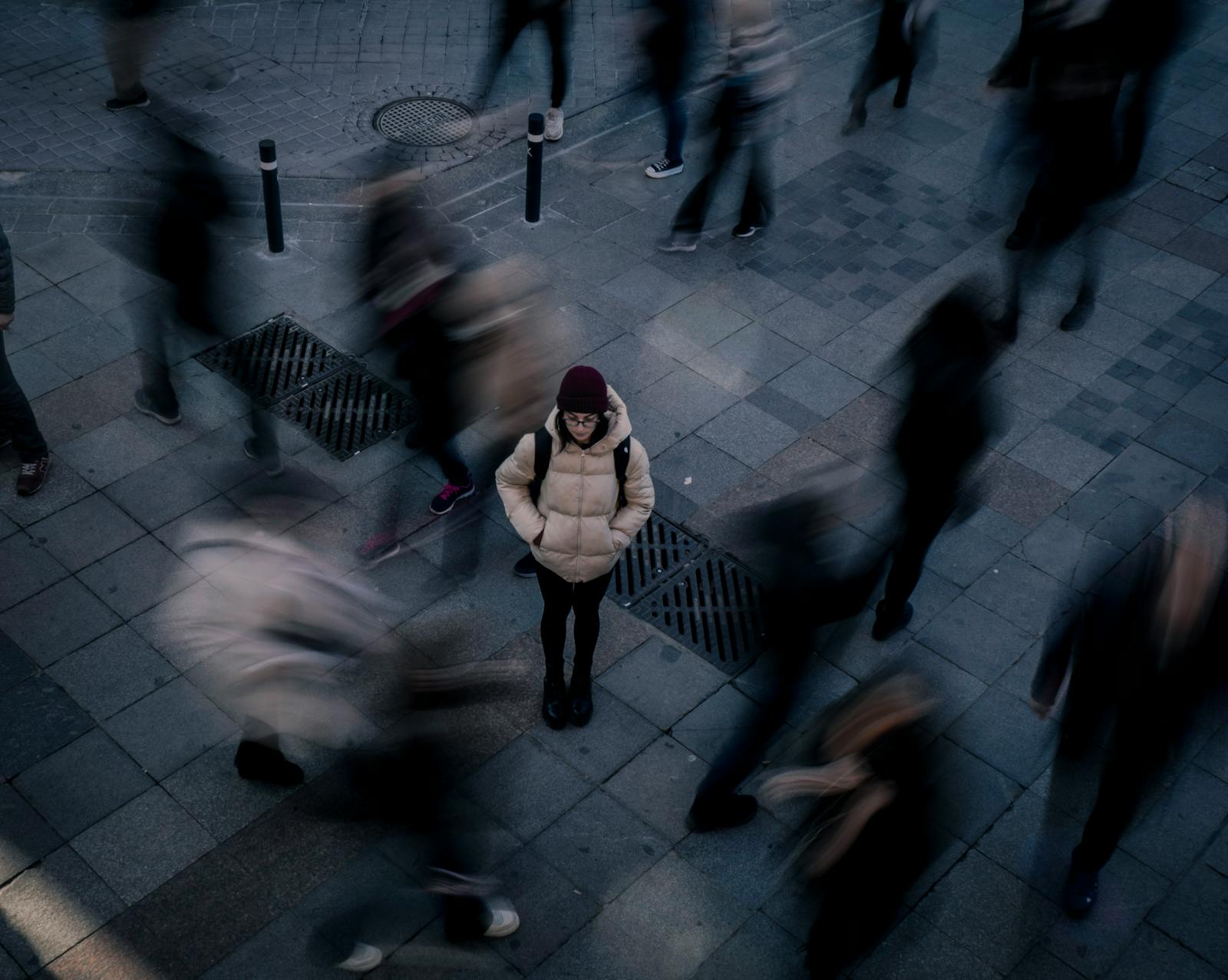
So the next time you're in a room where something goes wrong — a crisis at work, a medical scare, a plan that falls apart in real time — watch who goes still. Not stiff, not frozen. Still. The person whose breathing doesn't change, whose voice drops instead of rising, who starts doing the next useful thing while everyone else is still reacting to the last one.
That person isn't performing strength. They aren't naturally unflappable. They aren't blessed with some rare neurological gift the rest of us missed out on. What they are, almost always, is someone who has already been through something that made this particular disaster feel manageable by comparison. Their calm isn't the absence of fear. It's the residue of having already met something that mattered more than whatever is happening now — and having survived it, and having done the quiet, unglamorous work of turning that survival into something they can use.
The research on post-traumatic growth confirms what you can see with your own eyes if you pay attention: steadiness under pressure is almost never innate. It's earned. It's expensive. And the people who carry it rarely advertise what it cost.
If you know someone like that, don't mistake their steadiness for ease. Ask them, sometime, what it cost. You'll usually get a short answer and a long silence. Both are the real reply.