Repetitive breakfasts aren't a sign of boredom—they're a strategic choice to preserve mental energy for decisions that actually matter.
The most interesting people I know eat the same thing for breakfast every morning. Not because they lack imagination, but because they've decided to spend their imagination elsewhere.
This goes against most of what we're told about variety being the spice of life and the importance of "switching things up." The conventional wisdom treats routine as a slow surrender to monotony, the dietary equivalent of giving up. But the people I know who've eaten oats and berries for a decade, or two slices of sourdough with avocado for as long as I've known them, aren't surrendering anything. They're protecting something.
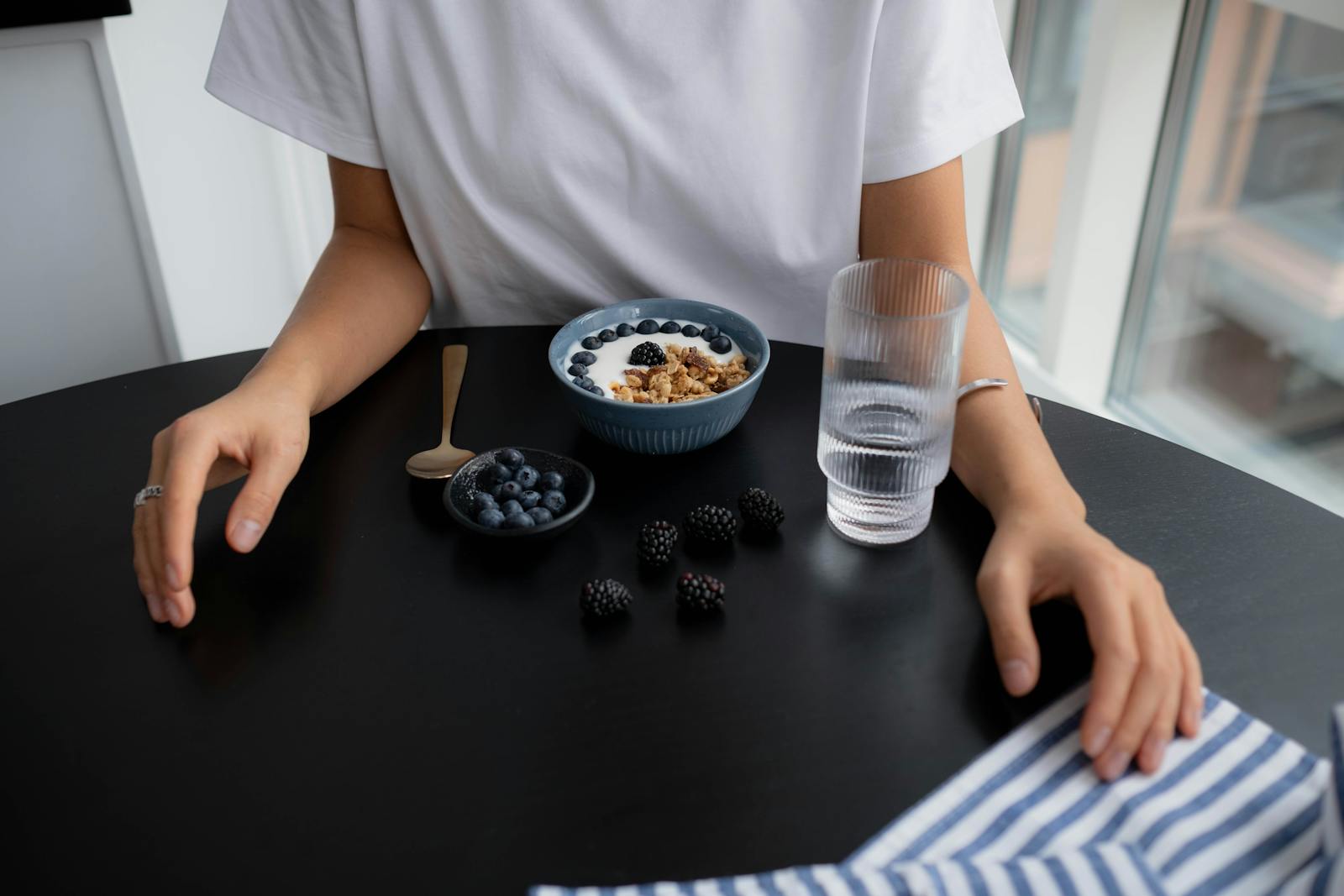
I'm a 5:30am person, regardless of what time I went to bed. The hours between six and ten in the morning are when my best work happens, usually in a quiet coffee shop before the city starts negotiating with me. And the only reason I get any of that work done is because I stopped asking myself what I wanted to eat first thing in the morning years ago. Coffee. Yogurt. The same handful of things. The decision was made once, and then it stopped being a decision.
The decision you don't have to make
The concept of decision fatigue suggests that self-control and decision-making draw from the same finite well, and every choice you make in the morning, however small, is a withdrawal from a balance you'll need later. The breakfast question is small. But it's not free.
The core observation that habits offload mental work has held up well in the broader habit-formation literature. Recent research in Psychology Today notes that roughly 65 percent of our daily behaviors happen on autopilot, formed through repetition and triggered by familiar cues. The autopilot isn't a sign of a dull mind. It's the mind's way of saving fuel.
The people who eat the same breakfast every day have, intentionally or not, designed a system that lets the autopilot take the first shift.
The cost of having too much to choose from
The Paradox of Choice made the case decades ago that more options don't make us happier. Past a certain point, they make us anxious, regretful, and slower to act. The research has held up across domains. Studies on choice overload in dating show that an abundance of potential partners often produces worse outcomes, not better ones: people freeze, second-guess, or disengage entirely.
The breakfast aisle of a decent grocery store now contains hundreds of options. Twelve kinds of granola. Six versions of oat milk. An entire wall of yogurts segmented by fat percentage, protein content, fermentation style, and cultural origin. None of this exists because we asked for it. It exists because variety sells, and the food industry profits from making every meal feel like a fresh decision rather than a settled one.
Choosing the same thing every morning is a quiet refusal to participate in that economy of decisions.
Habits are infrastructure, not personality
The research on habit formation keeps pointing in the same direction: repetition in a stable context is what builds automaticity, and automaticity is what frees the mind. A habit can be understood as an automatic response triggered by environmental cues you've established. It's a form of associative learning. The goal of any habit is to move toward automaticity, where the behavior happens with less effort and less thinking.
That last phrase is worth sitting with. Less thinking. Not as a deficit, but as a deliberate design choice. The breakfast that requires no thinking is the one that lets you think about everything else.
This is why the people who eat the same thing every day are often, in my experience, the people doing the most interesting cognitive work in the rest of their lives. The novelist who eats the same eggs for thirty years. The surgeon with her morning protein smoothie. The poet and his oatmeal. They're not people who've stopped caring about food. They're people who've decided where caring about food belongs in the architecture of their day, and where it doesn't.
The structural argument for boredom
There's a structural argument here that I think gets missed. The modern day asks more decisions of a person than any previous generation has had to make. What to wear. What to read. What to watch. Which of forty-seven Slack messages to answer first. Which of nine streaming services has the show your friend mentioned. Which route home, which delivery app, which version of yourself to be in which group chat.
None of these are difficult decisions individually. Cumulatively, they're exhausting in a way that previous generations didn't have to metabolize. The person who eats the same breakfast every day isn't withdrawing from life. They're recognizing that life has expanded the menu in ways that aren't always serving them, and they're choosing where to opt out.
The same logic shows up in other places. I wrote recently about how people who keep one drawer perfectly organized while the rest of their home is chaos aren't contradictory — they're maintaining a single zone of control in a world that mostly refuses to give them one. The repeated breakfast is the same instinct in food form. One small place where the day cannot ambush you.
What the autopilot is actually for
NPR ran a piece on how a consistent daily routine reduces stress and anxiety by creating a structure the nervous system can rely on. The mental health counselor quoted in that piece described routine as a way of building a foundation underneath your day, something that holds even when the rest of the day doesn't.
The same breakfast, eaten at the same time, in roughly the same way, is one of the cheapest pieces of that foundation a person can build. It costs nothing. It requires no app. It can't be sold to you, which is probably why it gets framed as boring rather than wise.
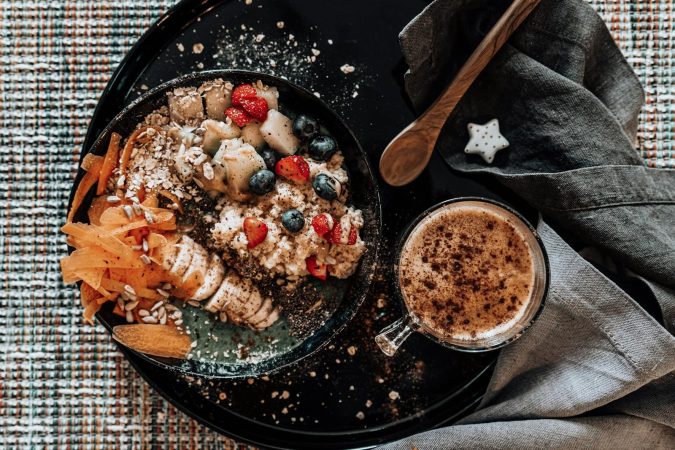
And the routine doesn't have to be ascetic. My version involves good coffee, a proper bowl, the same ceramic mug I bought at a flea market three years ago. The repetition isn't punishment. It's a small daily luxury that I don't have to negotiate for.
The counterargument worth taking seriously
The honest objection to all of this is that some routines are genuinely a sign of avoidance: rigidity dressed up as efficiency, a refusal to encounter anything new. There's a personality dimension to consider. Recent UCL research published in Frontiers in Psychology found that personality traits influence what kinds of structure people enjoy and stick with. Extroverts gravitate toward intensity and novelty. People high in neuroticism prefer short, predictable bursts and the privacy of doing things their own way. Conscientious people build well-rounded routines because the routines feel right, not because they're enjoyable.
So a same-breakfast person who's also a same-everything-else person, who hasn't tried a new food or a new route or a new idea in five years? That's a different story. That's not decision conservation. That's the autopilot driving the whole car.
The distinction matters. The healthy version of routine is the one that frees you up to be more curious in the parts of your life that benefit from curiosity. The unhealthy version is the one that closes the curiosity down across the board.
Repetition as a form of attention
I think often about how repetition gets coded as the opposite of attention, when in practice it's often a form of it. The cook who makes the same dish for twenty years notices things about it that the person who makes it once never will. The runner on the same route notices the seasons in a way the route-shuffler doesn't. Familiarity doesn't dull perception. It deepens it, if you let it.
The same breakfast, eaten with attention, is a small daily practice in noticing. The yogurt is slightly more tart this week. The berries are better in July. The bread is different at this bakery. You notice these things precisely because everything else is held constant.
This is the same logic that runs through a lot of what I believe about sustainability: that keeping what you have, and learning it deeply, is almost always more interesting than chasing the next thing. The leather jacket I bought at nineteen has been to more places and survived more weather than anything I could buy new this season. It's not boring. It's known.

The quiet politics of opting out
There's a small political dimension to all of this that I don't want to overstate but also don't want to skip. The food industry profits when every meal is a decision. The wellness industry profits when every breakfast is a wellness opportunity. The attention economy profits when you're scrolling through breakfast inspiration on a Tuesday at 7am instead of just eating.
The person eating the same oatmeal they've eaten for a decade is, in a small way, refusing to be a customer of any of those systems. The decision was made once. It's not up for renegotiation. The mental real estate that would have gone to choosing has been redirected to whatever they're actually trying to do with their life.
Which is, when you think about it, exactly the point of having a breakfast in the first place. Fuel for the day. Not the day itself.
The people who eat the same thing every morning aren't boring. They've just figured out which decisions are worth making and which ones were never decisions at all, only choices the world kept offering them, hoping they'd say yes.