A new WMO-FAO report documents how extreme heat is destabilizing global food production from Brazil to India to Kyrgyzstan — but critics say the billions of agricultural workers behind those harvests are largely missing from the solutions.
In March 2024, the heat index in Rio de Janeiro hit 144.1°F, the highest reading the city had logged in a decade. That same season, Brazilian sugarcane cutters were still working piece-rate contracts that paid them more for slicing through the hottest hours of the day. The seed catalogues got an update. The labor contracts didn't.
This is the gap the food system keeps producing. Farmers from São Paulo to the Fergana Valley are now operating in a climate where extreme heat isn't an outlier event. It's the baseline.
The conventional response has been technological. Heat-tolerant seed varieties, precision irrigation, better forecasting. What this approach largely sidesteps is the human infrastructure those technologies depend on: the people who plant, harvest, and tend the food itself.
Brazil as the canary
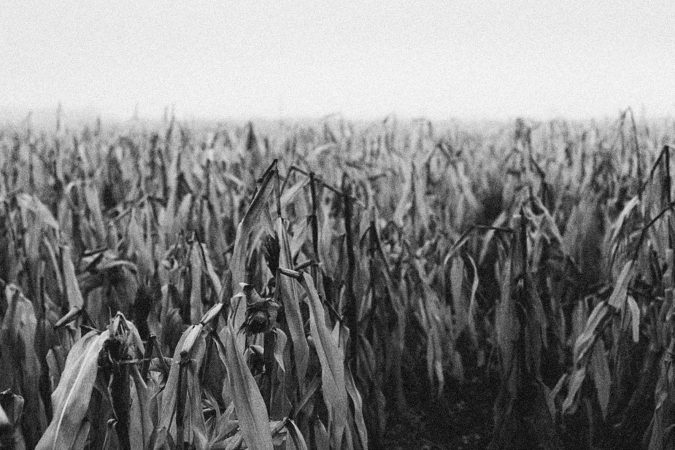
Brazil offers a telling example. Over the past two years, the country absorbed a sequence of heat waves that battered nearly every major commodity it exports. Soy and corn yields slumped in southeastern states. Peanuts, potatoes, sugarcane, and arabica coffee took widespread losses. Pigs in the central-west endured nearly a year of severe heat stress. When a heat dome blocked an incoming cold front, the resulting floods in Rio Grande do Sul disrupted pink shrimp supply chains nationwide.
The response from the country's largest agricultural exporters was swift and specific: investment in heat-tolerant cultivars, expanded crop insurance products, satellite-based forecasting partnerships. What did not arrive at anything like the same scale was protection for the people working in 144-degree heat indexes. Brazilian sugarcane cutters, many of them migrants from the country's northeast, continued working piece-rate contracts that incentivize pushing through the hottest hours of the day. Heat-related deaths in the cane fields have been documented for years. Binding federal standards on outdoor heat exposure still do not exist.
The pattern keeps surfacing in different countries with different crops and the same outcome.
In India's 2022 heatwave, wheat yields fell across more than a third of states, and the government response leaned heavily on procurement adjustments, export controls, and accelerated rollout of climate-resilient seed lines. Meanwhile, the agricultural laborers harvesting that wheat (overwhelmingly informal, overwhelmingly women) worked through wet-bulb temperatures approaching the limits of human tolerance, with no enforceable right to paid rest or shaded recovery. In the U.S. Pacific Northwest's 2021 heat dome, raspberry and blackberry growers received emergency disaster designations and federal crop loss support within weeks. Farmworker Sebastian Francisco Perez collapsed and died moving irrigation lines in an Oregon nursery during the same event. Oregon eventually issued an emergency heat rule. Most states still haven't.
The pattern is consistent. When heat hits a commodity, money and policy move. When heat hits the workforce that produces the commodity, the response lags by years, if it comes at all.
The workers missing from the prescription
This is where conventional framing starts to crack. The diagnosis is sweeping. The prescription is narrow.
By the end of this century, on a high-emissions trajectory, much of South Asia, tropical Sub-Saharan Africa, and parts of Central and South America could face hundreds of days a year too hot to work outside. That's not a forecast about crops. It's a forecast about people.
An International Labour Organization report found that extreme temperatures had put roughly 2.4 billion workers (about 70 percent of the global workforce) at high risk. Those findings prompted UN Secretary-General António Guterres to issue a call to action in the summer of 2024, urging governments to prioritize four things: protecting the most vulnerable, stepping up safeguards for workers, building data-driven resilience, and phasing out fossil fuels.
UN officials estimate that extreme heat kills approximately half a million people annually. This death toll significantly exceeds that from tropical cyclones.
Adaptation recommendations in agricultural policy focus almost entirely on crops, livestock, and ecosystems: earlier or later planting windows, heat-tolerant breeds, expanded irrigation. Direct guidance for the agricultural workforce appears mostly as passing references to worker safety agreements adopted more than a decade ago.
Who profits from the framing
It's worth asking why approaches to heat and food production default to crop genetics and irrigation while leaving worker protections at the margins. Follow the money and the answer comes into focus.
Bayer, the world's largest seed company after its acquisition of Monsanto, reported roughly $27 billion in agricultural revenue in 2023 and has publicly committed to investing about €2.5 billion annually in agricultural R&D, much of it tied to climate-resilient crops and digital farming platforms. Corteva, the next-largest player, spends over $1.2 billion a year on similar R&D. John Deere has poured hundreds of millions into precision-irrigation acquisitions and AI-driven agronomy tools. Climate FieldView, Cropwise, and a half-dozen competing platforms are sold directly to farmers as adaptation infrastructure.
Now compare that to what flows toward the people in the fields. The U.S. Department of Labor's farmworker protection programs operate on budgets in the low hundreds of millions, a rounding error against the agritech investment line. Globally, the ILO's entire occupational safety and health budget is a fraction of what a single seed company spends on a single product launch. There is no Bayer of farmworker shade structures. There is no Corteva of paid heat days.
The reason is structural. Heat-tolerant seeds, climate-smart irrigation, and digital early-warning platforms are products. They have buyers, sellers, and growth curves. Worker protection (shaded rest, paid heat days, hourly wage floors during extreme conditions) is a cost. It lands on the wrong side of the balance sheet for the trading houses that move most of the world's commodities: Cargill, ADM, Bunge, Louis Dreyfus. Those four companies handle an estimated 70 to 90 percent of the global grain trade. None of them set wages or working conditions for the laborers at the bottom of their supply chains. The contracts are with growers. The heat falls on workers the buyer never has to see. That asymmetry shapes which interventions get studied, funded, and recommended. The result is a climate adaptation strategy that treats farmworkers as a constant input rather than a population at acute risk.
What the food system asks of the people inside it
For a magazine audience that thinks about food choices, this is the harder middle layer of the conversation. The carbon footprint of a meal is one variable. The conditions under which it was grown and picked are another. Coffee, chocolate, berries, and out-of-season produce all rely on outdoor labor in regions where heat exposure is becoming more dangerous each year.
This is the part of the food system that's hardest to see from a grocery aisle. As we've previously explored, every system we participate in connects to the same machine. Heat doesn't just shrink yields. It compresses the human time available to produce food at all.
What happens next
The most concrete intervention available right now is also the most overdue: a binding federal heat standard for agricultural workers, with enforceable thresholds for mandatory paid rest, shade, water, and acclimatization periods, applied across supply chains regardless of contractor structure. OSHA proposed exactly this kind of rule in 2024. It has been stalled by industry pressure ever since. California, Oregon, Washington, and Colorado have state-level versions. The rest of the country does not.
The power to move it sits in a small number of places: the federal regulators who can finalize the rule, the lawmakers who can fund its enforcement, and the major buyers — the Cargills and ADMs, the grocery chains, the restaurant groups — who could require equivalent protections from their suppliers tomorrow if they chose to. Readers who want to push on this have an unusually clear target. A public comment process, a procurement standard, a corporate sourcing policy. Not a vague call for awareness.
Meanwhile, the heat keeps arriving. The 2024 Brazilian harvest is already history. The 2026 one is being planted into a climate that no longer resembles the one the seed catalogues were written for. Whether the people doing the planting are protected or quietly written out of the model will shape what the next decade of food looks like, and who pays for it.