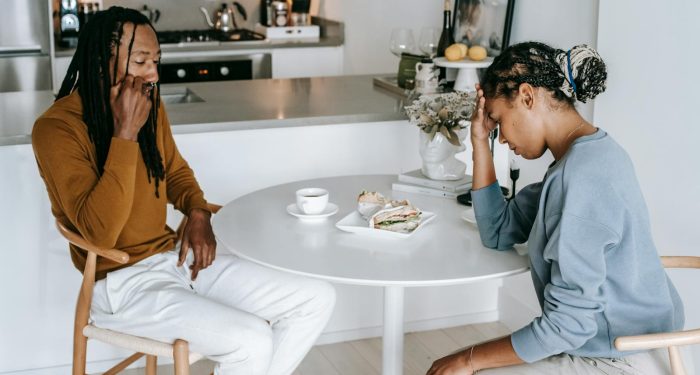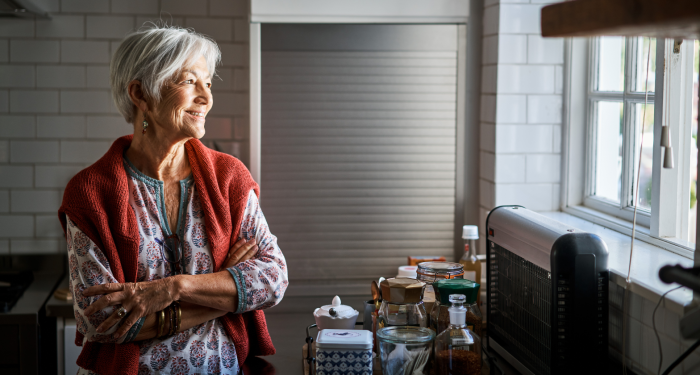
After decades of trying to renovate her husband like a fixer-upper house, one woman discovered the secret that psychology research missed: the strongest marriages aren't built on perfection or agreement, but on the radical choice to stop fixing and start truly seeing the person sleeping beside you.
The renovation project that never ends
When I was young and in my first marriage, I treated my husband like a house that needed updating. Every habit I didn't like was a wall to knock down. Every preference that differed from mine was outdated wallpaper that had to go. I spent six exhausting years with my metaphorical hammer, convinced that if I just tried hard enough, I could transform him into the blueprint I carried in my mind.
Have you ever tried to change someone's fundamental nature? It's like trying to teach a cat to bark. You might get some strange sounds out of them, but you'll never get what you're after, and you'll destroy something essential in the process.
My second husband loaded the dishwasher like someone playing Tetris blindfolded. Every plate faced a different direction. Bowls nested in ways that defied physics. For our first few years together, I'd quietly reload it when he wasn't looking, convinced I was being helpful. One evening, I caught him watching me redo his work, and the look on his face wasn't anger or hurt. It was resignation. The same look I'd worn for years in my first marriage when nothing I did was quite right.
Lian Bloch, Assistant Psychology Professor at Berkeley and Stanford Universities, discovered something fascinating: "When it comes to managing negative emotion during conflict, wives really matter." But here's what I think that research misses: it's not about managing the conflict. It's about choosing which conflicts deserve management and which ones are just noise.
Learning a foreign language
The dishwasher became our Switzerland, neutral territory where we agreed to disagree. But something interesting happened once I stopped correcting his method. I started noticing other things. Like how he always ran it before bed so I'd wake to clean dishes. Like how he'd hand-wash my favorite mug because he knew the dishwasher's heat might crack it.
His language of love wasn't spoken in properly loaded dishes. It was spoken in consideration, in small acts of knowing. When did we decide that love had to look a certain way to count?
My friend keeps a running joke with her husband of thirty years. He brings her flowers every Friday, always carnations, always from the grocery store, always slightly wilted. She hates carnations. She told him this exactly once, twenty-eight years ago. But she also noticed that he buys them because they last longest, because he wants his gesture to endure through the week. So she puts them in water, sets them on the table, and they've become something else entirely: a symbol of his practical love, his desire for permanence, his weekly remembrance of her.
The art of being known
Research examining 100 couples married for over 45 years found that mutual liking, commitment, a sense of humor, and consensus on life goals were crucial for marital stability and satisfaction. But notice what's not on that list? Perfect agreement. Identical habits. Changed personalities.
My husband never learned to close cabinet doors. Twenty-five years, and every morning I'd walk into the kitchen to find them all ajar like open mouths. For the first decade, this felt like disrespect. How hard was it to close a door? By the second decade, it had become something else: evidence of his presence, a signature as unique as handwriting.
The morning after he died, I walked into the kitchen to find every cabinet door closed. I'd done it myself the night before, moving through grief on autopilot. The tidiness felt wrong, like the house had been abandoned. I opened every door and left them that way for a week.
Being known isn't about being agreed with. It's about having someone who recognizes your specific frequency in a room full of noise. My husband knew that when I reorganized the spice rack, I was really organizing my anxiety about our children's life challenges. I knew that when he watched the same war documentary for the fifteenth time, he was really visiting something deeper.
The marriages that actually last
I watch younger couples now with their apps and their optimization strategies, their endless negotiations about emotional labor and mental load. These conversations matter, but sometimes I want to tell them about the quieter truth of long marriage: the person you marry at thirty will not be the person you're married to at sixty. Neither will you be the same person. The question isn't whether you can change each other but whether you can keep recognizing each other through all the changes that life will bring anyway.
Robert Levenson, a psychologist at Berkeley College, noted that "the happiest marriages were those in which women used what the researchers called 'constructive communication' to temper disagreements." But here's what I learned: the most constructive communication sometimes means not communicating your critique at all. It means distinguishing between what needs discussion and what's just the natural friction of two different humans sharing space.
My husband hummed while shaving. Always the same tuneless sound, every morning for twenty-five years. Did it annoy me? Absolutely. Did I ever mention it? Once, maybe twice. Did it matter in the grand scheme of our marriage? Not even slightly. That humming became the sound of an ordinary morning, of another day beginning together. Now my mornings are silent, and I'd give anything to be annoyed by that sound again.
Final thoughts
The wives who hold long marriages together have learned something that can't be taught in premarital counseling or relationship workshops. They've learned that being married to the actual person in your bed is more sustainable than being married to the improved version you're trying to create. They've stopped the exhausting project of reconstruction and started the more interesting work of deep recognition.
This isn't settling. It's not giving up. It's understanding that intimacy grows not from agreement but from the radical act of seeing someone clearly and choosing to stay anyway. It's knowing that the cabinet doors will always be open, the dishwasher will always be loaded wrong, and somehow, against all logic, these flaws become the very things that make your particular love recognizable in a world full of generic advice about how marriage should look.