You can tell a lot about someone by how they act in a restaurant. These seven habits quietly reveal when manners—or morals—are missing.
You can tell a lot about someone by how they behave in a restaurant.
Not just their taste in food or how adventurous their palate is, but their character.
Restaurants are like mini social laboratories. They bring together strangers, service staff, and shared spaces.
How someone navigates that mix often reveals more than words ever could.
When I go out to eat, especially after years of work dinners and client events, I can’t help but notice certain behaviors that hint at something deeper than poor etiquette.
They speak to a lack of respect, empathy, or self-awareness.
Here are seven habits that quietly expose when someone’s manners, or morals, might be missing in action.
1) Talking down to the waitstaff
Let’s start with the most obvious one.
How someone treats the person serving their food says more about them than almost anything else.
You’ve probably seen it before—the exaggerated sigh, the dismissive tone, the failure to make eye contact.
It’s one thing to be assertive if something’s wrong with your order. It’s another to treat a server like they’re beneath you.
I once watched a former colleague snap his fingers at a waiter to get attention.
The entire table went silent. The rest of the night, no amount of polite conversation could erase that sour taste.
It doesn’t matter how expensive the meal is or how much you’re tipping.
If you can’t show basic respect to someone doing their job, it speaks volumes about your character.
2) Leaving a mess behind
We all get it. Things spill, crumbs happen, napkins fall.
But leaving behind a disaster zone of used tissues, spilled drinks, and half-chewed food? That’s just lazy and inconsiderate.
I used to volunteer at a community café that employed young people getting back on their feet.
Cleaning up after guests was part of their work, but some of the messes people left behind were downright disrespectful.
It wasn’t about the physical effort. It was about what it symbolized.
Someone who leaves a chaotic table behind often carries the same “someone else will handle it” mindset into other parts of life.
Taking a moment to tidy up, even just stacking plates neatly or wiping up a spill, shows awareness and gratitude.
It’s a small act with big implications.
3) Being rude or impatient when waiting
No one enjoys waiting. Not for a table, not for food, and definitely not when you’re hungry.
But how someone behaves during that waiting period says a lot about their self-control.
Ever noticed how some people turn a simple delay into a public performance of frustration?
Eye-rolling, loud sighs, passive-aggressive comments like “How hard can it be to make a salad?” All of it reveals a lack of empathy.
In those moments, I always think: if a twenty-minute wait for food triggers this much irritation, how do they handle bigger inconveniences in life?
Patience, especially in shared public spaces, isn’t just a virtue. It’s a sign of emotional maturity.
Life’s full of waiting rooms, literal and metaphorical. The restaurant just happens to be one of them.
4) Treating service staff differently based on their role
Here’s one that’s sneakier but just as revealing.
Some people are perfectly polite to the main server but dismissive toward the busser, the host, or the person refilling their water.
That selective kindness says a lot.
I once watched a couple at a plant-based bistro smile warmly at their waiter but ignore the young busboy clearing the table next to them, as if he were invisible. It was uncomfortable to watch.
When we only extend respect to people we think can benefit us, it’s not kindness. It’s calculation.
True manners are consistent. They don’t depend on someone’s title, income, or ability to influence our dining experience.
5) Criticizing someone else’s food choices
As a vegan, I’ve experienced this one more time than I can count.
I’ve been at dinners where someone raised their eyebrows at my plate of lentil tacos and said, “That looks… interesting,” in a tone that clearly meant “gross.”
But I’ve also seen vegans or vegetarians judge meat-eaters with the same air of superiority. Both sides miss the point.
Food is deeply personal. It’s tied to culture, upbringing, ethics, and health.
Mocking someone’s plate, even in jest, is a small but telling act of disrespect.
You don’t have to share someone’s choices to respect them.
If you can’t sit through a meal without judging what’s on someone else’s plate, you’re showing more about your own insecurities than their menu.
6) Ignoring the people they’re dining with
You’d think that sharing a meal would encourage connection, but so often it’s the opposite.
It’s wild how many people spend dinner scrolling through their phones, barely glancing up as someone’s speaking.
You can feel the energy drain from the table when one person disengages like that.
I’m not against snapping a quick photo of your meal or responding to an urgent message.
But there’s a difference between momentary distraction and chronic disconnection.
When we ignore the people we’re with, especially in favor of a screen, it quietly signals that we don’t value their presence.
That kind of disregard doesn’t just make for bad company. It chips away at the foundation of our relationships.
If you want to show good manners and strong morals, put the phone face down. Be present.
After all, shared meals are one of the oldest and most meaningful ways humans connect.
7) Complaining loudly or creating a scene
We’ve all seen that diner who seems to think their restaurant experience is a one-person show.
They complain loudly about the temperature, the portion size, or the noise level, sometimes to the staff, but often just loudly enough for the entire room to hear.
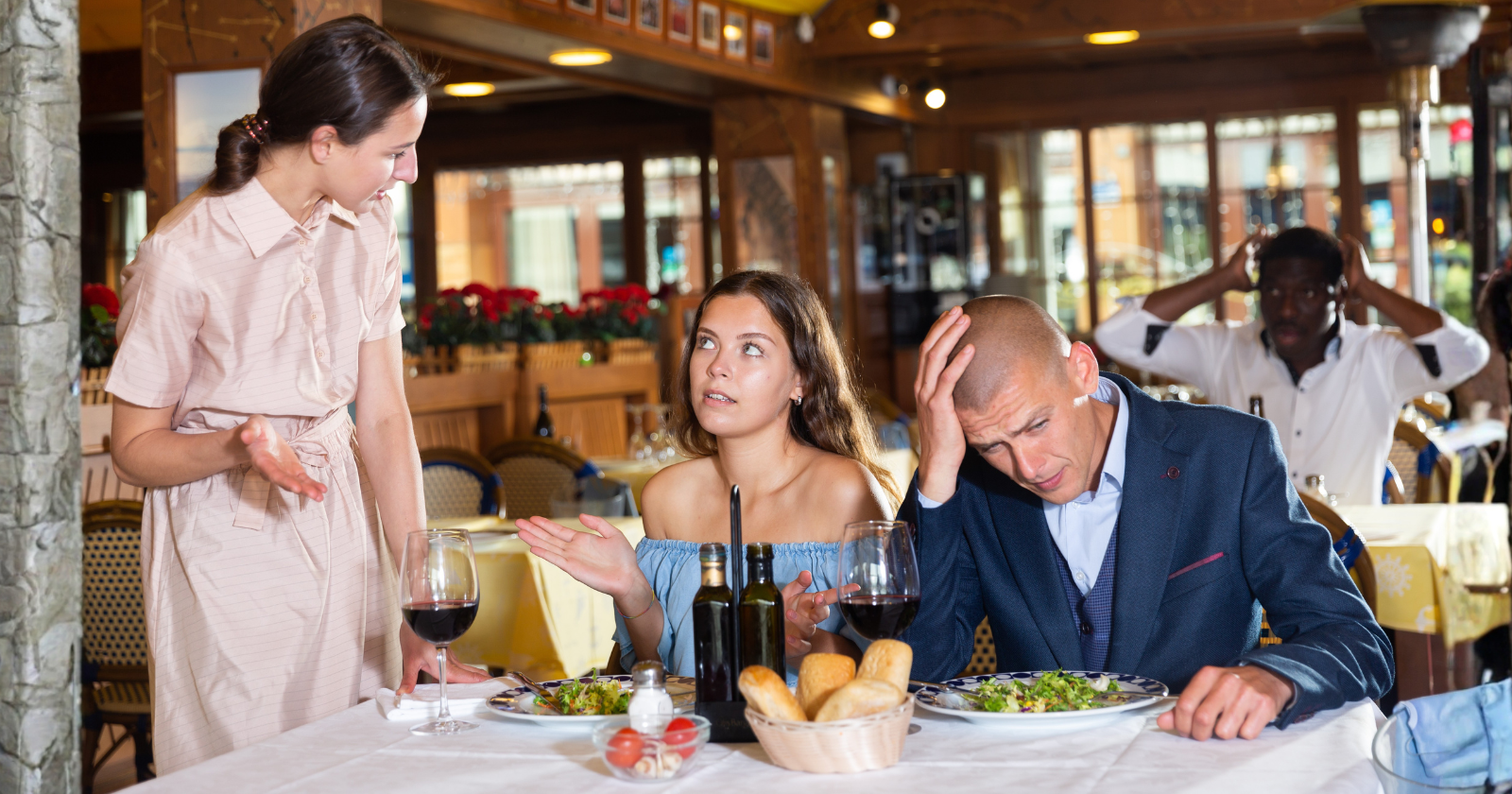
I once had dinner next to a man who berated a server for bringing the wrong kind of bread. He was red in the face, his voice rising, while everyone around him grew quiet.
It wasn’t about bread. It was about control.
People who can’t handle minor inconveniences without making a spectacle often lack empathy and humility.
There’s a way to raise concerns respectfully. But shouting, sarcasm, or public shaming? That’s not asserting your standards. It’s advertising your lack of grace.
A simple “Excuse me, I think there’s been a mix-up” does the job far better than theatrics ever could.
Final thoughts
The way we behave in restaurants reflects something bigger than table manners.
It reveals our empathy, patience, and awareness of others.
Sure, everyone has off days.
But if someone consistently treats dining out like a test of dominance rather than an opportunity for connection, that’s not just poor etiquette.
It’s poor character.
At the end of the day, good manners aren’t about fancy rules or knowing which fork to use.
They’re about respect for the people who serve us, the ones we share meals with, and the spaces we occupy together.
So next time you’re out to eat, look around.
What do your restaurant habits say about you?
What’s Your Plant-Powered Archetype?
Ever wonder what your everyday habits say about your deeper purpose—and how they ripple out to impact the planet?
This 90-second quiz reveals the plant-powered role you’re here to play, and the tiny shift that makes it even more powerful.
12 fun questions. Instant results. Surprisingly accurate.