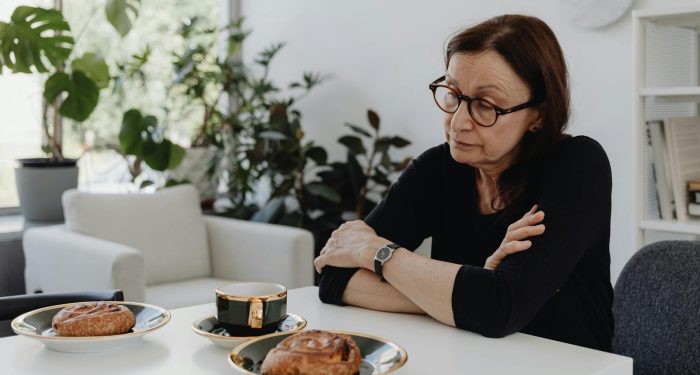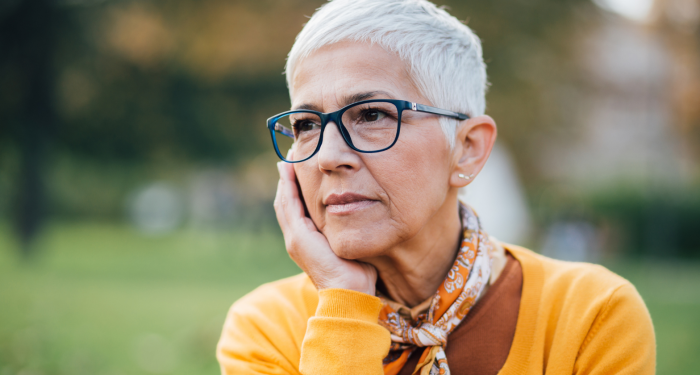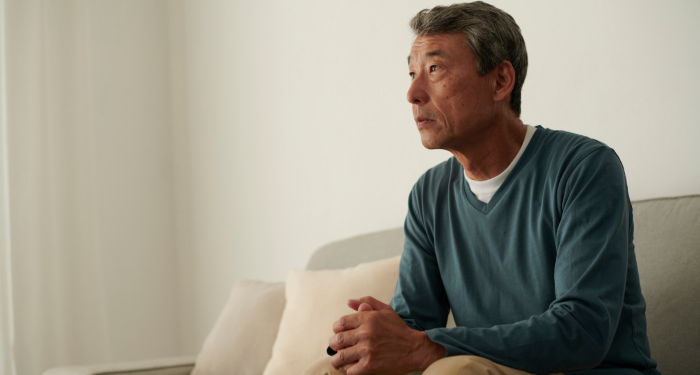
At 30, loneliness feels like a temporary state with endless exits, but at 60, it arrives with a calculator—quietly tallying the remaining years to build the deep friendships that take decades to ripen.
When you're young and lonely, the world feels full of potential connections waiting to happen. You might meet your future best friend at a conference next month, at the gym tomorrow, through a colleague's party this weekend. The horizon stretches endlessly forward, promising countless opportunities to build the relationships that will sustain you.
But here's what research from JAMA Internal Medicine confirms: older adults experience loneliness differently, with unique vulnerabilities tied to functional decline and mortality risks. It's not just a feeling anymore; it's a health factor we must actively manage.
I have perhaps fifteen good years left, maybe twenty if I'm lucky. That's not self-pity; it's simple arithmetic. When I meet someone new at the senior center's watercolor class, I can't help but calculate: if we become friends today, will we have enough time to move past politeness? To develop the shorthand that makes conversation effortless? To build the trust that lets you call at 2 AM when the nights get too long?
These calculations themselves become a form of loneliness that younger people don't carry. At 30, you assume there's time to circle back, to reconnect, to start over. You don't realize that some windows close permanently. The parent friends who disappeared after my divorce never returned. The teaching colleagues I thought I'd stay close to after retirement scattered like leaves. Even with family—my sister and I lost five years to a foolish fight, and though we've forgiven each other, those years are simply gone.
Why making friends at 70 feels like planting trees
"Loneliness is a rapidly growing global health issue," notes psychiatrist Rajesh K. Mehta. But what he doesn't mention is how the strategies for combating it must evolve as we age.
Making a new friend at my age feels like planting a tree you might not see fully grown. You do it anyway, because the alternative—accepting the narrowing without resistance—is its own kind of death. But the process requires a different kind of courage than it did at 30.
Young people can afford to be casual about friendships. They ghost each other, drift apart, assume they'll make new connections next year. We don't have that luxury. Every coffee date with my neighbor is sacred. Every weekly supper with my widow's group is non-negotiable. We show up because we understand that showing up matters more now than it ever did.
The infrastructure for connection is crumbling just when we need it most. Churches closing. Community centers underfunded. Libraries cutting programs. The places where lonely older people might accidentally bump into each other and spark a friendship are disappearing. We have to be more intentional, more persistent, even as our bodies make it harder to get out and engage.
The difference between being alone and feeling lonely
Nina Vasan, a psychiatrist at Stanford, makes an important distinction: "Loneliness is a feeling, while being alone is a situation or state of being, which is not inherently negative."
After 32 years of teaching high school English, raising two children alone, and burying my second husband, I've learned to appreciate solitude. I wake at 5:30 AM to an empty house, and often, the silence feels companionable. I've made peace with my own company. I read, I garden, I write. These aren't consolation prizes; they're genuine pleasures.
But loneliness at this age has a quality that psychologist Tyler Woods captures perfectly: "Loneliness is to our social needs what hunger is to our need for food." The difference is that at 30, you believe you'll always have access to the grocery store. At 70, you know some shelves are already empty and won't be restocked.
What psychology misses about later-life loneliness
Have you ever noticed how studies about aging often focus on decline? Research published in the National Library of Medicine found that loneliness fluctuates across the lifespan, with a notable increase around age 60 before decreasing again around 75. But these studies rarely capture what we actually do with our loneliness—how we transform it, work with it, even find unexpected gifts within it.
My grandmother survived the Depression and still found joy in small things until she died at 89. I survived single motherhood, cancer scares, widowhood. We older lonely people develop skills that don't show up in research papers. We learn to find connection in briefer moments—the grocery clerk who remembers my name, the librarian who saves books for me, the cardinal that visits my feeder every morning at seven.
"Loneliness is more than an uncomfortable feeling—research links it to measurable health risks, including increased likelihood of earlier mortality," warns psychologist Davia Sills. This is true, but it's not the whole story. What the research doesn't always capture is our resilience, our creativity in forging connections despite the obstacles.
The unexpected power of chosen family
Research from the University of New Hampshire found that strong friendships can significantly reduce feelings of isolation in older adults, sometimes even more effectively than family relationships.
My widow's support group has become something I never expected: a chosen family for the final act. We five women don't pretend we're going to become the kind of best friends who've known each other since college. We're clear-eyed about what we're doing—gathering companions for whatever time remains. There's an unspoken urgency to our connection that gives it surprising depth.
When young people talk about their loneliness—and I listen, I really do—I want to tell them: cherish your options. Your wide-open future. Your body that can still travel easily, dance at parties, stay up late making friends. Not because your loneliness matters less, but because you still have time to invest in the slow work of building friendships that will sustain you when the world narrows.
Final thoughts
The loneliness at 60, at 70, isn't sharper than at 30. But it's colored by knowledge younger people are blessed not to have: that time isn't infinite, that windows do close, and that the quiet calculation of remaining years is indeed a lonely arithmetic. Yet knowing this, we still reach out. We still show up at the watercolor class, text our grandchildren even when they don't respond, maintain our weekly coffee dates like they're sacred. Perhaps that's the greatest courage of all—to keep planting trees whose shade we may never fully enjoy, to keep building connections when the timeline has shortened, to find meaning in the moment because the moment is what we have.
What’s Your Plant-Powered Archetype?
Ever wonder what your everyday habits say about your deeper purpose—and how they ripple out to impact the planet?
This 90-second quiz reveals the plant-powered role you’re here to play, and the tiny shift that makes it even more powerful.
12 fun questions. Instant results. Surprisingly accurate.