The grocery store cashier doesn't know you're counting, and that's the whole point.

Add VegOut to your Google News feed. 
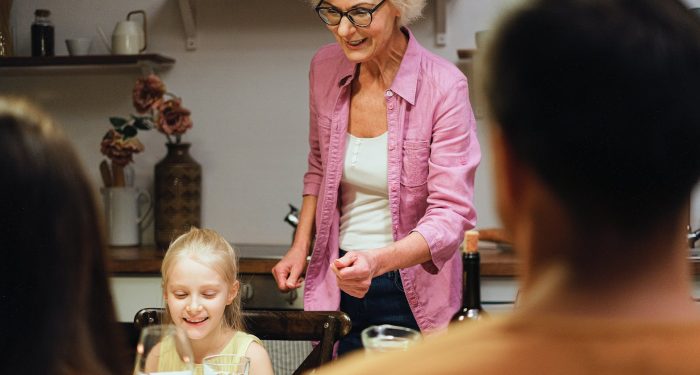
A hand reaches for the name-brand pasta sauce, then pulls back and picks up the store brand instead. A coat gets returned to the rack after a long pause. A dinner invitation gets declined with "I'm just not up for it tonight." These moments look like preference. They look like a woman who knows what she wants and what she doesn't. And that's precisely what makes financial decline in old age so invisible: it wears the costume of personal choice.
I've been thinking about this for months, ever since I caught myself telling my daughter I "just didn't feel like" going to the new Mediterranean place she wanted to try. The truth was that I'd looked at the menu online, done the math, and felt my chest tighten. Thirty-two dollars for an entrée. Fourteen dollars for a glass of wine. I could eat at home for a week on what that dinner would cost. So I said I wasn't in the mood. She said okay. And life moved on, a little quieter than before.
The Slow Architecture of Withdrawal
When I was teaching high school English, I used to tell my students that the best lies contain a kernel of truth. That's what poverty in old age does. It builds its architecture out of half-truths. You are tired. You do prefer staying in some nights. You have lost your taste for crowded restaurants. But those true things become cover for the thing you can't say: I am watching every dollar, and the watching has changed the shape of my life.
My mother understood this language fluently. She was a teacher married to a mailman, and our household ran on what I now recognize as controlled economic terror. She'd put back a box of cereal at the checkout with a little shrug, as if she'd just remembered we had some at home. She'd say "we don't need that" with such calm authority that I believed it was philosophy rather than arithmetic. I was well into my forties before I understood that "we don't need that" had been code, a translation of scarcity into the syntax of contentment.
I inherited that language. I speak it without thinking. And now, in my seventies, I hear myself using it more often than I'd like to admit.
How Constraint Becomes Identity
There's a psychological mechanism at work here that goes beyond simple embarrassment. Psychological research suggests how people who face repeated limitations gradually internalize those limitations as part of who they are. Studies on learned helplessness focus on students in classrooms, but the principle scales. When you can't afford something enough times, you stop wanting it. The constraint becomes preference. The cage becomes the room you chose.
I've watched this happen to myself with driving after dark. My eyesight isn't what it was, true. But the deeper truth is that evening events cost money: the dinner, the show, the gas, the parking. When I stopped going out at night, I told myself it was about safety. And it partially was. But the financial relief I felt confirmed what I didn't want to name. I wasn't choosing rest. I was choosing the version of my life I could afford.
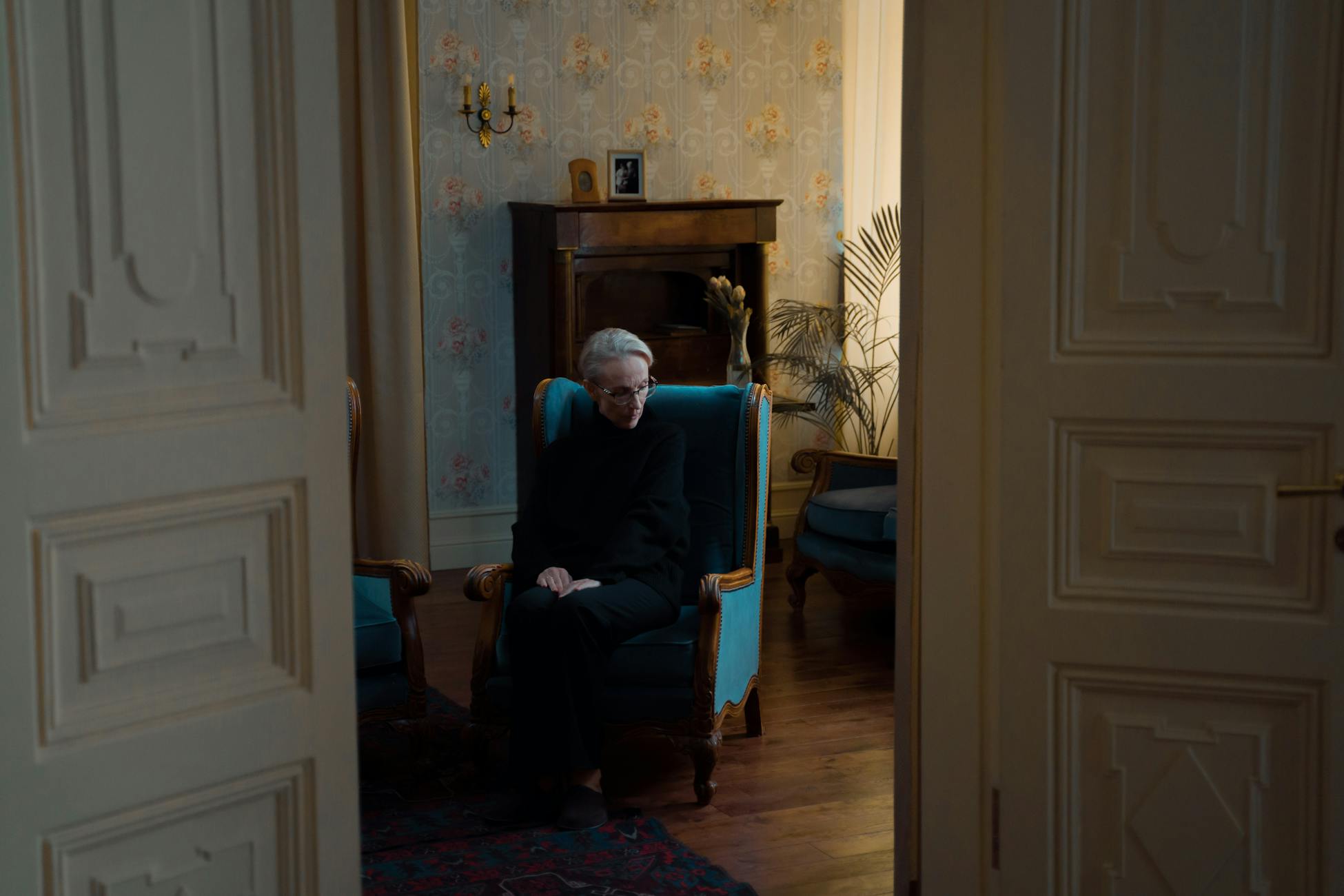
Studies suggest that financial scarcity doesn't just limit options, it actively occupies mental bandwidth. The brain, perpetually running calculations about money, has less capacity for everything else. I recognize this in the way I can spend twenty minutes deciding whether to buy a $7 bag of almonds. The decision isn't about almonds. The decision is about the running tally in my head that never stops, the quiet arithmetic that takes up residence in every pause.
The Social Consequences Nobody Mentions
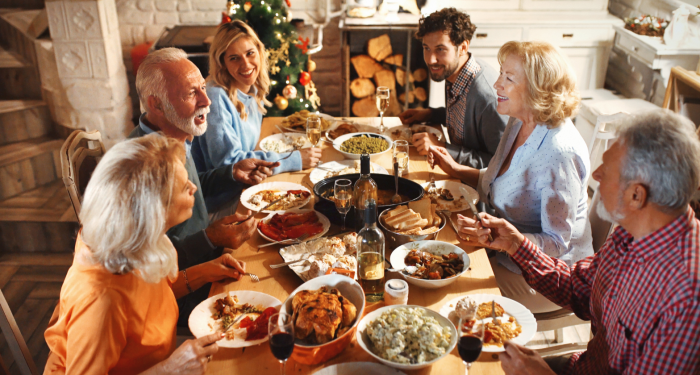
Here's where it compounds. When you stop saying yes to things, people adjust. They stop asking. They don't do it cruelly. They do it out of what they believe is respect. "Mom likes her quiet evenings." "She's a homebody." "She prefers her own cooking." A narrative forms around your absence, and the narrative is generous, which makes it almost impossible to correct.
My neighbor and I have had coffee together every Thursday morning for fifteen years. A few months ago, she mentioned a weekend trip she'd planned with two other women from our area. She hadn't invited me. When I asked about it (lightly, casually, the way you ask about things that hurt), she said she figured I wouldn't want to go. "You've been keeping to yourself lately," she said. "I didn't want to pressure you."
She was being kind. And she was wrong. I would have loved to go. But I'd spent so many months performing contentment with my reduced life that the performance had become the only version of me people could see. There's a broader pattern that many have explored: people over 60 often describe feeling invisible in ways that feel concrete, not abstract. The invisibility doesn't arrive all at once. It accumulates, one declined invitation at a time.
Studies on healthy aging and social psychiatry suggest that social engagement is important for mental health in older populations. Progressive disengagement, the slow pulling-back from community and connection, appears to carry psychological and physical consequences. But when that disengagement looks voluntary, when it looks like a woman who simply prefers her garden to a dinner party, who's going to intervene?
The Pride That Keeps You Quiet
I was raised by people who would rather skip a meal than ask for help. My father carried mail for thirty years and knew everyone in town by name, and he would have walked into traffic before admitting we were struggling. That pride was his armor. It was also his prison. And I wear the same armor, lighter maybe, but made of the same material.
After my second husband died, I spent seven years of our marriage managing his Parkinson's care, and the financial aftermath was something I wasn't prepared for. The savings had been spent. The insurance had gaps. My teacher's pension covered the basics but not the life I'd been living. The adjustment happened so gradually that I barely noticed it at first. One subscription cancelled. One fewer Christmas gift per grandchild. The good cheese replaced by the acceptable cheese. Each change was so small that it felt manageable in isolation. Together, they amounted to a different life.
I remember the moment I realized I'd stopped buying flowers for the kitchen table. I used to buy a small bouquet every week, five or six dollars. A tiny indulgence that made the room feel alive. When I stopped, I told myself I'd lost interest. Months later, standing in the grocery store floral section, I understood that I hadn't lost interest. I'd lost permission. Somewhere in the math of my monthly budget, flowers had become a line item I couldn't justify, and rather than feel that loss, I'd simply revised my preferences.
That revision is the thing nobody warns you about. Poverty in old age doesn't announce itself. It edits you.
I went pretty deep on this tension in a video about the true cost of chasing wealth—how we convince ourselves we're choosing ambition when we might actually be running from a different kind of trap, one where "voluntary" decisions about money end up costing us everything that isn't measurable.
What I Wish I Could Say Out Loud
I went through therapy in my fifties for people-pleasing, and one of the things my therapist said has stayed with me: "You've gotten so good at anticipating what other people need that you've forgotten you're allowed to need things too." I think about that now in a different context. I've gotten so good at making my constraints look like choices that I've almost convinced myself.
Almost. Not quite.
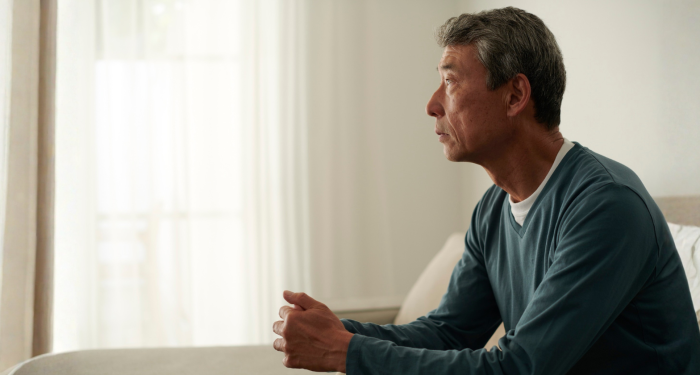
Because at 2 a.m., when I'm checking my bank balance for the third time that day (a compulsion I've carried since childhood, though the numbers are different now), I know the difference between choosing and managing. I know that the woman my children see, the contented grandmother with her piano practice and her meditation and her quiet evenings, is both real and incomplete. I am content, sometimes. I am also counting, always.
The piano, incidentally, was free. The church down the road was giving away an old upright, and I had it moved to my living room for the cost of two men and a truck. I started learning at sixty-seven. I can play "Clair de Lune" now, badly but recognizably, and it costs me nothing but time. I mention this because I want to be honest about the texture of this life. There is beauty in it. There is genuine pleasure. The beauty and the constraint exist simultaneously, and I'm tired of pretending one cancels out the other.
The Quiet Request
If you have a parent or an older friend who has gradually pulled back from social life, who seems to prefer staying home, who has developed a sudden enthusiasm for simplicity, I'd ask you to look more carefully. Not with suspicion. With curiosity. Ask them to dinner and offer to pay, casually, as if it's a celebration rather than a rescue. Invite them to the free things: the walk, the library reading, the afternoon on your porch. Make the invitation specific and easy. And if they say no, ask again next month. Because the withdrawal that looks like preference might be performance, the kind that gets more convincing with practice until even the performer starts to believe it.
My mother died believing she preferred the store-brand cereal. I catch myself reaching for it sometimes, out of habit or inheritance or the particular stubbornness of women who learned early that wanting things is expensive. I'm trying, at seventy-something, to notice when I do it. To pause at the shelf and ask myself: is this what I want, or is this what I can afford? The answer, more often than I'd like, is both. And the both is the part that nobody talks about, the way financial limitation and genuine acceptance can occupy the same breath, the same hand reaching for the same box, the same quiet evening that is both peaceful and too empty, all at once.