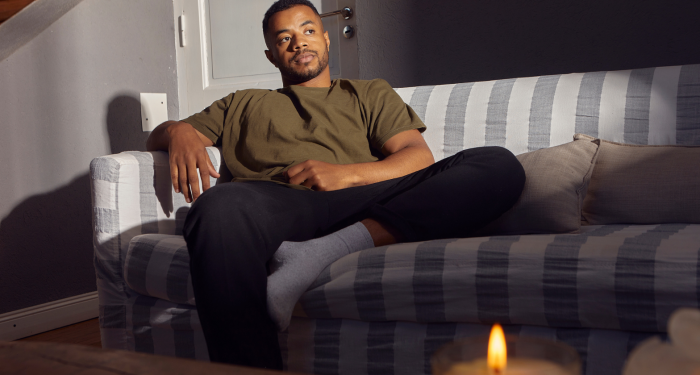
The pity was never about my life — it was about theirs, and they needed me to be the cautionary tale so they didn't have to examine what they'd settled for.

Add VegOut to your Google News feed. 
Add VegOut to your Google News feed.
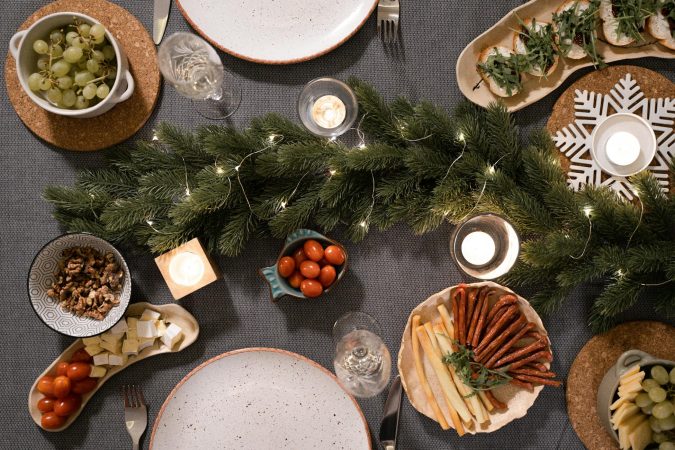
Last Saturday night, I sat at a long table at a friend's place in Singapore — string lights, good wine, a plant-based spread that someone had clearly labored over — and I watched it happen again.
The woman across from me tilted her head, placed her hand on my forearm, and said, with that particular softness people reserve for hospital visits and funerals, "You know, I really admire you. I don't think I could do it. Being alone, I mean."
Her husband was three seats away, scrolling his phone under the table. He hadn't looked at her once all evening.
I sat with this tension for a long time before I actually wrote about it — that I've been deliberately single for most of my adult life, not because I'm broken or waiting for the right person, but because for long stretches this is genuinely what I've chosen. That admission felt like the first time I stopped defending my choice and just owned it.
I smiled. I said something gracious. I've had fifteen years of practice at this point.
But here's what I wanted to say: I'm not the one at this table who's alone.
The Mythology of the Sad Single Person
There's a story our culture tells about people who stay single past a certain age — especially once you're into your forties. The story goes like this: something went wrong. You were too picky. Too career-obsessed. Too intimidating, too noncommittal, too something.
The story never includes the possibility that you simply... chose this. That you looked at the available options and decided your own company was better than a mediocre compromise.
I've been the single one at dinner parties, holiday gatherings, weddings, and weekend brunches for the better part of fifteen years — across three countries, from Sydney to London to Singapore. And I won't pretend there haven't been lonely nights — of course there have. Loneliness visits everyone, partnered or not.
But the hardest part of being single in a couples-oriented world was never the loneliness itself.
It was the pity.
It was sitting across from people in marriages they openly complained about — on the drive over, during appetizers, in hushed kitchen conversations — and having them look at me like I was the one who needed saving.
What Pity Actually Reveals
I've thought about this for years — it's the kind of thing you turn over endlessly when your work involves psychology and human behavior the way mine does — and I've come to believe that pity, especially unsolicited pity directed at someone who hasn't asked for it, is almost never about the person receiving it.
It's a projection. A way of organizing the world so that your own choices feel validated.
Psychology has a name for this. Research by Leon Festinger on social comparison theory established decades ago that people evaluate their own lives by comparing themselves to others — and that these comparisons aren't neutral. We need certain people to be worse off so we can feel okay about where we've landed.
It's not cruelty, exactly. It's architecture. We build our sense of self on the scaffolding of other people's perceived failures.
So when a woman in an unhappy marriage looks at me with that gentle, pitying tilt, she's not really seeing me. She's reinforcing a narrative she needs to survive her own situation: At least he's alone. At least someone chose me. At least I have this, even if this isn't what I wanted.
I understand it. I have compassion for it. But I refuse to perform suffering I don't feel so someone else's bargain looks like a better deal.
The Couples' Table and Its Unspoken Hierarchy
You know that feeling when you walk into a dinner party and everyone is seated in pairs, and there's one odd chair — slightly offset, maybe at the corner — and it's yours?
The seating arrangement alone tells a story. Couples are the default unit. The single person is the remainder. The thing left over after the math is done.
I stopped counting the times someone tried to set me up at these gatherings. A colleague's recently divorced friend. Someone's sister who "also likes travel." As if the primary qualification for my romantic life was simply being another unattached person, the way you'd match spare socks from a laundry pile.
But what struck me more than the matchmaking was the surveillance. People watched me at these events — not obviously, but consistently. Were my eyes lingering too long on someone else's wife? Did I look sad during the toast? Was I drinking too much, or not enough?
The single person at a couples' dinner is a mirror nobody asked for, reflecting back the question everyone is trying not to ask: Am I actually happy, or have I just been doing this for so long that I forgot to check?
We've written before about how the loneliest people aren't necessarily alone — they're surrounded by people who love a version of them that doesn't actually exist. I think that's what I was seeing at those tables for years. Not happy couples. Not miserable couples, either. But people performing partnership while the real texture of their connection had worn thin years ago — and needing my singleness to be tragic so their thinness still looked like something.
The Freedom Nobody Wants to Hear About
Here's the thing nobody at those dinner parties ever asked me: What's your life actually like?
Because if they had, I would have told them.
I would have told them about Sunday mornings that belong entirely to me — the slow coffee, the book I don't have to put down, the walk through the hawker centres at whatever pace I want. I would have told them about the trip to Portugal I booked on a Tuesday afternoon because no one else's schedule needed consulting.
About the career risks I took — co-founding Ideapod, building media platforms from scratch, relocating to Singapore — because I didn't have a partner's anxiety to manage alongside my own. About the friendships — deep, sustaining, chosen-family friendships scattered across time zones — that became possible because I had the emotional bandwidth that doesn't exist when you're managing a household's worth of someone else's feelings.
I would have told them that I actually liked my life. Not in a defensive, protesting-too-much way. In a real way. In a way that research by Yuthika Girme and colleagues on relationship satisfaction actually supports — their work found that single individuals who actively chose their relationship status reported well-being levels comparable to or exceeding those in satisfying partnerships.
The key word being chose.
But I learned early that saying "I'm happy alone" at a dinner party full of couples is treated the way atheism is treated at a church picnic. You're not just making a personal statement. You're threatening the entire organizing principle of the room.
What I Saw That They Didn't Know I Was Seeing
Years of being the observant single person at coupled gatherings gives you a very specific education. You become a student of other people's marriages — not because you're nosy, but because you're the only one at the table without a role to play in the performance.
I saw the wife who laughed at her husband's joke a half-second too late, her timing betraying a weariness so practiced it almost passed for delight.
I saw the husband who refilled everyone's glass but his wife's — not out of malice, out of forgetting she was there.
I saw couples who hadn't made eye contact all evening suddenly put their arms around each other for a group photo, performing closeness for the camera before returning to their separate orbits.
I saw people who had mentally left the marriage years ago but stayed because leaving would mean admitting the investment hadn't paid off.
I saw people who were genuinely happy — those exist too, and I never resented them. What I resented was the assumption that their happiness and my happiness couldn't coexist. That one of us had to be the cautionary tale.
The Pity Industrial Complex
A 2019 study published in the Journal of Social and Personal Relationships found that single people face consistent stigmatization — what the researchers called "singlism" — and that this bias operates so deeply that even single people sometimes internalize it, believing something must be deficient about themselves.
The bias is structural. It's baked into tax codes, insurance policies, social invitations, and the way a host counts chairs.
But what the research confirmed for me was something I'd felt in my body for years: the pity isn't a response to my reality. It's a cultural reflex. People don't pity me because they've assessed my life and found it wanting. They pity me because they've been taught that a life without a partner is, by definition, incomplete — the way people used to believe a woman without children was somehow unfinished, or a man without a family was somehow suspect.
The thing is, I've watched the people who pitied me the most. And many of them — not all, but many — were the ones most trapped. The ones who'd stopped voicing their preferences so long ago that they'd genuinely forgotten what they wanted. The ones whose identities had merged so completely with "husband" or "wife" that the idea of dining alone felt like a small death rather than a small freedom.
I don't say this with superiority. I say it with recognition. I could have been any of them. I almost was, a few times. I came close to settling — not out of love, but out of exhaustion with the pity, the odd chair, the gentle hand on my forearm.
What I Know Now
At forty-four, I've stopped needing anyone at the dinner table to understand. That's its own kind of freedom — the one that comes when you stop curating yourself for other people's comfort.
I know that my life has shape and texture and meaning. I know that the loneliness I've felt — real, genuine loneliness, the kind that arrives at 2 AM on a Wednesday for no reason — is not fundamentally different from the loneliness married people describe when they finally feel safe enough to be honest.
Loneliness isn't a housing situation. It's a human condition. It visits everyone. The only question is whether you're allowed to name it or whether you have to pretend it's impossible because someone's sleeping next to you.
I know that the pity was never really about me. It was about the terror of examining one's own choices too closely. I was the screen onto which other people projected the fear they couldn't face: What if I stayed in this not because it was right, but because I was afraid to be where he is?
And I know — with the deep certainty that only comes from years of paying attention and writing about human behavior for a living — that a life chosen deliberately, even when it doesn't match the expected template, is not a life that needs saving.
Next Saturday, I'll probably be at another dinner party. I'll probably sit in the odd chair. Someone will probably touch my arm and tell me how brave I am, as if eating a meal without a plus-one requires courage.
And I'll smile. I'll say something gracious.
But this time, I won't wonder if they're right about me. I'll wonder if they've ever asked themselves the question they keep trying to answer by looking at my life.
If You Were a Healing Herb, Which Would You Be?
Each herb holds a unique kind of magic — soothing, awakening, grounding, or clarifying.
This 9-question quiz reveals the healing plant that mirrors your energy right now and what it says about your natural rhythm.
✨ Instant results. Deeply insightful.

Justin Brown
Justin Brown is a writer and entrepreneur based in Singapore. He explores the intersection of conscious living, personal growth, and modern culture, with a focus on finding meaning in a fast-changing world. When he’s not writing, he’s off-grid in his Land Rover or deep in conversation about purpose, power, and the art of reinvention.
More Articles by Justin