While society whispers about lonely souls dining solo, psychology reveals these comfortable loners have achieved what most spend lifetimes avoiding: the rare ability to transform solitude from a feared enemy into a trusted companion.
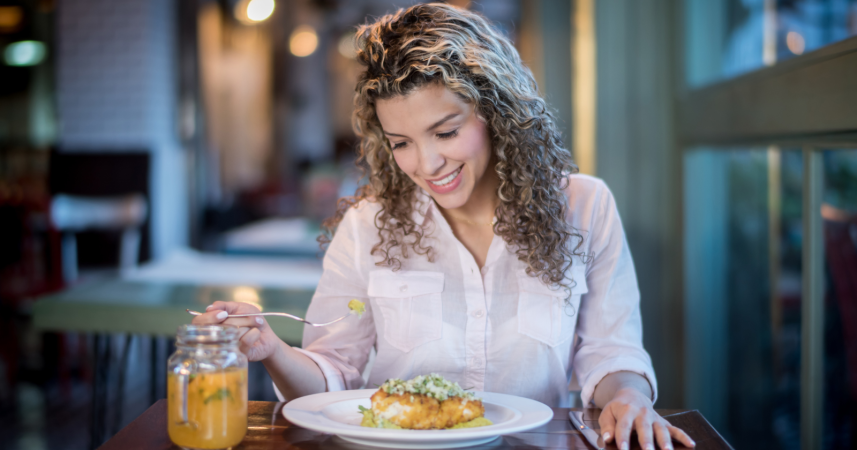
Picture this: you're sitting alone at your favorite café, savoring a meal in peaceful silence while scrolling through an article or simply watching the world go by. Around you, other diners chat animatedly in groups, yet you feel perfectly content in your own company.
If this sounds familiar, you might have noticed the occasional sideways glance or heard the whispered assumptions that you must be lonely or antisocial. But here's what most people don't understand: your solo dining isn't a symptom of isolation. It's actually a sign of something much more profound.
You've mastered what many people spend their entire lives running from: the art of being alone without feeling lonely.
The misunderstood art of solitary dining
There's something almost rebellious about eating alone in public, isn't there? Gina Barreca, Ph.D., Board of Trustees Distinguished Professor at UConn, puts it brilliantly: "A woman at a table by herself is the stuff of whispers and gossip. A man at a table by himself is the stuff of mystery and intrigue."
But regardless of gender, the reality is that choosing to dine alone speaks to a deeper psychological strength that most people haven't developed.
I learned this firsthand during my time in Vietnam, where the café culture completely shifted my perspective. There, I'd watch locals sit alone for hours with their strong black coffee, not rushing, not scrolling endlessly on their phones, just being present. They weren't lonely. They were connected to something deeper: themselves.
This experience taught me that solitary meals aren't about avoiding others. They're about creating space for self-connection in a world that rarely gives us permission to do so.
Why solitude terrifies most people
Let's be honest: how many people do you know who can't stand being alone with their thoughts for even five minutes? The moment they're by themselves, out comes the phone, on goes the TV, or they immediately text someone to make plans.
Hara Estroff Marano, psychologist and author, notes that "In a world of constant connectivity, the idea of being alone often carries a negative undertone." We've been conditioned to believe that being alone equals being lonely, that solitude is something to be fixed rather than embraced.
But here's where it gets interesting: those who eat alone comfortably have broken free from this conditioning. They've discovered that solitude isn't emptiness. It's fullness of a different kind.
Think about it. When you're constantly surrounded by others, when do you actually process your thoughts? When do you check in with yourself about what you really want, feel, or need?
The psychology of comfortable solitude
The ability to enjoy eating alone reveals something fascinating about your psychological makeup. You've developed what psychologists call "emotional self-sufficiency" — the capacity to regulate your emotions and find contentment without constant external validation.
Recent research backs this up. A study involving 695 adults aged 70-75 in Sweden found that while eating alone was associated with loneliness for some, this wasn't universal. The key difference? How people experienced their solitude. Those who chose it and embraced it showed different psychological patterns than those who felt forced into it.
In my book, "Hidden Secrets of Buddhism: How To Live With Maximum Impact and Minimum Ego," I explore how Buddhist philosophy has long celebrated this distinction. Solitude isn't isolation; it's an opportunity for self-discovery. When you can sit with yourself without discomfort, you've achieved something remarkable: you've become your own best companion.
Breaking free from social eating pressure
We need to talk about the pressure to always eat with others. It's everywhere, from family dinners to business lunches to weekend brunches. Don't get me wrong — shared meals can be beautiful. But when eating alone becomes something to avoid at all costs, we've got a problem.
Davia Sills, psychologist and author, reminds us that "People have different energy flows based on their personality." Some of us recharge through social interaction, while others need solitude to restore their energy. Neither is wrong. Both are necessary.
I've noticed in my own life that my morning writing sessions, fueled by strong black coffee in complete silence, are when I produce my best work. No distractions, no performances, no energy spent on social dynamics. Just me, my thoughts, and the blank page.
Could I write in a bustling café surrounded by friends? Sure. But would the quality be the same? Definitely not.
The inner strength connection
Here's what fascinates me most: people who comfortably eat alone have usually done the inner work that others avoid. They've faced their thoughts, processed their emotions, and developed a relationship with themselves that doesn't require constant external input.
Maggie Smith, poet and New York Times bestselling author, captures this perfectly: "Solitude is a state of being, distinct from social connection, that facilitates a connection to self."
This connection to self is what creates inner strength. When you know who you are without the mirror of others' reactions, you develop an unshakeable foundation. You're not swayed by every opinion, trend, or social pressure because you've cultivated your own inner compass.
Think about the most confident people you know. Chances are, they're perfectly comfortable being alone. They don't need constant reassurance or validation because they've learned to provide it for themselves.
Transforming loneliness into solitude
Now, I'm not suggesting everyone should eat every meal alone or become a hermit. That's missing the point entirely. The magic happens when you can choose solitude without feeling lonely, when being alone becomes a choice rather than a punishment.
A cross-sectional study of 1,011 Japanese adults found that eating alone was associated with psychological distress for some, but this connection was heavily influenced by nutrient intake and dietary habits. In other words, how you eat alone matters as much as the act itself.
When you treat solo meals as opportunities for mindfulness, self-care, and reflection rather than something to endure, everything changes. You start to notice flavors more intensely, thoughts become clearer, and that constant mental chatter finally quiets down.
In my meditation practice, I've learned that the same principle applies. Sometimes five minutes of focused solitude does more for my mental state than hours of distracted social time. Quality over quantity, always.
Final words
If you're someone who eats alone without feeling lonely, celebrate it. You've achieved something that many people struggle with their entire lives: the ability to be your own companion.
For those still uncomfortable with solitude, start small. Have coffee alone at your kitchen table without your phone. Take yourself out for lunch once a month. Sit with the discomfort until it transforms into comfort.
Remember, being alone and being lonely are entirely different experiences. One is a physical state; the other is an emotional one. When you master the difference, you unlock a superpower that most people never develop: the ability to find peace within yourself, regardless of who's around you.
The next time someone gives you a pitying look for dining solo, smile knowing what they don't: you're not antisocial or lonely. You've simply discovered that the best company you can have is often your own. And in a world that fears silence and solitude, that makes you remarkably strong.