While countless people chase youth through expensive creams and procedures, those who seem to glow well into their 70s and 80s have discovered something far more powerful—they've mastered the art of setting down invisible burdens that most of us don't even realize we're carrying.
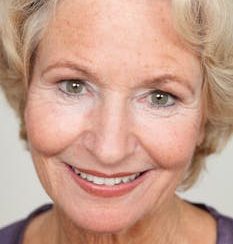
At my neighbor's 75th birthday party last month, I watched two women of similar age sit side by side, and the contrast struck me like lightning. One radiated a warmth that drew people in, her laughter genuine and eyes bright despite the lines mapping her face. The other, though younger and arguably more "preserved," seemed to carry an invisible burden that showed in her rigid posture and the tightness around her mouth. What separated them wasn't genetics or skincare routines. It was something far more profound.
The difference was written all over them, and neither one knew it.
The invisible burden that shows on every face
Have you ever noticed how some people seem to age overnight after a difficult period, while others emerge from tragedy somehow more luminous? A M Kligman, M.D., dermatologist and researcher, notes that "Appearance counts heavily in human affairs. The good-looking have many advantages. These benefits also extend to old age." But what Kligman's observation doesn't fully capture is that true beauty in aging isn't about maintaining youth. It's about releasing the emotional weights that etch themselves deeper than any wrinkle.
I learned this lesson the hard way. After my divorce at 28, I carried shame like a second skin. Every mirror showed not just my face but my failure. Friends would comment that I looked tired, stressed, older. It wasn't until I finally forgave myself — truly released that burden — that people began saying I looked different, lighter somehow. The lines were still there, but the weight behind them had lifted.
Why we hold on when letting go would free us
Jim Taylor, Ph.D., psychologist and author, explains that "Emotional baggage may have served a protective purpose in your childhood." This insight revolutionized how I understood my own tendencies. The perfectionism that once kept me safe as a child of critical parents became the very thing aging me as an adult. The hypervigilance that helped me navigate a volatile household turned into chronic anxiety that showed in my furrowed brow and tense shoulders.
What protective mechanisms are you still carrying that no longer serve you? I remember asking myself this question in my 50s, sitting in my therapist's office, realizing I was still trying to earn my late father's approval. The day I released that impossible goal, three people independently told me I looked years younger. No new moisturizer, no cosmetic procedure. Just the simple act of putting down a weight I'd carried for decades.
The surprising link between emotional weight and physical appearance
Research from a fascinating study demonstrated that psychosocial resources like optimism, self-esteem, and relationship satisfaction are indirectly associated with a younger facial appearance in men, emphasizing the link between emotional well-being and aging appearance. While this particular study focused on men, anyone who has released a long-held resentment knows this truth applies universally.
I think of my friend Margaret, who spent years caring for a mother who never acknowledged her sacrifices. The bitterness carved itself into her features until, at 68, she finally accepted what would never change. Within months of releasing that expectation, she literally looked transformed. Same woman, same challenges, but without the crushing weight of waiting for recognition that would never come.
How our bodies keep score of what we refuse to release
Rose Pastore, a Psychology Today writer, observes that "Your personality influences many life experiences. Now comes word that it might be making you fat...then thin, then fat again." This connection between our emotional state and physical manifestation extends far beyond weight. Every grudge we nurse, every shame we harbor, every fear we feed. They all take up residence in our bodies, showing in our posture, our expression, our very presence. During my years teaching high school, I watched this play out repeatedly. The teachers who carried home every slight from administrators, every difficult parent interaction, every budget cut as a personal affront, aged before our eyes. Meanwhile, those who learned to leave work at work, who chose their battles carefully, who released what they couldn't control, maintained a vitality that had nothing to do with their chronological age. I watched one colleague, a brilliant English teacher, grow visibly smaller under the weight of grievances she refused to set down. Another, who taught across the hall from her for twenty years and faced the same indignities, somehow kept her light. The difference wasn't circumstance. It was what each of them agreed to carry home at the end of the day.
The daily practice of choosing what to keep
Recent research from China found that older adults' psychological well-being is influenced by factors such as marital status, education, income, and physical activity, suggesting that emotional health plays a role in aging appearance. But here's what the studies don't always capture: it's not just about having these resources, but about how we relate to them emotionally.
After retiring from teaching, I could have focused on the loss of identity, the reduced income, the absence of daily purpose. Instead, I chose to see it as freedom to explore, to write, to mentor differently. That choice, repeated daily, makes all the difference between wearing your years as a burden or as a badge of experience.
When holding on becomes heavier than letting go
There's a moment in everyone's life when the weight of carrying old hurts becomes heavier than the fear of releasing them. For me, it came during my second husband's illness. I realized I was using so much energy maintaining old resentments, toward my sister for her absence, toward former colleagues who'd disappointed me, that I had nothing left for the present moment.
Vanessa Lancaster, Ph.D., psychologist and researcher, writes that "Body image is constructed slowly over time and is dependent on the responses we receive from our culture, subcultures, and life histories." But what Lancaster's work also suggests is that we can reconstruct this image by changing our internal responses, by choosing which cultural messages to internalize and which to release.
The unexpected gifts of release
What nobody tells you about letting go is how much energy it frees up. All those years I spent managing my anger at my first husband, carefully maintaining my position as the wronged party. What a waste. When I finally released it, not for him but for me, I discovered reserves of creativity I didn't know existed. I started writing, really writing, not just grading papers. I took up watercolor at 66. I learned to laugh at my mistakes instead of cataloging them as evidence of inadequacy.
Studies show that positive personal views of aging and psychological resilience are associated with higher quality of life in midlife and older adults, highlighting the impact of emotional factors on aging. But "positive views" doesn't mean denial or forced optimism. It means accepting what is while releasing what was supposed to be.
Recognizing the weights we don't know we're carrying
Sometimes the heaviest burdens are the ones we've carried so long we've forgotten they're there. The belief that we're not enough, inherited from a critical parent. The fear of being seen as weak, absorbed from a culture that prizes invulnerability. The shame of not meeting impossible standards we never chose.
I discovered one of mine accidentally, during a conversation with my daughter. She mentioned how I always apologized for taking up space, in restaurants, in conversations, in my own life. I hadn't even noticed I was doing it, this constant shrinking, this perpetual apology for existing. Releasing that unconscious burden took conscious practice, but the freedom on the other side was worth every uncomfortable moment of taking up my rightful space.
The courage to age authentically
Jennifer Lea Austin writes that "Aging is inevitable, and the lure of youth can be appealing as people age." But what if the real appeal isn't youth itself but the lightness we associate with it? The freedom from accumulated disappointments, the absence of compounded resentments, the unburdened spirit we remember from before life taught us to armor ourselves with emotional weight?
The people who age beautifully aren't trying to recapture youth. They're reclaiming lightness. They're doing the hard work of examining what they carry and asking whether it still serves them. They're choosing presence over perfection, acceptance over resistance, release over resentment.
Final thoughts
So here is the question I'd rather not ask you, because it's the one I had to ask myself: what are you still carrying that you've convinced yourself is part of who you are? The grudge you've rehearsed so many times it feels like identity. The disappointment you've worn so long it's starting to look like your face. The story about who wronged you, who failed you, who owed you something they never delivered.
None of it will be lifted by a cream or a surgeon or another decade of waiting for the person who hurt you to finally understand. It will sit there, quietly carving itself into you, until you decide it's heavier than you are willing to keep being. The mirror isn't lying to you. It's just showing you what you refuse to put down.
What’s Your Plant-Powered Archetype?
Ever wonder what your everyday habits say about your deeper purpose—and how they ripple out to impact the planet?
This 90-second quiz reveals the plant-powered role you’re here to play, and the tiny shift that makes it even more powerful.
12 fun questions. Instant results. Surprisingly accurate.