While most parents obsess over grades and achievements, the families who raise automatically courteous children are quietly passing down something far more valuable—a worldview where respect isn't earned or calculated, but flows as naturally as breathing, revealing in two simple words what others spend lifetimes trying to teach.
Researchers who study linguistic automaticity have a term for the words we produce without conscious effort: formulaic language. These are phrases so deeply embedded in our neural wiring that they bypass deliberation entirely. "Please" and "thank you," when spoken reflexively, fall squarely into this category — and the science suggests they reveal far more than politeness.
A body of developmental research has found that children absorb courtesy behaviors not through explicit instruction but through thousands of observed interactions before the age of seven. By adulthood, whether someone says "thank you" to a barista without thinking is less a question of etiquette and more a readout of early environment. Those two words, produced in under a second, carry the fingerprint of an entire household.
Which is why the coffee shop moment is so diagnostic. Someone bumps your table, your laptop slides, and before they've finished steadying it, out comes "Oh! I'm so sorry, please excuse me." In that split second, you've learned something profound about their childhood that no amount of small talk could reveal. Those words weren't picked up from a self-help book. They were installed, piece by piece, by parents who understood something most of us miss: courtesy isn't about being polite. It's about seeing other people as real.
The inheritance we don't talk about
When someone says "please" and "thank you" without pause, without calculation, without deciding whether the other person "deserves" it, they're revealing a family legacy. Laura Martin Sanjuan, a communication and body language expert, notes that "Saying 'please' and 'thank you' without thinking can reveal surprising insights about your personality and how you relate to others."
But here's what's fascinating: the parents who raised these automatically courteous kids rarely made a big deal about it. They didn't have reward charts for saying "thank you" or punishment systems for forgetting "please." Instead, they did something far more powerful. They modeled it constantly, consistently, without fanfare.
My grandmother raised four kids on a teacher's salary while volunteering at the food bank every Saturday. She never lectured about manners. She just thanked the grocery store clerk like they'd done her a personal favor. She asked for salt at dinner like she was requesting a kidney donation. "Please" and "thank you" weren't special occasions in our house. They were breathing.
Why automatic matters more than perfect
Have you ever noticed how some people's politeness feels like a performance? They hit all the right notes, say all the right words, but something feels off. That's because there's a difference between learned politeness and inherited courtesy.
Research from China found that family socioeconomic status positively affects parent-child attachment and emotion regulation, which in turn influence college students' prosocial behavior. But here's the kicker: it wasn't about having money. It was about having stability and connection that allowed parents to model consideration consistently.
When courtesy is automatic, it reveals that someone grew up in an environment where respect wasn't conditional. You didn't have to earn the right to be spoken to kindly. You got it because you existed. That's revolutionary when you think about it.
The preemptive kindness principle
Dr. Brittany McGeehan, a licensed psychologist and performance coach, points out something brilliant: "Saying 'please' and 'thank you' can serve as a preemptive smoothing mechanism in potentially uncomfortable situations."
Think about that. Kids who grew up with automatic courtesy learned that kindness isn't reactive. It's preemptive. You don't wait to see if someone deserves politeness. You lead with it.
The most successful people I know aren't the ones who learned to network. They're the ones who treat the CEO and the janitor with identical courtesy because that's just how their internal operating system works. They're not calculating who's worth their kindness. They're just running the program their parents installed decades ago.
The emotional intelligence backdoor
Here's where it gets really interesting. Parents who raise automatically courteous kids aren't usually trying to teach manners. They're teaching something deeper.
Dr. Allison Davis, a child development specialist, explains: "Saying 'please' and 'thank you' is a simple but powerful way for kids to show consideration for others. It lays the groundwork for developing strong emotional intelligence and social skills that will serve them well throughout their lives."
When my grandmother drove six hours to bring me soup when I had the flu in college, she thanked me for "letting her help." That wasn't about manners. That was about teaching me that even love is a transaction of mutual respect. Even care requires consent. Even kindness acknowledges the other person's autonomy.
The missing piece most families skip
Studies show that parental educational styles significantly influence children's social skills, with positive affects mediating this relationship. But here's what the research often misses: the families who produce automatically courteous kids don't usually have a parenting philosophy. They have a way of being.
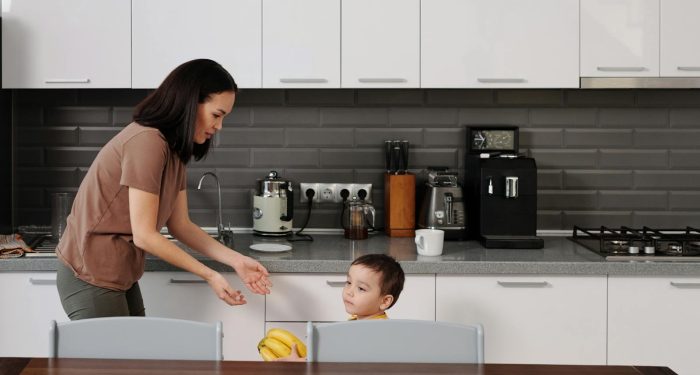
They thank their kids for small things. Not in a patronizing way, but genuinely. "Thanks for setting the table." "Please pass the salt." "Thank you for waiting while I finished my call." The child isn't being trained. They're being included in a world where everyone's contribution matters.
What's extraordinary is how ordinary this feels in these families. Nobody's making a big deal about it. It's just how people talk to each other. Like breathing.
The quiet revolution of unconditional respect
Research published by the NIH found that warm and sensitive parenting, along with family stability, are predictive of better social skills in children from low-income backgrounds. Notice it's not about resources. It's about consistency and warmth.
The families who raise automatically courteous kids are running a quiet revolution. They're saying that respect isn't earned through achievement or status or good behavior. It's the baseline. It's the starting point. It's what you get for showing up human.
At Thanksgiving now, my parents' house has both traditional dishes and vegan options for me. I help my grandmother cook even though I won't eat everything. We thank each other constantly. Not because we have to, but because gratitude is the language we speak. She makes a vegan side dish specifically for me, and every time, she thanks me for "helping her try new things."
That's the inheritance. Not the words, but the worldview behind them. The radical idea that every interaction is an opportunity to acknowledge someone's humanity.
Wrapping up
When you meet someone whose "please" and "thank you" come as naturally as blinking, you're not just meeting them. You're meeting their parents, their grandparents, and a whole lineage of people who figured out something essential: the smallest words carry the biggest truths about how we see each other.
These families didn't set out to teach manners. They set out to raise humans who see other humans. The automatic courtesy is just a byproduct of something underneath — a household where consideration was the default setting, not the lesson plan.
So the next time you hear someone thank a stranger without thinking, notice it. Somewhere, years ago, someone modeled that for them. And they're still doing it, quietly, in a coffee shop on a Tuesday.
What’s Your Plant-Powered Archetype?
Ever wonder what your everyday habits say about your deeper purpose—and how they ripple out to impact the planet?
This 90-second quiz reveals the plant-powered role you’re here to play, and the tiny shift that makes it even more powerful.
12 fun questions. Instant results. Surprisingly accurate.