Boomer childhoods were shaped by freedom, routine, and a world that moved slower. These 7 shared experiences bring back memories almost everyone from that era can relate to.
We talk a lot about generational differences, don’t we? But every now and then, someone tells a story from their childhood that feels weirdly universal, even if it came from a very specific era.
Lately, I’ve been digging into conversations with folks from the boomer generation, and what struck me most was how many of their experiences overlap.
Different cities, different family structures, different personalities, yet the same themes kept popping up.
It made me wonder about how childhood shapes who we become as adults.
Here are seven of the most common experiences I heard boomers share, and what they reveal about growing up, belonging, and navigating the world today.
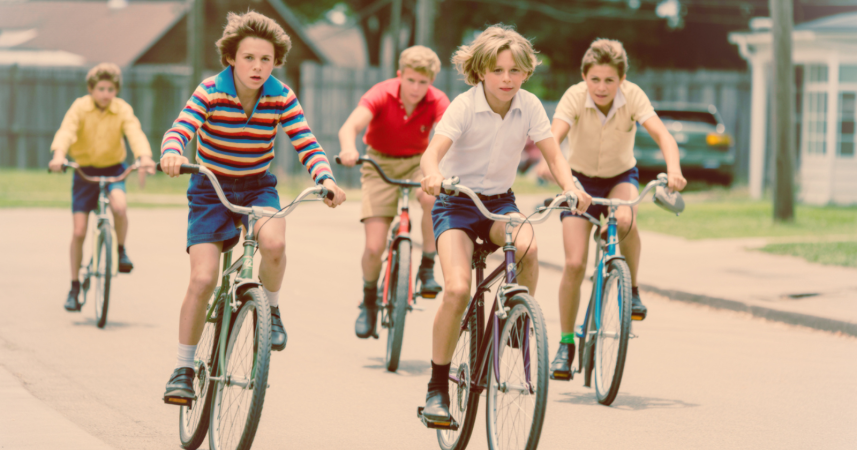
1) Riding bikes until the streetlights came on
Have you ever noticed how many people talk about their childhood freedom through the lens of two wheels?
Every boomer I spoke with had a version of, “We just rode around the neighborhood until the streetlights told us it was time to go home.”
There was something striking about the simplicity of that rule. No phones. No GPS trackers. No hovering adults. Just trust, time, and a loose sense of geography.
I kept thinking about how that kind of freedom forms you. When I was growing up, I had my own version of wandering, though it looked more like getting lost on hiking trails.
Even now, as someone who trail runs to clear her head, I see the value of unstructured exploration. It teaches you to self regulate, solve problems on the fly, and manage risk without panic.
When kids are trusted to roam, they learn to trust themselves.
2) Drinking from the garden hose
This one made me laugh. Not because the image is funny, but because boomers talk about it like a badge of honor. As if surviving hose water was the original resilience test.
But underneath the humor is a reminder of a time when life was not yet filtered, packaged, and optimized. Kids played outside all day. They got thirsty. The nearest spigot was good enough.
What stuck with me was how many people described this as a symbol of resourcefulness. Everything was not sanitized or curated. You used what was available.
And I cannot help but wonder how that mindset carries into adulthood. When you grow up improvising, making do, and not expecting perfection, you end up learning how to adapt. That is a skill many adults still struggle with.
It reminds me of my own gardening habits. Sometimes the soil is a little too sandy, or the tomatoes split from too much rain. But the experience is not about controlling every detail.
It is about working with what you have and letting the outcome be good enough.
3) Being told to go outside and find something to do
This one came up repeatedly. No detailed itinerary. No structured playdates. No screens. Just a directive. Go entertain yourself.
There is a certain magic in boredom. We do not talk about that enough. When kids are not overstimulated, their imagination has space to stretch.
And schoolteachers from that era even noted that kids learned emotional regulation by having to manage their own time.
One boomer woman told me she used to spend hours lying in the grass identifying cloud shapes because there was nothing else competing for her attention. That image stayed with me. When was the last time any of us just stared at the sky?
It made me notice how often adults today seek constant stimulation as a way to avoid stillness. But stillness builds resilience.
Sometimes the best thing you can do for yourself is step outside without an agenda and let your brain breathe.
4) Eating dinner at the table every night
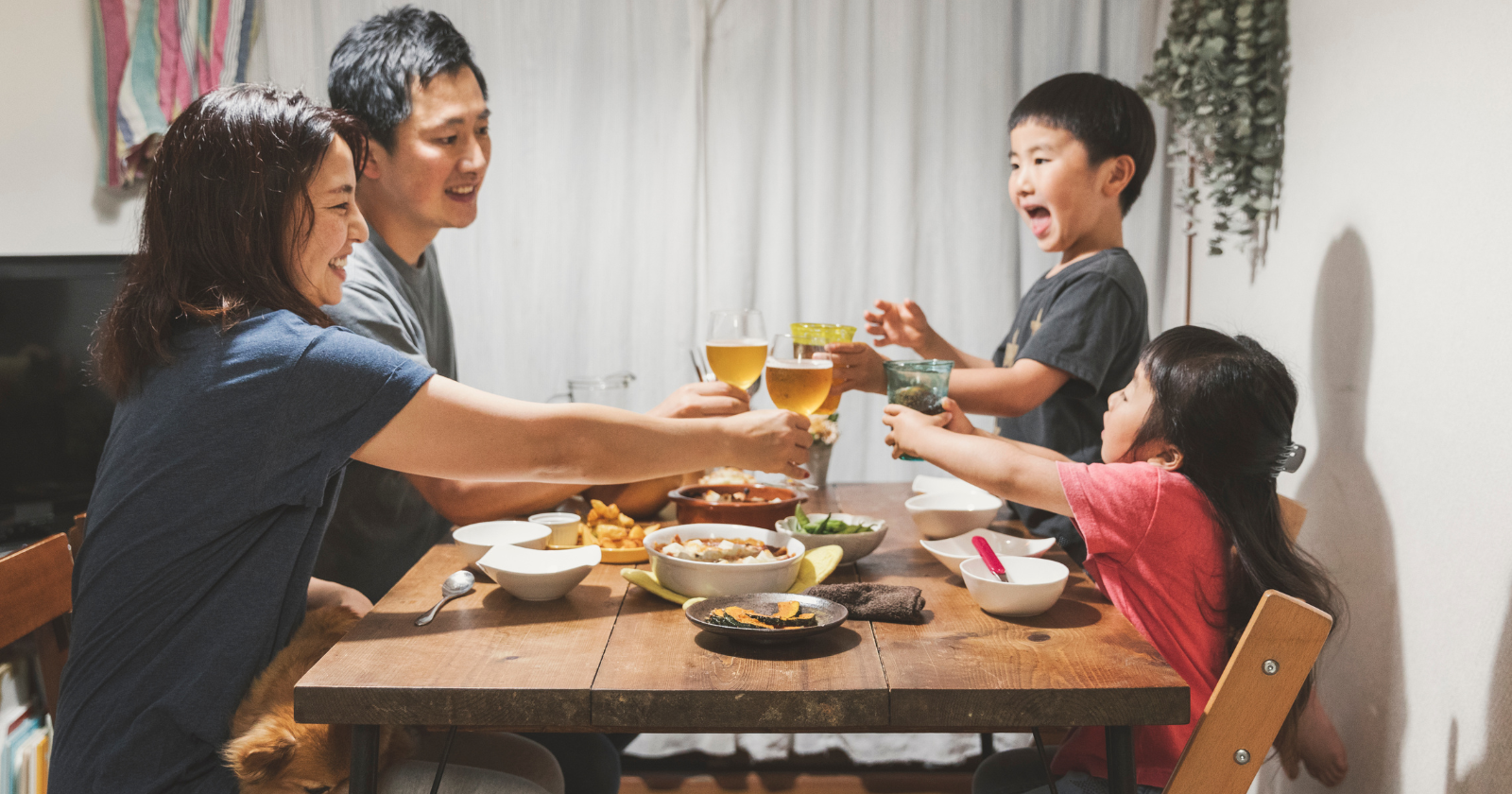
Now, this is not to romanticize the past. Not every dinner table was peaceful. Not every household had a happy structure. But the routine itself came up in nearly every conversation.
Dinner was the daily anchor. A ritual. A predictable point of connection before the world got busy again.
One man described it as the place where you learned how to be a person. You learned manners, patience, conversation. You learned how to listen to stories that were not about you. You learned when to speak and when to give space.
I appreciated how many people said they did not realize the importance of those routines until long after they left home. Isn’t that how most foundational lessons work? You only understand the scaffolding once you are building your own life.
I sometimes think about how modern schedules pull us in so many directions.
Volunteering at the farmers market often feels like one of the few remaining places where shared meals still matter, where people slow down long enough to talk about their day.
Maybe the table can take different forms, but the connection is the part that lasts.
5) Sharing one phone for the entire household
Every generation has its communication quirks, but this one fascinated me. A single phone, often mounted on the wall, sometimes with a cord long enough to wind through the hallway.
Privacy was optional. Eavesdropping siblings were guaranteed.
But here is what was interesting. This experience taught boomers early on how to negotiate time, take turns, and communicate efficiently. When three people were waiting for the phone, you learned to get to the point fast.
Several people said it taught them boundaries too. You could not tie up the line for hours without someone yelling, Get off the phone. It was accountability in its simplest form.
And in a world where our devices now allow us to isolate ourselves, hide behind texts, or avoid tough conversations, there is something refreshing about the built in vulnerability of a shared phone.
Everyone knew who you called. Everyone heard your tone.
6) Hearing because I said so as the default answer
I will admit, this one made me pause. Not because I had never heard it myself, but because of the mix of reactions it triggered. Some boomers laughed. Others rolled their eyes. A few got thoughtful, even quiet.
For many, it was the defining marker of an authority first household. You did not ask why. You did not challenge rules. You accepted them.
Some said it taught obedience, which they carried into adulthood. Others said it fueled their later desire for autonomy.
Interestingly, several mentioned that they parented differently because they wanted their kids to understand the reasoning behind rules.
Why include this here? Because childhood shapes how we relate to power, responsibility, and even conflict as adults. If you grew up without explanations, you might hesitate to ask for clarity now.
If you were taught not to challenge authority, you might struggle to advocate for yourself at work.
I spent years in corporate environments where people followed instructions blindly, even when something did not make sense. And I often wondered how many of those instincts were formed long before they ever entered an office.
Awareness is where change begins.
7) Experiencing community in a way that feels rare today
This one came up the most, and it carried a bittersweet tone.
Boomers described neighborhoods where everyone knew each other, where you could knock on any door if you scraped your knee, where parents shared responsibility without formal agreements.
It was not perfect, and certainly not idyllic for everyone, but it created a sense of belonging many people say they miss.
There was a collective watchfulness. A shared investment in each other’s kids. A trust that spilled across property lines.
Community looks different today. Some of that is good. We are more aware of boundaries. More respectful of differences. More intentional about choosing our circles.
But I still hear so many adults quietly craving connection, craving the ease of knowing the people around them. Maybe that is why I love volunteering at the farmers market.
It feels like a faint echo of what so many boomers describe, where familiar faces gather for no reason other than being part of something together.
Maybe the lesson is not that we have lost community but that we now have to consciously build what once happened naturally.
Final thoughts
Listening to these stories reminded me that childhood is not just a collection of memories. It is a blueprint. A lens. A quiet undercurrent that shapes our decisions, reactions, and expectations long into adulthood.
Whether you grew up in the boomer era or decades later, reflecting on these shared experiences can help you understand the forces that shaped you.
What did you learn from the freedom, the constraints, the routines, the lack of routines? What echoes from your childhood still show up in your adult life?
And perhaps the bigger question is this. Which parts are you ready to keep, and which are you ready to rewrite?
If reading these brought up memories of your own childhood, I hope you will sit with them for a while. Patterns reveal themselves when we are willing to look. And that awareness can be a powerful beginning.
What’s Your Plant-Powered Archetype?
Ever wonder what your everyday habits say about your deeper purpose—and how they ripple out to impact the planet?
This 90-second quiz reveals the plant-powered role you’re here to play, and the tiny shift that makes it even more powerful.
12 fun questions. Instant results. Surprisingly accurate.