At 70, after decades of being sought for advice and expertise, she discovered the world had quietly reassigned her from participant to spectator—and the hardest part wasn't the physical changes of aging, but learning to reclaim her visibility in rooms that had already decided she was just part of the scenery.
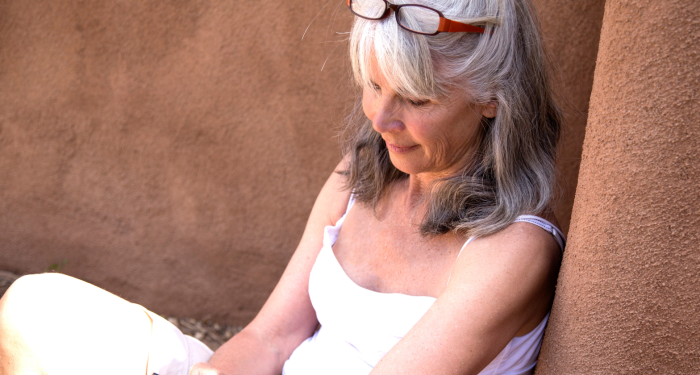
The waiter is looking at my son. He has been looking at my son for the better part of a minute now, pen hovering over his little notepad, waiting for him to order on my behalf. I am seventy years old. I am sitting upright, holding the menu, wearing my reading glasses, clearly capable of speech. And yet the transaction is happening above my head, as if I were a child or a houseplant.
"I'll have the salmon," I say, and the waiter blinks. There is a half-second of recalibration on his face, the small surprise of furniture expressing a preference. My son, bless him, pretends not to notice. I pretend not to notice. The salmon arrives, and life goes on.
This is the thing nobody warns you about in your seventies. It isn't the arthritis or the reading glasses or even the loneliness. It's the slow, uncredited reassignment of your role in every room you enter. After teaching high school English for 32 years, raising two children mostly alone, surviving widowhood, and discovering I could still surprise myself by learning Italian at 66, I've realized the hardest part of this decade is the way the world has quietly moved me from participant to spectator. Nobody thought to ask if I was ready for the career change.
When consultation becomes condescension
The shift happens so gradually you might miss it entirely. One day you're the person everyone asks for advice about careers, relationships, recipes, resilience. The next, you're being gently managed, like a beloved but fragile heirloom that needs special handling.
I noticed it first at the doctor's office. After my knee replacements, my daughter started accompanying me to appointments. Wonderful, supportive daughter that she is, she meant only to help. But somehow the doctor began addressing his comments to her. "Your mother should avoid stairs when possible." "Make sure she takes her medication with food." "She'll need to ice that twice a day." She, she, she. As if I'd become third person singular, grammatically present but functionally absent.
The same thing happens at restaurants now, as I've described. The server approaches, makes eye contact with whoever is younger, and waits. When I speak up, there's often a moment of surprise. My son redirects these interactions, but the fact that redirection is necessary tells its own story.
Even technology, which I've been adapting to for years, becomes a battlefield of low expectations. When I mention that I've been taking online watercolor classes, people respond with the kind of excessive praise usually reserved for toddlers learning to use utensils. "Good for you!" they exclaim, as if operating a laptop at 70 is equivalent to climbing Everest in bedroom slippers.
The invisible years
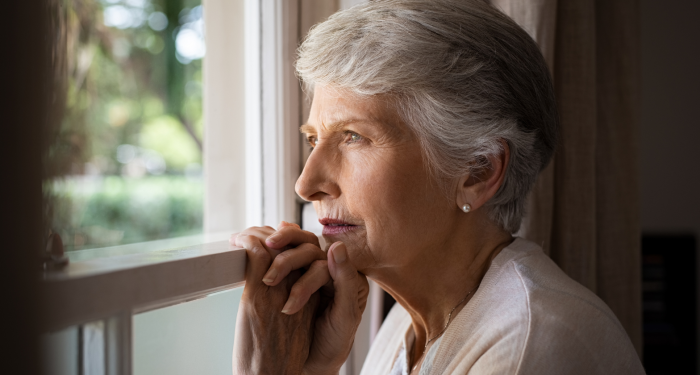
Virginia Woolf wrote about women needing rooms of their own. What she didn't mention is that after seventy, you can be standing in the middle of that room and still be invisible. It's not the dramatic invisibility of being actively ignored. That would at least acknowledge your presence. It's the more insidious invisibility of being seen but not registered, like how your eyes skip over familiar wallpaper.
I felt it acutely last Thanksgiving when my family gathered at my daughter's house. The conversation flowed: politics, travel plans, my grandson's new job, my granddaughter's graduate school applications. Everyone had opinions, stories, advice. But when I mentioned the article I'd read about climate change affecting bird migration patterns (I'm an avid birdwatcher), the conversation paused politely, then resumed as if I'd sneezed rather than contributed.
The message was clear though unspoken: grandmother equals nostalgia, not current events. I'm expected to have opinions about how things used to be, not how they are or might become. When did my observations expire? Was there a sell-by date I missed?
This invisibility extends beyond family. At the women's shelter where I've volunteered for years, new volunteers are routinely introduced to me as someone who "helps out sometimes," despite the fact that I coordinate the entire literacy program. At the garden center, young employees explain basic plant care to me, though I've been tending my English cottage garden for 30 years. The assumption seems to be that age erases expertise, that every year past seventy subtracts rather than adds to what we know.
The courage to claim space
Here's what nobody tells you about being seventy-something: staying visible requires a different kind of courage than you needed at thirty or fifty. It's not the courage to speak up. Most of us learned that long ago, through divorces, career battles, or raising teenagers. It's the courage to keep speaking when the room has already decided you're background noise.
Some days I win this battle. I insert myself into conversations about current events, sharing not memories but analysis. I join the hiking group despite the surprised looks when I keep pace on moderate trails. I signed up for that watercolor class not to prove something to anyone but because I wanted to learn, and learning doesn't have an expiration date. When the instructor partnered me with a woman in her forties for critiques, assuming we'd have "more in common," I politely requested to work with the twenty-something art student whose bold use of color challenged my tendency toward safe pastels.
I've learned to preface opinions with evidence of current engagement: "I was just reading in The Atlantic..." or "Have you seen that new documentary about..." These verbal calling cards remind people that I exist in the present tense, not some sepia-toned past.
But claiming space at this age also means choosing your battles. When the cashier speaks slowly and loudly, I sometimes let it go. Not because I accept the condescension, but because I'm saving my energy for the fights that matter. Like when my doctor suggested I might be "too old" for the physical therapy that could improve my mobility, I pushed back hard. Or when the bank tried to require my son's signature on my own account "for safety," I took my business elsewhere.
The unexpected power of the unseen
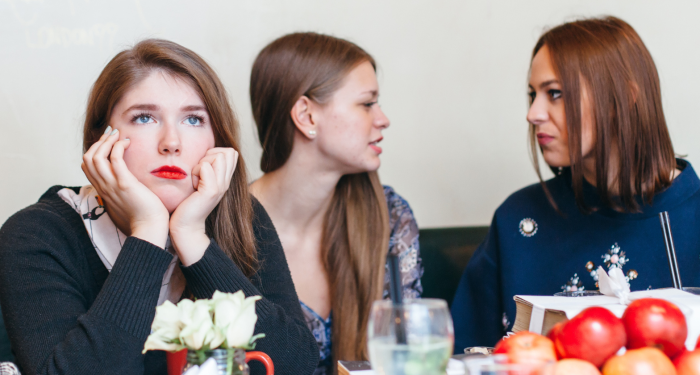
Perhaps the strangest discovery of these invisible years is that being overlooked gives you a peculiar kind of power. People speak freely around you, assuming you're not really listening or won't understand. Young couples argue in front of you at cafes. Middle-aged women discuss their marriages while you're within earshot at the gym. The business deals, the family secrets, the fears and dreams. They all spill out around you like you're part of the scenery.
We, the invisible elders, become unwitting witnesses to life's private moments. And with that witnessing comes understanding. I see the young mother at the grocery store, exhausted and overwhelmed, because I remember being her. I notice the new widow at church, sitting in a different pew because the old one holds too many memories. I recognize the teacher fighting budget cuts, the nurse working doubles, the father learning to braid his daughter's hair.
This seeing leads to a different kind of action. My friends and I, a group of five women all navigating our seventies, have become guerrilla supporters. We leave larger tips for struggling servers. We write thank-you notes to tired teachers. We show up at school board meetings to support education funding, even though our grandchildren have graduated. We use our invisibility as a superpower, appearing when needed, offering help that comes with no strings, no need for credit, no expectation of gratitude.
Final thoughts
I don't know yet what to do with any of this. Some mornings I wake up and feel clear about it, almost amused, ready to interrupt the waiter and correct the doctor and take up whatever space I decide to take. Other mornings I catch myself going quiet at the table, editing sentences before they leave my mouth, wondering when I started doing that and whether I can stop.
The waiter still looks past me. The doctor still talks around me. The videographer at the next family wedding will almost certainly pan across our table in three seconds or less. I notice it now in a way I didn't a decade ago, and noticing is not the same as solving. There is no tidy arrival at the end of this decade, no moment where the room turns back and hands you the microphone. There is only the uncomfortable in-between: still here, still thinking, still holding opinions about more than the centerpieces, and no longer certain what any of that is worth to anyone but me.
Maybe that is the honest shape of seventy. Not a reclamation, not a surrender. Just the long, quiet question of what to do when you are still in the room and the room has moved on.