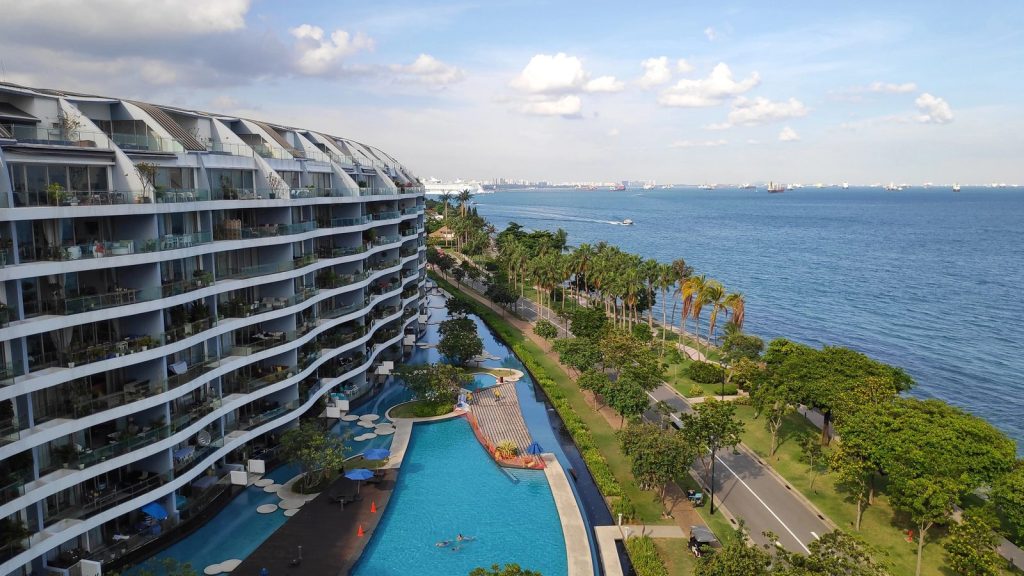
Not all of them. Just enough to restore what officials delicately call "balance." The long-tailed macaques have multiplied beyond their designated zones, raiding kitchens in Bukit Timah, stealing phones at MacRitchie Reservoir, biting children at Sentosa where I'm about to move. Last month, a troop occupied the roof garden of a million-dollar condo, turning the infinity pool into their personal bath. The residents called it terrorism. The National Parks Board called it successful reforestation.
This is what happens when a city gets too good at being green. Singapore has 47% tree coverage, more than any other major city, engineered so perfectly that actual wildlife has returned. The macaques don't understand they're supposed to stay in their designated nature reserves, just as the hornbills that now nest along the Singapore River don't know they've followed the same shipping routes as the timber from Borneo.
I came here three years ago to make money. After two decades bouncing between the world's most ambitious cities, from the trading floors of London to the startups of New York, the film studios of Los Angeles to the emerging markets of Bangkok and Ho Chi Minh City, Singapore was meant to be my wealth accumulation phase. The place where everything works, where business gets done, where a media company like mine could scale without the friction that exhausts ambition elsewhere.
The trees were not part of the calculation.
But you can't avoid them. Lee Kuan Yew planted three million in his first decade as Prime Minister, starting in 1967 when Singapore had nothing to offer except efficiency. No oil like Brunei, no palm plantations like Malaysia, no beaches like Thailand. Just a port and the will to transform a malarial swamp into something multinational corporations would choose over Hong Kong.
"Without the greening, we would have died," he said in 1995, and he meant it literally.

The trees were economic infrastructure, as essential as the port. Make the city livable in the tropics. Reduce the heat that makes thinking impossible. Create the illusion of space in one of the world's densest nations. Give expatriates something that felt, if not like home, at least like a place humans were meant to live.
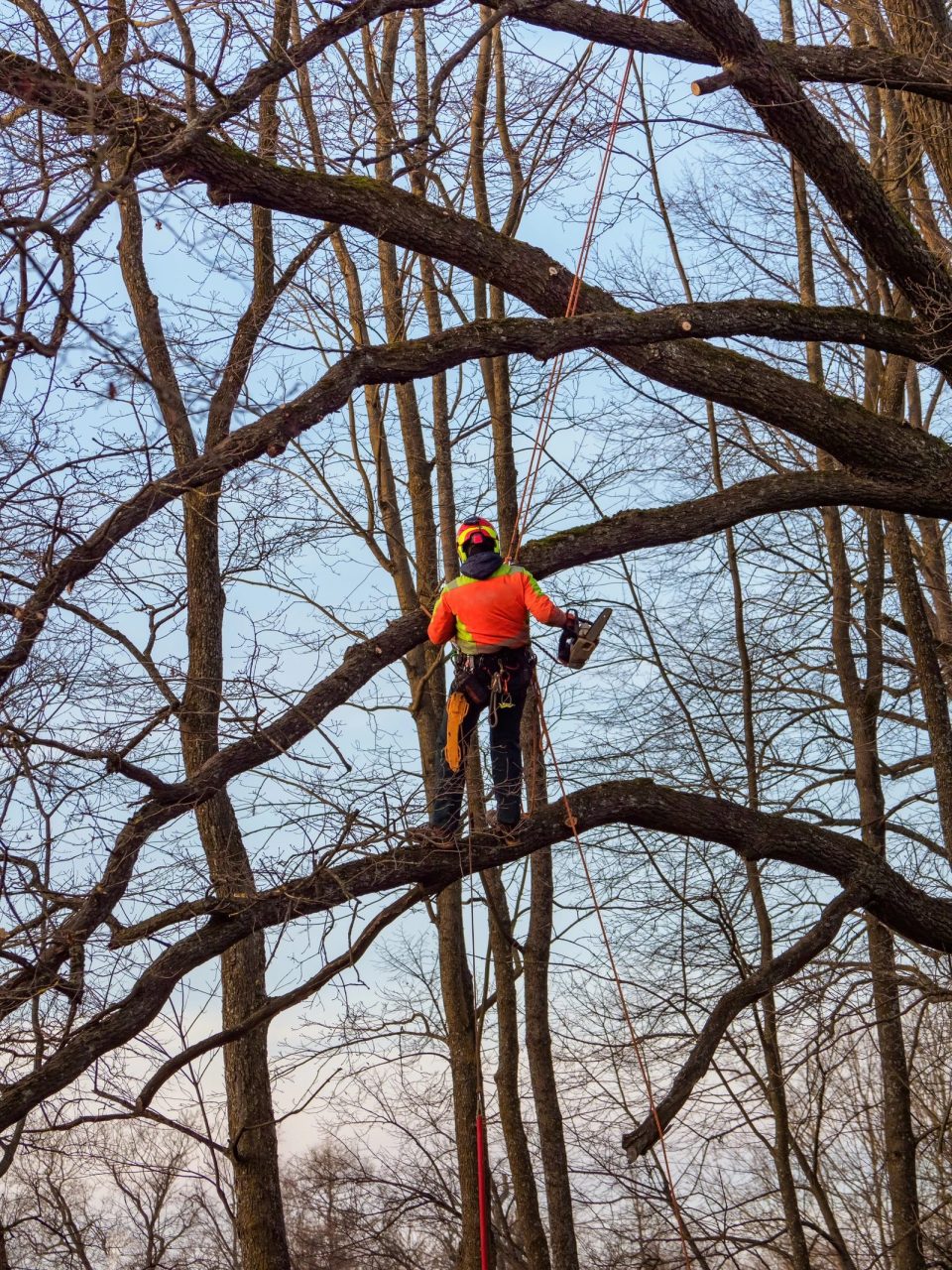
The strategy was comprehensive to the point of obsession. Every road categorized by width, every width assigned its species. Angsanas for highways, rain trees for parks, yellow flames for residential streets. The National Parks Board became a military operation with botanical objectives. Two million trees planted annually. Thirteen thousand hectares of green space managed with Swiss precision.
My first week here, jet-lagged and disoriented, I went running at 7 AM as the sun rose along the Park Connector Network. These are not paths through parks. They're a separate transportation system, 360 kilometers of green corridors that link the entire island. You can run from the Malaysian border to the Indonesian strait without crossing traffic. Otters swim in the canals beside you. Monitor lizards sun themselves on the bridges. It feels like Singapore has been reclaimed by nature rather than from it.
The government counts everything. Tree density per kilometer: 1,400. Green plot ratio for new buildings: mandatory 4.0, meaning four square meters of greenery for every square meter of land. Sky gardens required above the fifth floor. Green walls on car parks. Rooftop farms on public housing where 80% of Singaporeans live. The metrics are published quarterly like GDP figures because here, they essentially are GDP figures.
The results are measurable. The Urban Heat Island effect, which makes cities hotter than surrounding areas, is 4.5°C in Bangkok, 3.8°C in Jakarta, but only 2.1°C in Singapore. Mental health scores correlate directly with proximity to green space. Productivity in offices with garden views exceeds those facing concrete by 15%. The trees pay for themselves in reduced air conditioning costs alone.
My office in Robertson Quay overlooks the Singapore River where the last wild crocodile was shot in 1890. Now smooth-coated otters hunt in the same water, their population exploding from zero to over 150 since someone spotted the first family in 1990. They're celebrities here, with Facebook pages tracking their movements, their territorial disputes covered like gang warfare in the tabloids. The Bishan family versus the Marina family. Nature documentary drama playing out between shopping malls.
The otters, like the macaques, are what happens when rewilding actually works. Singapore didn't intend to bring back wildlife. It intended to install green infrastructure. But build it comprehensively enough, maintain it thoroughly enough, and life finds a way back. The hornbills returned on their own from Malaysia. The eagles nest in the telecommunications towers. The pythons eat the monitor lizards which eat the rats which thrive on human waste.
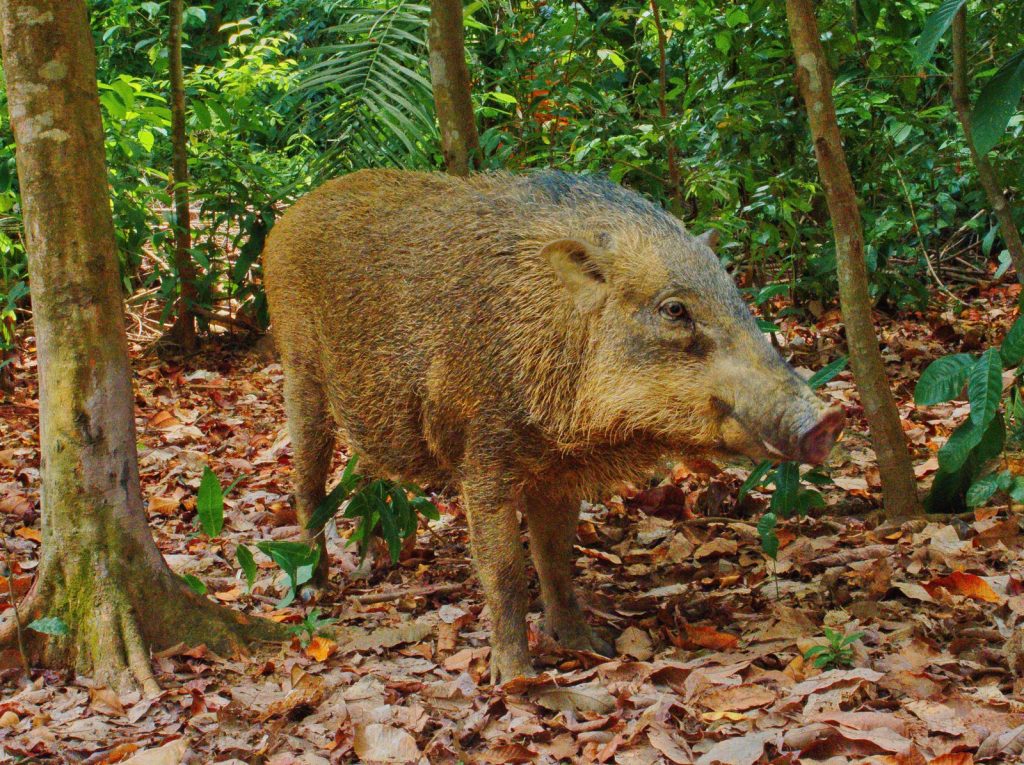
This terrifies people. Last year, a family of wild boar emerged from the Central Catchment Reserve and wandered into Punggol, a new town built on reclaimed land. Reclaimed is the euphemism Singapore uses for sand imported from other countries before they banned the exports. The boar didn't know they were walking on sand dredged from Cambodian rivers. They just followed the green corridors, designed to connect parks but functioning as wildlife highways.
Residents filmed them with a mixture of wonder and horror. Wild boar in Singapore. Actual wildness in the most controlled environment on Earth. The government's response was swift. The adults were culled, the piglets relocated. The minister reminded everyone that human safety takes precedence over biodiversity. The green city has limits.

Those limits are geographic as much as political. Singapore is 730 square kilometers, smaller than New York City, half the size of London. You can drive across it in 45 minutes. Every tree is planted in soil that was somewhere else first. Some of it came with the sand from Indonesia, Malaysia, Cambodia, Vietnam. Over 500 million tons imported since 1965, though Indonesia banned exports in 2007 after losing islands to erosion, followed by Malaysia and Cambodia after their own coastlines disappeared.
Sentosa, where I'm moving next month, is almost entirely artificial. The beaches are Malaysian sand. The soil for the gardens was Indonesian earth. The rocks for the landscaping came from Burmese quarries. Even the palm trees were grown in nurseries in Johor, trucked across the causeway at night. The island is assembled rather than built, a collection of other places' geology reformed into Singapore's playground.

The view from Sentosa faces south toward Indonesia, where on bad days you can see the smoke. The fires in Riau province, just 40 kilometers away, burn through peat forests to clear land for palm oil plantations. The smoke drifts north, closing Singapore's schools, grounding flights, sending air quality indices into the hazardous zone. We seal our windows, run our air purifiers, and wait for the wind to change.
The palm oil from those plantations trades through Singapore's commodity exchange, a $65 billion annual flow that makes this city the agricultural hub of Southeast Asia despite having no agriculture. The traders work in towers wrapped in award-winning vertical gardens, their screens showing the flow of palm oil from Indonesia, timber from Borneo, rubber from Thailand. The same companies funding Singapore's Million Trees movement are financing the clearing of forests across the region.
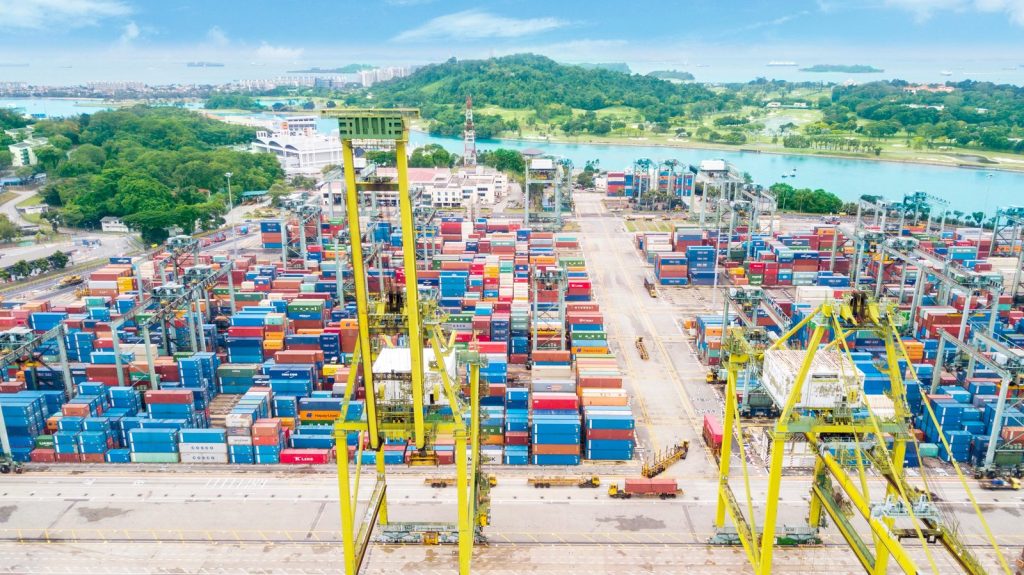
This is not hypocrisy. This is how the system works. Singapore doesn't cut down forests. It processes their value. The logs arrive at Jurong Port, get graded, sorted, re-exported. Singapore adds value through logistics, financing, and legal frameworks that make contracts enforceable. The trees become commodities become derivatives become numbers on screens in offices overlooking gardens.
Recently I met someone who works at one of these trading houses, at Atlas Bar where they serve $28 cocktails under a gilt ceiling three stories high. He was explaining how his firm was pioneering sustainable palm oil certification, blockchain tracking from plantation to refinery. "Singapore leads the region in ESG," he said, meaning Environmental, Social, and Governance investing. His fund had just committed $100 million to reforestation. Not here, of course. Land here costs $30,000 per square meter. The reforestation would happen in Indonesia, in the same provinces where other divisions of his company source timber.
The math is straightforward. A tree in Papua New Guinea sells for $10 per cubic meter to the local community. By the time that timber reaches Shanghai, going through Singapore's port, it's worth $250. The markup happens here, in the offices with garden views, where lawyers structure the deals and traders find the buyers and banks provide the financing. Singapore doesn't need to own forests. It owns the system that monetizes them.
I learned about Forest Clearing Authorities from a petition shared by the Bruno Manser Fund, a Swiss NGO fighting deforestation in Borneo. The petition exposed how agricultural permits in Papua New Guinea were being used as logging licenses. Clear the forest, claim you're preparing for palm oil, extract the timber, never plant anything. Completely legal. The PNG government knows but can't stop it because technically, agricultural development is occurring, even if the agriculture never arrives.

The companies executing this strategy are registered in Singapore, managed from offices in Raffles Place, financed by banks in Marina Bay. The logs ship through Singapore's port. The profits flow through Singapore's tax system, optimized to 17% or less with the right structure. The executives live in condos with sky gardens, their children attend international schools surrounded by heritage rain trees that require parliamentary approval to remove.
The contradiction should bother me more than it does. My own company benefits from Singapore's efficiency, its digital infrastructure, its position as the capital allocation hub of Southeast Asia. The scaling I came here to achieve depends on the same systems that enable the forest arbitrage. We're all participating in the machine, whether we're trading commodities or publishing media or coding applications. The machine runs on extraction somewhere becoming accumulation here.
But living here also means living with the immediate benefits of what Singapore has built. The temperature really does drop five degrees under the tree canopy. The air is cleaner than Bangkok or Jakarta or Ho Chi Minh City where I lived before. The parks are genuinely accessible, genuinely free, genuinely maintained. Children grow up thinking cities are supposed to have hornbills and otters, that beaches are supposed to be clean, that running paths are supposed to connect everything to everything else.
It also proves that achieving this requires extreme wealth concentration, authoritarian land control, and the ability to import your environmental costs from somewhere else.
This is what Singapore proves: that cities don't have to be concrete misery, that density doesn't require sacrificing livability, that the tropical metropolis can be habitable without air conditioning in every corridor.
You cannot replicate Singapore in Jakarta or Manila or Dhaka. Those cities are being built for immediate need by people who need immediate shelter. They don't have sovereign wealth funds for tree maintenance. They don't have state capacity for comprehensive planning. They don't have geography that makes them indispensable to global trade. They pour concrete while Singapore plants trees, not because they're short-sighted but because they're responding to present crisis rather than optimizing for future comfort.
The macaques understand none of this. They've discovered that humans leave food everywhere, that our gardens are easier than forests, that our roofs are safer than trees. They've adapted to the city more successfully than intended, becoming synanthropes, animals that thrive in human environments. The government culls 1,000 annually, but the population keeps growing. They're too successful at being urban wildlife.
The proposed solution is vasectomy. Catch the males, sterilize them, release them back. Let the population decline naturally. It's more humane than bullets, more sophisticated than poison. Very Singapore. Manage the wildness. Control the rewilding. Engineer nature to acceptable parameters.

But the macaques keep outsmarting the system. They recognize the trap cages now. They post sentries when raiding bins. They've learned that tourists with phones are likely to have food. They've become urban in ways that make them impossible to manage through urban planning. They're wild animals that have figured out civilization.
Watching them raid a grocery store in Bukit Timah, I realize they're the only honest participants in Singapore's green experiment. They don't care about the contradiction between the preserved and the extracted. They just see trees, whether heritage or imported, as habitat. They see the city as continuous with the forest because Singapore has made it so.
The macaques are what successful rewilding actually looks like: messy, uncontrolled, exceeding boundaries. Everything Singapore fears. Everything Singapore has tried to engineer away. Nature returning not as managed greenery but as actual wildness, with all its inconvenience and danger and refusal to follow plans.
Next month I'll move to Sentosa, to a condo in Sentosa Cove near the beach where the macaques are particularly aggressive. I'll continue running the park connectors, working in offices overlooking managed forests, benefiting from the green infrastructure built on regional extraction. The contradiction will remain unresolved because it's not a contradiction. It's the system working exactly as designed.
Singapore is the green city, and the green city requires forests to fall elsewhere. The monkeys thriving here depend on the same economics that clear their habitat everywhere else. We've built a bubble of environmental perfection sustained by environmental destruction just beyond the borders. A 730-square-kilometer proof that salvation is possible for those who can afford it.
From my new condo, on clear mornings, I'll be able to see Indonesia. On hazy mornings, I'll smell it burning. The monkeys will raid my garden, unaware they're living in a city built on the bones of forests they'll never see. And I'll keep participating in the system that makes this possible, because individual choices don't change systems. Systems change when they stop working. And Singapore still works perfectly.

That's the horror and the beauty of it. It works. The trees clean the air. The temperature drops. The otters thrive. The economy grows. The forests burn elsewhere, but here the gardens bloom. We've solved the problem of urban livability by exporting the cost of the solution.
The macaques are the only ones who've escaped the contradiction. They just live where the trees are, without caring where the trees came from. Without wondering what was sacrificed to plant them. Without calculating the carbon math that makes preservation profitable in theory but extraction profitable in practice.
They've achieved what Singapore actually promises but can't deliver: a return to nature, not as managed parks but as actual wildness. They're the future Singapore doesn't want but keeps accidentally creating. Wildlife that doesn't respect the boundaries between the engineered and the natural, because it recognizes what we can't admit.
There are no boundaries. There's just the green and the gone, and we live in both.