
The documentary was supposed to be about cephalopod intelligence, but watching Heidi cycle through what looked like active sleep states, I found myself thinking about a gathering in London in 1944, where six people tried to name something that did not yet have a word.
They thought they were simply naming a diet. They were actually naming a fundamental rupture in human consciousness.
The Ancient Refusal
Abu al-ʿAlaʾ al-Maʿarri, the blind Syrian poet and philosopher, was born in 973 CE; he did not write the quoted line in the year of his birth. In writings produced later in his life, he rejected meat and other animal products and framed that refusal as an ethical objection to taking from animals. His position emerged in medieval Syria, centuries before the modern vegan movement.
Translations of al-Maʿarri's work include verses urging readers not to eat slaughtered animals, fish or milk intended for their young. The surviving texts support describing him as an unusually early ethical abstainer from animal products; they do not justify attributing a modern theory of consciousness to him.
The thread runs through every civilization that documented it. Pythagoras, the Greek mathematician, believed that killing and eating non-human animals sullied the soul and prevented union with a higher form of reality. He taught that all animals had souls, which were immortal and reincarnated after death. Before the word "vegetarian" was coined, people who abstained from eating meat were called "Pythagoreans."
In India, Mahavira formalized ahimsa into Jainism's central principle—not just non-violence but the absence of even the desire to harm. Jain monks still sweep the ground as they walk, wear masks to avoid inhaling insects, strain water before drinking. Western observers call this extreme, revealing more about Western baselines than Jain philosophy. The Jains understood something we're only beginning to rediscover: that harm creates ripples far beyond the immediate victim.
What's striking isn't the diversity of these traditions but their convergence. Separated by geography, centuries, and cosmologies, they arrived at remarkably similar conclusions: that consciousness is not binary but a spectrum, that suffering is not hierarchy but a web, that what we do to the vulnerable we eventually do to ourselves.
The Naming
Donald Watson had been vegetarian for twenty years when he called the November 1944 meeting. The meeting was held at the Attic Club, 144 High Holborn in London. Those who attended were Donald Watson, Elsie Shrigley, Fay K. Henderson, Alfred Hy Haffenden, Paul Spencer and Bernard Drake. London still showed its bombing scars. Rationing had reduced food to mathematics. The Holocaust's full scope was just becoming known.
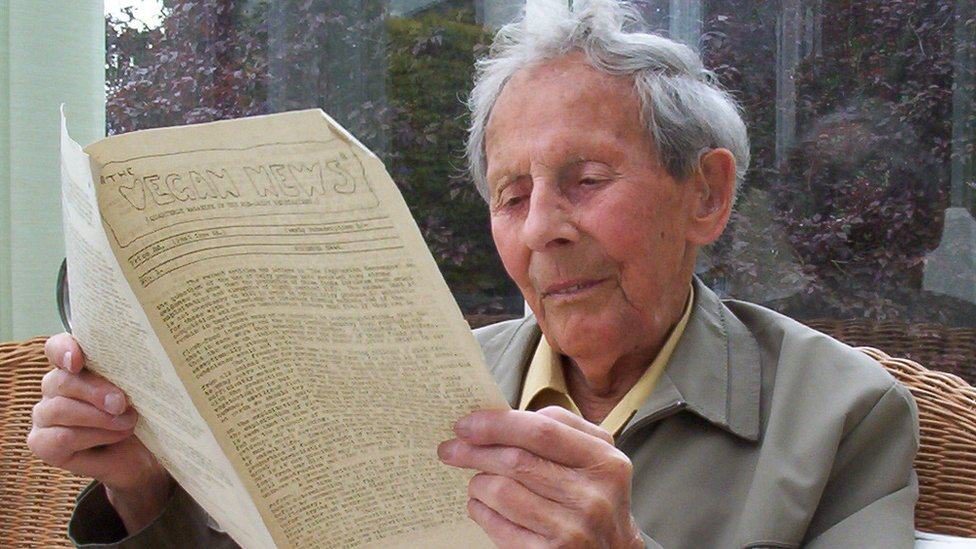
Watson later wrote about the beginnings: "Perhaps it seemed to us a fitting antidote to the sickening experience of war, and a reminder that we should be doing more about the other holocaust that goes on all the time." The machinery of mass death, once built, seeks objects. The logic of industrial slaughter, once normalized, expands.
They spent considerable time on the word itself. Watson coined the term vegan to describe a vegetarian diet devoid of all animal-derived ingredients. He derived the term from the word vegetarian by taking its first three letters and its last two letters. Short, memorable, new. What began as naming a dietary practice became an ethical position.
Leslie Cross, Watson's collaborator, saw veganism as something that would emancipate human and other animals. The first Vegan Society newsletter reached twenty-five subscribers. Within two years, it was international.
Here's what those founding members couldn't have known: Over 80 billion land animals are slaughtered for meat globally every year. The question they named has become more urgent, not less.
The Contemporary Paradox
The movement was contradictory from the start. Watson was working-class, but many early vegans were aristocrats playing at simplicity. The American Vegan Society, founded in 1960, explicitly linked veganism to ahimsa, though its founder H. Jay Dinshah was born in New Jersey, not Jaipur.
The appropriation was well-meaning but telling—Western veganism has always borrowed liberally from Eastern philosophy while remaining fundamentally Western in its approach.
These tensions have only intensified dramatically. Contemporary veganism is simultaneously anti-capitalist and thoroughly commodified. Beyond Meat went public at a $3.8 billion valuation. Oatly's IPO reached $10 billion. Venture capitalists poured $3.1 billion into alternative proteins in 2020 alone. The same system that created industrial slaughter now sells its solution. Instead of reimagining our relationship with life, we're refreshing the brand.
The movement oscillates between purity spirals and corporate capture. At a vegan potluck in Oakland, someone argues that eating honey is "stealing reproductive labor from female bees." In the same city, a former vegan tells me her orthorexia hid behind ethics for years, her body depleted, her relationship with food destroyed. The line between conscientiousness and pathology blurs. Meanwhile, McDonald's tests the McPlant burger, KFC launches Beyond Fried Chicken. The revolution will be franchised.
Social media amplifies both extremes. Instagram influencers promote "clean" eating that's barely distinguishable from disordered restriction. TikTok creators film themselves crying at the meat aisle. The algorithm rewards performance, not principle. Lost in the noise is the original ethical inquiry: What do we owe other conscious beings? Both the purity police and the corporate co-opters miss the central paradox: What if awareness exists in forms we can't recognize?
The Octopus Problem
When researchers study octopuses like Heidi, they observe chromatophores—elastic cells of pigment—flickering under the skin during apparent sleep states. These color changes might be the octopus equivalent of REM sleep, though scientists remain divided on whether this indicates dreaming.
The footage is mesmerizing: Heidi shifts from ghostly pale to mottled brown, then flashes deep maroon before settling into a paisley of yellow and black. David Scheel narrates his speculation: she's hunting dream crabs, camouflaging against imagined seafloor, celebrating an illusory catch. But other scientists are skeptical. "Color change is just a neuromuscular behavior," says biologist William Gilly. It might be nothing more than involuntary muscle twitches, no different from a dog's legs paddling during sleep.
A 2021 study found that octopuses alternate between quiet and active sleep. During short active-sleep episodes they changed skin colour and texture and showed eye and body movements. The authors described parallels with REM sleep, but this behaviour neither proves dreaming nor dates the origin of consciousness. Cephalopod and vertebrate lineages diverged more than 500 million years ago, so their complex nervous systems evolved along very different paths.
Octopuses have a highly distributed nervous system, with many neurons located in their arms. Their arms can perform substantial local sensory and motor processing while remaining coordinated with the central brain. That does not mean each arm literally thinks on its own, and active-sleep colour changes do not reveal which part of the system, if any, is dreaming.
This is veganism's core challenge: not whether to eat animals but how to acknowledge sentience we can't fully comprehend. Philosopher Peter Carruthers argues that animal suffering might be unconscious, mechanistic—no more meaningful than a smartphone's low-battery warning. If he's right, veganism is an elaborate projection. If he's wrong, our violence is more extensive than we imagine. The octopus, with her alien intelligence, forces us to confront the possibility that sentience pervades nature in forms we're not equipped to recognize.
The Impossible Practice
I stopped eating animals years ago, initially for the wrong reasons—using restriction as control—but eventually found my way to ethics. Imperfect, but genuine. The shift from performance to principle took time.
Last week, preparing dinner in my kitchen: quinoa shipped from South America, vegetables from Malaysia, electricity from imported natural gas. The global food chain makes every meal a web of invisible connections and contradictions. Every choice cascades into untraced consequences.
This is what ahimsa means to me: not the absence of harm but the acknowledgment of it, the attempt to minimize it while knowing perfection is impossible. The Jains who sweep the path know they'll still step on something. The point is the sweeping—the attention, the intention, the expansion of care despite its futility.
The science does not give us direct access to an octopus's subjective experience. That uncertainty is not proof of human-like awareness, but neither is it a reason to assume there is nothing to consider. It is a reason for intellectual and moral caution.
Beyond Purity
The scale of animal agriculture is large, but estimates need definitions and dates. The UN Food and Agriculture Organization estimated that livestock agrifood systems produced about 12 percent of anthropogenic greenhouse-gas emissions in 2015, using a life-cycle scope that included on-farm activity and selected supply-chain processes. Farmed-animal counts, land-use shares and the meaning of 'factory farmed' vary by dataset and should not be combined without that context.
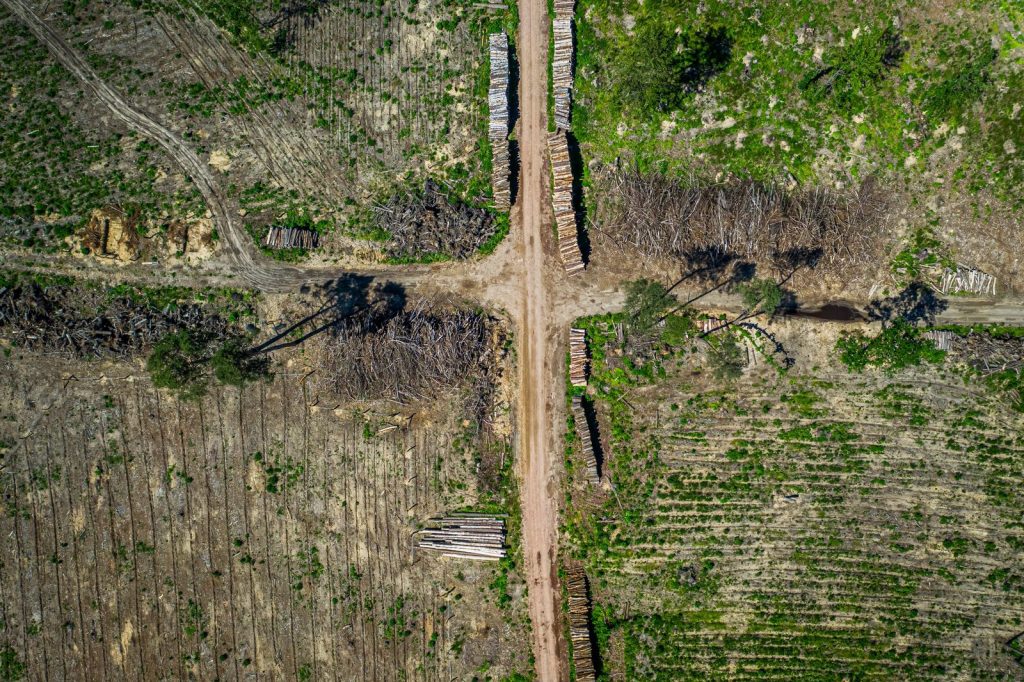
But even this risks reducing ethics to carbon math, as if the octopus matters only insofar as her ocean affects our coastlines. Climate change has conscripted veganism into service as a solution to emissions, but this instrumental logic misses something essential. We shouldn't avoid eating animals just because it's inefficient or warming the planet. The deeper issue remains: What does their inner experience feel like?
Indigenous scholar Kim TallBear points out that Western veganism often replicates the same human-nature divide it claims to dissolve. Many Indigenous peoples never separated human and animal worlds to begin with. The Lakota phrase "Mitákuye Oyásʼiŋ"—all my relations—acknowledges kinship with all beings. This isn't metaphorical but literal: a recognition of shared ancestry, shared fate. The point isn't creating new separations but recognizing existing connections.
When the Inuit hunt seal or the Mi'kmaq fish salmon, they're participating in relationships millennia old, guided by reciprocity rather than domination. The industrial slaughterhouse and the subsistence hunt exist in different moral universes. Veganism's universalist claims stumble here, revealing their Western assumptions.
Yet Indigenous hunting practices complicate vegan orthodoxy.
Cellular agriculture promises meat without murder. Precision fermentation creates milk proteins without cows. Companies like Perfect Day brew dairy proteins using microflora, while Upside Foods grows chicken from cell cultures. These technologies feel like science fiction, but so would industrial slaughterhouses to Pythagoras, so would factory farms to al-Maʿarri.
The uncertainty isn't whether these technologies will succeed but what kind of awareness they'll foster. We're not just choosing what to eat but who to become. Will lab-grown meat finally separate us from violence, or will it complete our alienation from the living world? The answer depends on whether we're seeking connection or escape.
The Dream State
Active-sleep episodes in the 2021 study were brief, with a median duration of about 41 seconds. If octopuses dream, that timing may constrain the episodes, but researchers cannot infer the content or narrative structure of a dream from skin patterns and movement.
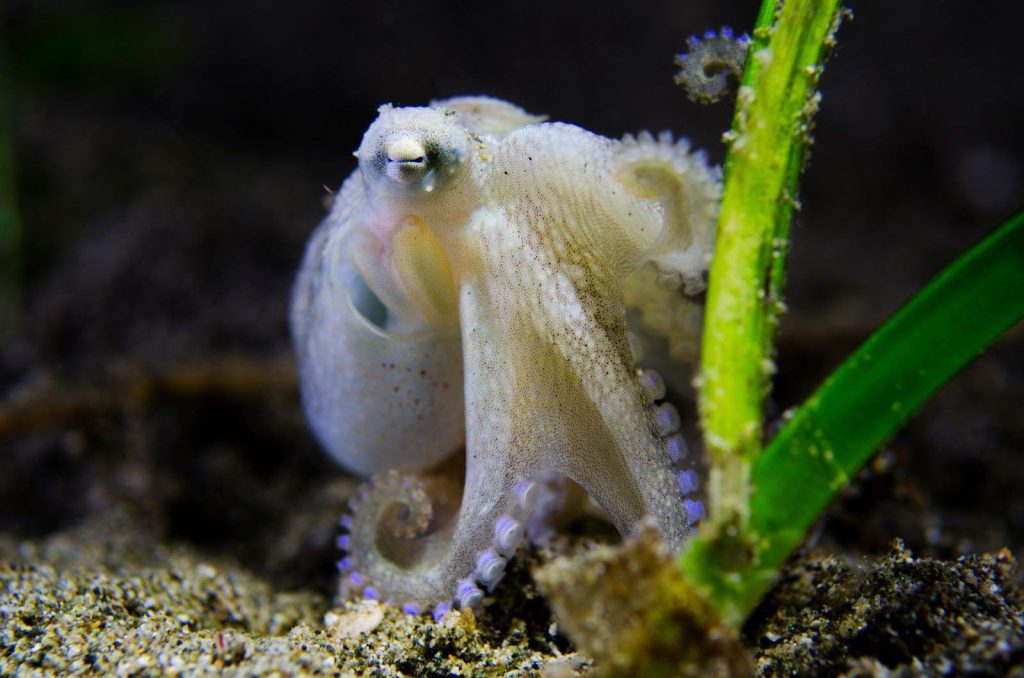
What veganism keeps asking is what we owe animals whose experience we are still learning to interpret. The answer keeps evolving, shaped by new evidence, philosophy and the expanding circle of who counts as someone rather than something.
Watson lived to ninety-five, long enough to see his word enter dictionaries. Near the end, he said: "We don't know the spiritual advancements that long-term veganism would have on human life." He was still thinking about awareness, about what emerges when we stop rehearsing domination with every meal.
We're running the experiment now, unevenly, imperfectly, worldwide. We're still naming it, still failing at it, still trying. The footage of Heidi is still online.
You'll find her shifting through colours we have named but do not fully understand, behaving in ways that invite us to wonder, cautiously, whether octopuses dream.
Correction (14 September 2026): The founding group numbered six, al-Maʿarri was born rather than writing in 973, and octopus active sleep does not establish dreaming or date the evolution of consciousness. Livestock-emissions figures were also updated and scoped.