I didn’t become a new person; I just gave future-me a better plan and a gentler path to follow.
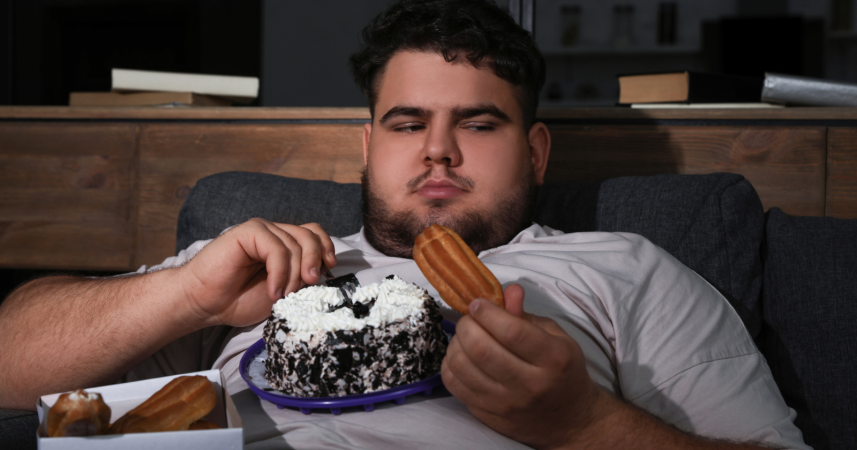
For years, my evenings ended with a glowing menu board and a paper bag that smelled like comfort.
I told myself I “deserved” it after a long day. I was always going to cook tomorrow—tomorrow rarely came.
What looked like a willpower problem was really a timing problem.
I wasn’t making decisions when I was calm; I was making them when I was tired, hungry, and one traffic light away from the drive-thru.
By 8 p.m., my brain wanted the fastest path to relief.
Guess what reliably delivered that? Salt, fat, sugar, and a friendly voice asking, “Do you want to make that a combo?”
Sound familiar? If you’ve ever sworn off late-night takeout at 10 a.m. only to order it at 9 p.m., you’ve met the same disconnect I had—morning-you writes the rules, while evening-you ignores them.
I didn’t fix it with a cleanse or a heroic kitchen overhaul, because one small shift did the heavy lifting.
The one small shift
I moved the dinner decision to lunchtime—that’s it.
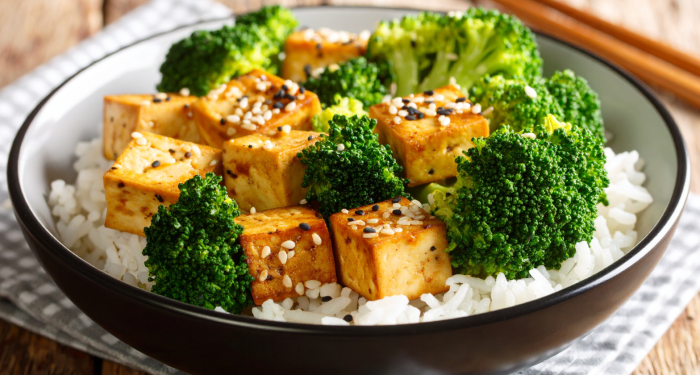
Every day at 12:30 p.m., I decide exactly what I’ll eat for dinner and I write a one-line plan on a sticky note: “6:30—roasted veggies + quinoa bowl,” or “leftover bean chili with avocado,” or “stir-fry with tofu and frozen veg.”
Then I put that note where 8 p.m. me will see it: On my phone case, on the fridge, or on the front door.
Some days I also text myself the plan, because seeing it pop up later reenforces the commitment.
No calorie counts, no rules about “never” or “always;" just a concrete plan made by a well-fed brain, settled before the hunger, stress, and decision fatigue kick in.
Pre-deciding took the nightly negotiation off the table.
I stopped asking, “What do I feel like?” and started following, “What did I already decide?”
Why deciding early works
Have you noticed how everything feels easier before you’re exhausted?
There’s a reason: When we’re hungry and stressed, the part of the brain that loves quick rewards gets louder, and the part that thinks about tomorrow gets quieter.
By 8 p.m., the future is a fuzzy concept—the fries are not.
Deciding dinner earlier sidestepped that tug-of-war.
It also solved another sneaky problem: Decision fatigue.
After a day of micro-decisions—emails, meetings, kid logistics, life admin—my mental energy was already frayed.
No wonder a menu of a hundred options felt easier than chopping an onion.
Moving the decision to lunchtime put it in a calm, bright slot while I still had gas in the tank.
It’s the same logic I used as a financial analyst years ago: Make high-impact choices when you have the clearest head.
My spreadsheets taught me to commit money to a budget before impulses arrived.
The dinner plan works the same way—pre-commit when you’re steady, follow through when you’re not.
One more thing happens when you decide early: Anticipation shifts.
Instead of fantasizing about the crunch of drive-thru fries, your mind quietly rehearses the meal you chose.
That soft rehearsal matters as it turns the plan into a mental default.
What the first week looked like
I wish I could say angels sang and kale glittered. In reality, the first week felt weird.
At 12:30 p.m., I’d write “6:30—pasta with garlicky broccoli and white beans.”
By 7:45, the old itch would whisper, "Are we sure?"
Sometimes I followed the itch but, more often, the note nudged me: This is tonight’s plan.
I didn’t make it fancy: “Plan” sometimes meant microwaving a bag of frozen brown rice, heating a can of lentils, and tossing in a handful of arugula with olive oil and lemon.
Ten minutes, bowl in hand, done.
Was it Instagram-worthy? No.
Did it keep me out of the drive-thru? Yes.
I also set one tiny logistical support: I prepped exactly one element right after I wrote the plan.
If dinner was a veggie bowl, I washed and chopped the broccoli at 12:35; if it was soup, I diced the onion or measured spices (two minutes tops).
That little act created friction against bailing later. With something already started, it felt easier to finish than to quit.
By the end of the week, I’d hit five planned dinners out of seven.
That ratio felt like a miracle.
The mental gymnastics I stopped doing
Before, I treated evenings like a courtroom—I was the lawyer, the judge, and the jury.
“I’ll cook, but I’m tired.”
“I have groceries, but delivery is faster.”
“I’m hungry now, but future-me will be disappointed.”
Round and round it went; all those arguments disappeared when I adopted a policy mindset instead of a nightly verdict.
My lunchtime decision became policy and evening-me just executed.
Do you know how much mental bandwidth that frees up? I stopped performing morality plays about food and I stopped framing my choices as virtue vs. vice.
I started seeing them as logistics: "It’s Tuesday, I already decided, so let’s eat."
That shift also softened the shame spiral—if I veered from the plan, it was data.
“What got in the way? How can tomorrow’s 12:30 plan account for that?”
That curious tone kept me moving instead of quitting.
What this looks like now
After a few months, the nightly fast-food loop wasn’t my norm anymore.
Did I become a saintly home cook? Hardly.
Some days dinner is a very beige bowl of potatoes and tofu or a rainbow salad with everything crunchy I can find; some weekends I volunteer at the farmers’ market and come home giddy with produce, while other weekends the fridge is a desert and dinner is tomato soup and toast.
But the pattern is set: I decide at 12:30, I leave a breadcrumb for my future self, and I do the smallest prep step right away.
I keep dinner simple and plant-forward most of the time because it makes tomorrow’s run feel better and my brain calmer.
The best part? Even on stressful days, I don’t feel hijacked by 8 p.m. anymore.
That’s freedom I can taste.
What I didn’t do (and don’t miss)
I didn’t ban foods, nor did I delete my delivery apps from my phone.
To be frank, I still eat burgers, fries, and pizza now and then—I just mostly eat them on purpose, not by default.
I didn’t become the person who meal-preps 14 perfect containers on Sunday (if that’s you, I bow to your organizational prowess.), instead I learned that one firm decision made at noon beats a fragile fantasy made at night.
Moreover, I didn’t hide from my triggers; I admitted the route past the drive-thru was part of the problem so, when I can, I take the parallel street.
The heart of the change wasn’t the route but, rather, it was that my choice had already been made.
Try this in your own way
If your evenings slide into choices that don’t feel like you, experiment with this: Decide dinner at a set time when you’re steady—lunchtime works well—and write it down where your future self can’t miss it.
Then, if you want to stack the deck, add one two-minute prep step right away—wash greens, measure rice, or slice one pepper.
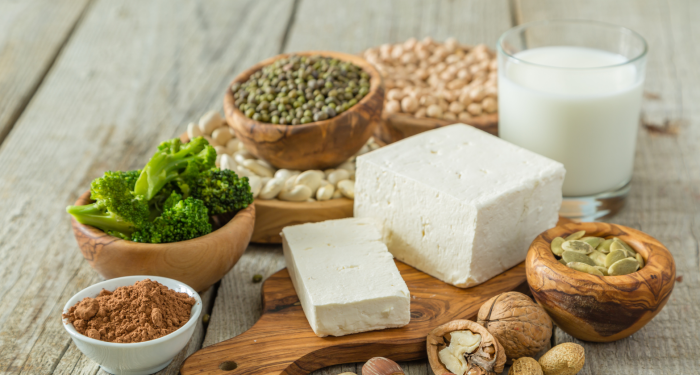
Keep a tiny list of fast, satisfying plant-forward “Plan B” meals. Think bowls, toasts, scrambles, soups, and snacky plates built from beans, grains, nuts, tofu, and lots of vegetables.
It’s surprising how often that pause changes the decision without any force.
A question to leave you with
What if you stopped trying to be stronger at 8 p.m. and instead got smarter at 12:30 p.m.?
What if the smallest shift—one sentence on a sticky note—was enough to rewrite your nights?
You don’t have to overhaul your identity, your kitchen, or your cravings; you just have to move a decision to a better time and let your calmer self lead.
That tiny act can ripple into everything: Your sleep, your energy, your mood, and your mornings.
When I made that shift, I got my evenings and my attention back.
I even got my Saturday mornings back—the ones I now spend running dusty trails and picking out weirdly beautiful squash at the market.
The truth is, I didn’t become a new person; I just gave future-me a better plan and a gentler path to follow.
Most nights, that’s all I need.
What’s Your Plant-Powered Archetype?
Ever wonder what your everyday habits say about your deeper purpose—and how they ripple out to impact the planet?
This 90-second quiz reveals the plant-powered role you’re here to play, and the tiny shift that makes it even more powerful.
12 fun questions. Instant results. Surprisingly accurate.