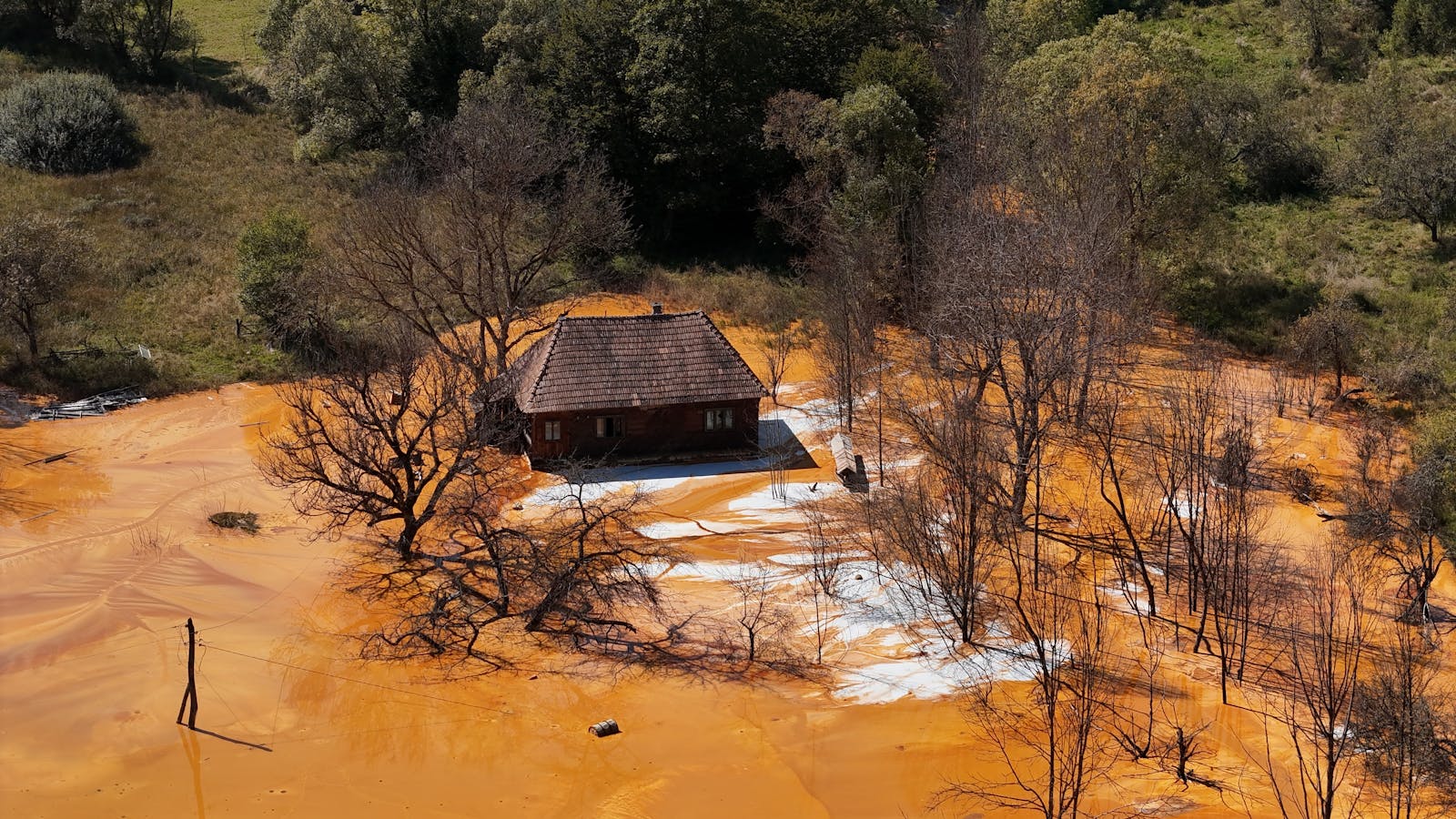
The bill for fashion's "forever chemicals" is being paid in Sampson County, North Carolina, where residents of the historically Black community of Snow Hill have spent years asking what's in their water. PFAS show up in nonstick pans, water-repellent jackets, and stain-resistant carpets, products that are eventually thrown away. The cost of that consumer convenience tends to land in rural, low-income, and disproportionately Black communities living next to where the trash ends up. As reported by Grist, a grassroots coalition led by the Environmental Justice Community Action Network (EJCAN) has now produced enough evidence to force the state's hand, even as federal funding promised to expand testing has been pulled back.
The Sampson County landfill has grown into one of the largest in the state, accepting waste from across North Carolina. Many households nearby rely on private well water for drinking, bathing, and watering gardens and animals, with no municipal system to flag contamination on their behalf.
After residents reported elevated illness rates with no formal health study to back up their concerns, EJCAN partnered with researchers to run free well-water testing. State testing told a sharper story. Samples collected by the North Carolina Department of Environmental Quality between October 2023 and April 2026 showed that roughly a quarter of wells exceeded EPA drinking water standards for PFAS.
A UNC environmental sciences professor whose team detected legacy PFAS along with newer compounds like GenX and Nafion downstream of the landfill told Grist that landfills are a common source of these chemicals, owing to the disposal of various consumer products. Some of the compounds detected match those produced by Chemours, a PFAS manufacturing facility that has reportedly sent industrial sludge to the Sampson County site.
The state has responded with point-of-use filter systems statewide, including dozens in Sampson County, plus bottled water for affected households. EJCAN has supplemented that with water filtration pitchers distributed in coordination with the North Carolina Department of Health and Human Services. Separately, the Southern Environmental Law Center has pursued legal action against landfill operator GFL Environmental, leading to a December 2024 cooperative agreement documented by The Assembly that requires the company to curb PFAS discharges and fund community projects.
Funding for the science driving all of this is now in doubt. EJCAN and partner institutions were approved for an EPA grant that would have tested hundreds of homes over multiple years. According to researchers at Appalachian State University, the grant was suspended under federal cuts before any funding was received. Private PFAS testing is expensive, putting it out of reach for most families in the area.
The Snow Hill story sits at an uncomfortable intersection most consumer-facing conversations about "forever chemicals" skip. Cleaner supply chains and stricter PFAS rules upstream matter, but so does who gets believed when they say something is wrong with their water.