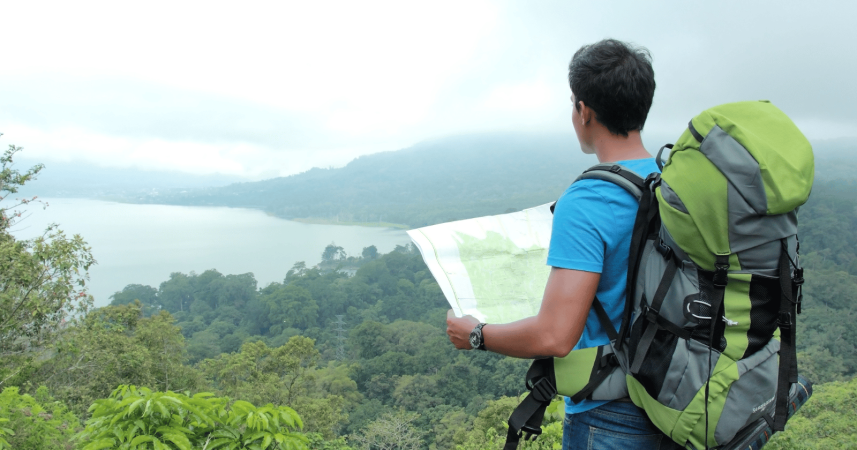
The more you explore the world, the more you realize the biggest transformations happen long after you’ve unpacked your suitcase.
Travel changes you in quiet, irreversible ways.
Not just in how you see the world, but in how you move through it. The more often you go, the more it rewires your instincts, your patience, your tolerance, even your sense of time.
After enough flights, border crossings, and long train rides, you start to notice the subtle things you no longer do. The things that fall away once you’ve been exposed to how other people live, think, and connect.
Here are eight of them.
1) You stop assuming your way is the “right” way
One of the first things frequent travelers lose is the idea that their way is the default.
I remember sitting in a café in Osaka, watching people line up for the subway in perfect silence. No pushing, no muttering, no eye-rolling. The order didn’t feel forced; it was cultural muscle memory. Compare that to what happens at most U.S. airports, and you start to see how deeply behavior reflects values.
When you’ve been abroad enough, you realize “normal” is a relative term. Breakfast in one country is rice and miso soup; in another, it’s black coffee and a croissant. There’s no universal right way to do things, just local logic shaped by geography, history, and culture.
That realization does something to you. You become more open-minded, more flexible. You stop labeling unfamiliar things as “weird” and start calling them “interesting.”
It’s not that you lose your sense of identity; you just stop assuming it’s the standard.
2) You stop overpacking — literally and emotionally
If you’ve ever dragged a massive suitcase up a narrow stairwell in Venice, you probably vowed never to do it again.
Frequent travelers become minimalists out of necessity. After your fifth or sixth trip, you stop packing “just in case” items. You realize you can buy socks anywhere.
But the real shift isn’t just physical, it’s emotional.
The same way you trim your luggage, you start trimming your attachments. You let go of grudges faster. You stop carrying relationships that feel heavy. You stop saying yes to everything just because you can.
Travel teaches you what’s essential. It makes you realize that every extra thing, whether it’s an item, a plan, or a person, has a cost.
There’s a lightness that comes with not needing to pack your entire life with you, and it stays with you long after you return home.
3) You stop chasing “perfect” plans
If you’ve traveled even a handful of times, you’ve probably had a trip that went completely sideways.
Maybe your flight was delayed 12 hours. Maybe the hotel lost your reservation. Maybe you ended up eating dinner in a gas station because everything else was closed.
At some point, you stop fighting it.
I used to plan my itineraries down to the hour. I wanted to “make the most of every moment.” But life doesn’t care about your spreadsheets. And honestly, neither does travel.
Some of my best memories came from plans that fell apart, like a missed train in Italy that turned into an impromptu dinner with strangers, or getting lost in Lisbon and finding a vegan café tucked away on a side street.
Once you’ve been through enough of those moments, you learn to leave room for chance. You start seeing flexibility as a strength, not a lack of control.
Psychologists call this “cognitive reframing,” the ability to reinterpret stress as opportunity. And travelers, over time, get really good at it.
4) You stop judging people for their choices
Before I traveled widely, I was quick to evaluate people’s lifestyles. Why would someone choose to live in a tiny apartment? Or work part-time? Or stay in a small town their whole life?
Then I met people around the world who were perfectly content doing those exact things.
A family in rural Vietnam who live mostly off the land. A group of friends in Portugal who close their cafés every afternoon for two hours just to rest and talk. A street artist in Bogotá who measures success not in money, but in creative freedom.
Travel humbles you. It teaches you that happiness wears different outfits in every country.
You start to replace judgment with curiosity. You realize that most people are just trying to make choices that make sense in their context, just like you are in yours.
It’s a quiet kind of empathy that grows the more you see of the world.
5) You stop needing constant comfort
In the beginning, I used to obsess over hotel ratings and Wi-Fi speeds. I wanted everything to be clean, predictable, and climate-controlled.
Then, somewhere between sleeping on an overnight bus in South America and showering with a bucket in Nepal, something shifted.
I stopped expecting comfort to equal happiness.
Some of my richest experiences came from uncomfortable situations, like hiking in the rain or staying in a place with no hot water. You realize that discomfort doesn’t always mean something’s wrong. Sometimes, it’s just part of the story.
Once you’ve lived that enough times, your tolerance for inconvenience skyrockets. You stop panicking when things don’t go smoothly. You adapt. You improvise.
Back home, that skill translates into everyday life. You don’t need everything to be easy to feel good anymore. You can find peace in chaos.
That’s one of travel’s most underrated gifts: it teaches resilience without you even noticing.
6) You stop trying to “see it all”
If you’ve ever tried to see all of Paris in three days, you know how exhausting it is.
When I first started traveling, I treated destinations like checklists. I wanted to hit every landmark, every “top ten” spot, every hidden gem mentioned in blogs.
But over time, that rush started feeling hollow.
Now, I’d rather spend an afternoon sitting in one café, watching how locals talk and move, than speed-walk through five attractions. I’d rather have one deep experience than twenty shallow ones.
It’s the difference between visiting and connecting.
Seasoned travelers understand that you’ll never “see it all,” not in one trip, not even in a lifetime. And that’s okay.
Because travel isn’t about collecting proof you were somewhere. It’s about being present while you’re there.
When you let go of the pressure to do everything, you actually start to see more.
7) You stop measuring value in money alone
After enough time on the road, your sense of what’s “worth it” changes completely.
A $2 bowl of pho made by a street vendor can feel like a luxury. A $200 hotel might feel sterile. The best value isn’t always the most expensive, it’s the most meaningful.
I’ve mentioned this before, but travel teaches you an economy of experience. You start spending less on things that prove status and more on things that expand your worldview.
Behavioral economists talk about the “experience economy,” the idea that we gain more long-term happiness from experiences than from possessions. Travelers figure this out organically.
You start to see time as the real currency. You notice how much of your life you trade for comfort or control. And eventually, you choose meaning over margin more often.
That’s a quiet evolution that stays with you long after your passport’s expired.
8) You stop postponing joy
There’s a moment that happens after enough trips: you stop waiting for the “right time” to live.
You’ve seen how fragile plans are. You’ve met people who dream of traveling “one day” and never do. And you’ve met others who live fully in the moment because they have no idea what next year looks like.
It changes how you move through life.
You stop saying “after this project” or “once I save a bit more.” You start saying yes more, to spontaneous road trips, to creative risks, to time off. Not because you’re reckless, but because you understand how temporary everything is.
Travel shows you that the perfect moment rarely arrives. The world doesn’t wait for you to be ready.
And once you’ve felt that truth deeply, standing under a foreign sunset, surrounded by strangers who somehow feel familiar, you start making joy a daily practice, not a future goal.
Final thoughts
Travel changes your habits in ways you can’t always see from the outside.
You stop needing to be right. You stop needing to be comfortable. You start needing to be present.
Each trip strips away a little more of what’s unnecessary until you’re left with something lighter, sharper, more alive.
The person who’s traveled ten times isn’t just more worldly; they’re usually more patient, curious, and grounded.
Because somewhere between the flights, the chaos, and the quiet mornings in unfamiliar places, they’ve learned one simple truth:
It’s not what you bring back that matters. It’s what you leave behind.