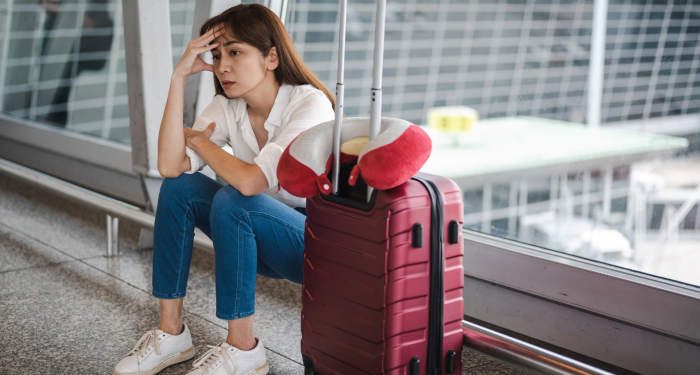
It’s often the smallest moments on a trip—missed buses, lazy mornings, shared meals—that reveal the real strength of a relationship.
Vacations aren’t just about sightseeing and sandy beaches. They’re like a magnifying glass for relationships. When we’re outside our usual routines—with no deadlines, no laundry piles, no familiar distractions—the way we travel together often reveals how we actually function as a couple.
Some habits are telling. They whisper whether you’ll last long after the suitcases are unpacked.
Let’s dive into seven of them.
1. How they handle planning (or not planning)
Do you know those couples where one person meticulously builds a spreadsheet of every meal, tour, and train departure—while the other wants to “just wing it”?
Vacations bring those differences into sharp focus. It’s not about who’s right or wrong. It’s about whether they can respect each other’s styles. If both are rigid, frustration builds. If both are too loose, plans may fall apart. The healthiest couples find a middle ground—one handles structure, the other leaves room for spontaneity.
I once traveled with friends who nearly broke up over this exact thing. She wanted to explore every local street market and he insisted on sticking to a list of “must-sees” from a travel blog. By day three, they were snapping at each other over gelato flavors. The issue wasn’t the gelato—it was the deeper inability to flex.
Psychologists have long noted that shared decision-making strengthens bonds.
As Dr. John Gottman, a leading researcher on relationships, once said, “Successful long-term relationships are created through small words, small gestures, and small acts.” Planning a trip together—without controlling or dismissing one another—falls squarely into that category.
2. Their attitude toward delays and setbacks
Flight cancellations. Lost luggage. Rain during the “perfect” beach week.
When stress hits, do they turn on each other—or turn toward each other? I’ve seen couples where one meltdown at the airport spiraled into a three-day argument. I’ve also seen others who made the best of sleeping on an airport floor, laughing about it for years afterward.
Vacations test resilience. The way couples handle the unexpected says more about their bond than picture-perfect moments ever will. If one person constantly blames the other for bad luck, it erodes goodwill fast.
But when couples treat the mishaps as “our challenge” instead of “your fault,” they show the kind of unity that keeps relationships strong.
I once missed a ferry with my partner, leaving us stranded overnight. At first, I was furious with myself for misreading the schedule.
But instead of piling on, he cracked jokes about how we’d “accidentally booked a bonus night” in the little port town. That shift in attitude turned a potential fight into one of our favorite travel stories.
3. Whether they actually enjoy downtime together
Not every moment of a vacation is go-go-go. There are long train rides, lazy mornings, and afternoons with nothing to do but sip coffee.
Here’s the quiet test: Do they enjoy just being together in those slower stretches—or do they immediately reach for their phones, get restless, or need constant distraction?
A friend once told me her biggest realization about her marriage came not during the Eiffel Tower proposal, but during a rainy weekend in a cabin. She and her husband spent hours reading, napping, and cooking—no pressure, no agenda. That calm companionship was what convinced her, “We really can build a life together.”
When couples can fill the quiet without forcing it, that’s a sign of deep compatibility. It’s not about never getting bored—it’s about being comfortable in silence, in stillness, in the unremarkable moments. Vacations highlight those gaps, and how couples handle them often predicts how they’ll handle the quieter seasons of life.
4. How they divide responsibilities
Vacations come with invisible tasks: booking tickets, navigating streets, paying for meals, even carrying the luggage.
In healthy couples, those responsibilities get shared without resentment. Maybe one person drives while the other handles directions. Maybe one books hotels while the other researches food spots. What matters isn’t perfect equality—it’s fairness and appreciation.
If one partner consistently offloads all the “mental load” onto the other, friction builds fast.
I’ve been on group trips where it was obvious one half of a couple had become the de facto tour manager—while the other floated along without thanks. Those dynamics never stayed contained to the vacation; they mirrored what was happening at home too.
What I’ve noticed is that the happiest couples treat every task—big or small—as part of the adventure. One carries the bags without complaint, the other makes sure they don’t miss the bus. And they say “thank you” for both. That attitude turns travel logistics into a sign of teamwork instead of tension.
5. Their spending habits on the trip
Money is one of the biggest stressors in relationships, and vacations shine a bright light on it.
Do they argue about every meal cost? Does one splurge without checking in? Do they share openly about what they can afford and what feels uncomfortable?
I once traveled with a couple where one person insisted on five-star hotels while the other panicked about the credit card bill. You could feel the tension simmering every night at dinner. By the time they got home, the financial stress had turned into resentment.
On the flip side, I know another couple who make a little ritual out of travel budgeting. They set aside a “fun fund” before each trip—money they can both spend guilt-free on experiences or food. That practice turns money talks into teamwork instead of conflict.
Money isn’t just about numbers—it’s about values. Couples who can navigate spending with openness and respect are far more likely to thrive back home too.
6. How they balance “together” time and “me” time
Vacations don’t erase the fact that we’re still individuals. Some people want to hike mountains at sunrise. Others want to linger in cafés until noon.
Do couples give each other space—or guilt-trip when their partner wants something different? The strongest relationships I’ve seen are ones where partners say, “You go explore the art museum, I’ll go for a run—we’ll meet later for dinner.”
That balance of closeness and autonomy is essential. Without it, resentment brews. I remember taking a trip with my ex where we did every single activity together.
By day four, I felt suffocated and cranky, and he felt rejected when I asked for just one solo hour. Looking back, it wasn’t the activities themselves—it was the lack of breathing room.
When couples allow each other independence on vacation, they show trust. And that trust spills into daily life, where space and individuality are just as important as closeness.
7. The way they talk about the experience afterward
Here’s something most people overlook: how couples recount their trip once it’s over.
Do they laugh about the wrong turns, brag about shared discoveries, and recall it as “our adventure”? Or do they highlight only frustrations—“You made us miss the bus,” “That restaurant you chose was terrible”?
The stories we tell about vacations often reflect the stories we tell about the relationship itself. If your narrative about your trip is filled with joy, gratitude, and shared ownership, that’s a promising sign. But if the story is mostly finger-pointing, it usually signals deeper cracks.
As noted by researcher Dan McAdams, who studies narrative psychology, “The life stories we construct shape our identity and our future.” If a couple builds a positive shared narrative—even around imperfect trips—they’re more likely to build a lasting one about their partnership too.
Think about it: would you rather look back on your trip as “the week everything went wrong” or “the week we made it through everything together”? That choice of story often makes the difference.
Final thoughts
Vacations don’t create problems—they reveal them. The planning, the setbacks, the downtime, the money talks—all of it pulls back the curtain on how two people function as a unit.
If you and your partner recognize yourselves in some of the trickier patterns, don’t panic. None of this is destiny. Habits can shift, dynamics can improve, and conversations can change the course of things.
But if your vacations consistently highlight partnership, fairness, humor, and joy—even in the messy moments? That’s as close as you’ll get to a quiet prediction that you’ll last.
So the next time you’re sitting in an airport lounge, stuck in traffic on a coastal road, or sharing a plate of food in a bustling market, pay attention. Those little habits you reveal while traveling together may just be the clearest map of where your relationship is heading.
If You Were a Healing Herb, Which Would You Be?
Each herb holds a unique kind of magic — soothing, awakening, grounding, or clarifying.
This 9-question quiz reveals the healing plant that mirrors your energy right now and what it says about your natural rhythm.
✨ Instant results. Deeply insightful.