When travel becomes more about status than soul, even the most beautiful places can leave you feeling oddly empty.
We’ve all seen the glossy Instagram reels: infinity pools, artfully plated breakfasts, and perfectly staged sunset shots.
But behind the hashtags and curated angles, some places are simply not worth the hype—or the bill.
And yet, certain destinations keep showing up on “must visit” lists, mainly because upper-middle-class folks have convinced themselves (and everyone else) that they’re the pinnacle of travel.
Let’s get real for a minute. Here are seven places where the ROI just doesn’t add up.
1. Santorini
Yes, the blue domes are pretty. Yes, the sunsets are fiery. But after the first evening, you’re basically stuck in an overpriced Instagram feed come to life.
Hotels here are absurdly marked up, restaurants know you’re a captive audience, and every corner is clogged with tourists all angling for the same shot.
I remember being there once in July, and it felt like a wedding reception where the entire guest list was invited but no one knew each other. Beautiful for about 24 hours, but then it hit me: I could’ve had the same views in less crowded parts of Greece—Crete, Naxos, even Paros—for a third of the cost.
Psychologists have a term for this: social proof. We assume a place must be worth it because “everyone” is going there. But once you’re in the thick of it, you realize you’re basically paying for the privilege of waiting in line for the same photo as thousands of strangers.
2. Dubai
There’s luxury, and then there’s spectacle for spectacle’s sake. Dubai falls squarely into the second category.
If you’ve ever wondered what it’s like to walk through a mall with an indoor ski slope, or sip overpriced cocktails at the top of a tower while wondering if your soul just left your body, Dubai’s for you.
But beyond the glitz, it doesn’t offer much depth. It’s a place engineered to impress, but like eating too much frosting, you quickly realize there’s no cake underneath.
As one urban geographer put it, “Dubai is less a city and more a showroom.” That about nails it.
Travel is supposed to connect us with culture, history, or nature. In Dubai, culture often feels imported, history is limited, and nature is mostly sand kept at bay with irrigation. What you’re left with is status signaling. People aren’t going for the experience—they’re going so they can say they went.
3. The Maldives
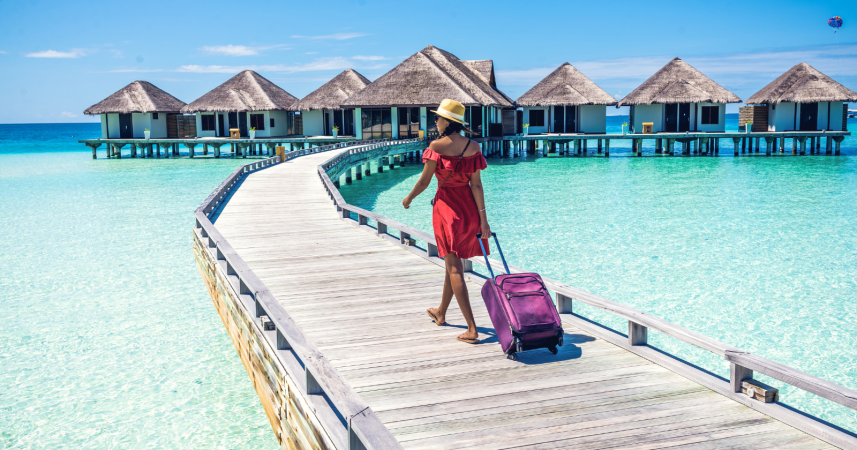
You’ve probably seen those bungalows on stilts that hover over clear turquoise water. It looks like paradise—and for one afternoon, it is.
But here’s the truth: once you’re there, you’re basically trapped on an island resort where every coffee costs $12, and the nearest “local culture” is a staged event by the hotel.
A friend of mine joked it felt like living inside a screensaver. Gorgeous, but empty. After a while, the boredom sets in, and you start wondering if you should’ve just gone to Thailand for half the price.
This is a textbook case of hedonic adaptation—the psychological phenomenon where even the most awe-inspiring views lose their effect once you’ve seen them a few times. That overwater bungalow might blow your mind at first, but by day three, it’s just “the walkway to your overpriced minibar.”
4. Napa Valley
This one might sting for the wine lovers. Napa has turned into a playground for people who love the idea of being “into wine” but mostly want to pay $50 for a tasting flight.
Don’t get me wrong, I like wine. But the vibe here is less about viticulture and more about signaling status. It’s about who can book the most exclusive tasting room and which restaurant reservation you managed to snag.
I once overheard a couple at a tasting room say, “This bottle is only $175, which is actually reasonable for Napa.” Reasonable? Only if you’ve fully bought into the theater of luxury.
I’ve mentioned this before in another post, but true wine lovers know you can get as much, if not more, out of small producers in Spain, Portugal, or even California’s less polished regions without needing to take out a small loan.
As noted by wine critic Eric Asimov, “Great wine doesn’t have to be expensive. Some of the best experiences come from discovering the unexpected in modest places.” Napa, unfortunately, has leaned hard into exclusivity rather than accessibility.
5. Iceland
Now, I’ll admit: Iceland is visually stunning. But is it $18 for a sandwich stunning?
The marketing has done an incredible job selling it as an untouched natural paradise, but at this point, it’s practically a theme park. Every “secret waterfall” is now on a Google Map list, and every hot spring is booked out.
I remember pulling into a tiny gas station café outside Reykjavik and being charged $9 for a cup of coffee that tasted like burnt water. That was the moment I realized the hype machine had fully outpaced reality.
Behavioral science helps explain why that feeling stings. As Dan Ariely explores in Predictably Irrational, our expectations shape our perception—what we expect to be breathtaking often falls short simply because anticipation lent it more value than the experience could deliver.
It’s not that the landscapes aren’t breathtaking—they are. But the sheer influx of tourists has turned “authentic Iceland” into a polished product. It’s less about discovering a country and more about consuming a brand.
6. Bora Bora
If you want to know what it feels like to spend $800 a night to live inside a travel magazine ad, Bora Bora has you covered.
The views are unreal, the waters crystal clear—but here’s the kicker: that’s about it. Unless your idea of a vacation is lying in one spot and hemorrhaging money for basic amenities, you’ll run out of things to do quickly.
I once met a couple who described it as “the most beautiful boredom we’ve ever paid for.” That sums it up better than I could.
There’s also an odd psychological pressure here. When you’ve dropped thousands on a single trip, you have to convince yourself it’s worth it.
That’s called cognitive dissonance—the mental gymnastics we perform when reality doesn’t live up to the cost. It’s easier to tell people Bora Bora was life-changing than admit it was a very pretty nap.
7. Disneyland vacations for adults
This one’s bound to ruffle feathers. But hear me out: spending thousands on a trip to Disney World or Disneyland as an adult—no kids in tow—feels like buying nostalgia at full price.
The parks are insanely crowded, food is overpriced (don’t even get me started on the $7 churros), and the whole thing feels like a meticulously designed funnel to drain your wallet.
Sure, nostalgia has its place. But when you look at the bill at the end of the week, it’s hard not to realize you could’ve had a richer, more authentic experience somewhere else entirely.
As cultural critic Neil Postman once wrote, “Entertainment is the supra-ideology of all discourse.” Disney has perfected this. They’ve convinced generations that paying more equals feeling more. But nostalgia, when bought, rarely delivers what memory promised.
The bottom line
Travel should expand your world, not shrink your bank account for the sake of a curated Instagram post.
Some of these places can be enjoyable, but let’s stop pretending they’re worth the hype just because the upper-middle-class consensus says so.
The real gems? They’re usually the places you stumble upon when you’re not trying so hard to check off a list.
And if there’s one lesson here, it’s this: don’t let social proof or glossy marketing decide where you go. The best trips often come from chasing curiosity, not hashtags.
What’s Your Plant-Powered Archetype?
Ever wonder what your everyday habits say about your deeper purpose—and how they ripple out to impact the planet?
This 90-second quiz reveals the plant-powered role you’re here to play, and the tiny shift that makes it even more powerful.
12 fun questions. Instant results. Surprisingly accurate.