Seven landscapes that recalibrate your nervous system and sense of scale—proof that awe isn’t a destination, but a practice you can bring home.
We all have places that catch our breath before we ever get there.
A photo. A story. A friend’s voice rising a little when they describe the view from a ridge, the colors at dusk, the silence that feels like presence.
If you’re like me, you don’t just travel for pictures—you travel for perspective. For quiet. For the moment your nervous system stops tugging at your sleeve and says, “Okay. Let’s just be here.”
As psychologist Dacher Keltner has said, “Awe is the feeling of being in the presence of something vast that transcends your understanding of the world.” It isn’t just pleasant; it’s regulating. It interrupts worry loops and returns you to your senses.
These seven destinations do that. Each one is stunning, yes—but more importantly, each one invites a different kind of inner reset. When you plan with awe in mind, travel becomes a practice.
1. Patagonia, Chile & Argentina
Question for you: when was the last time your goals felt small—in the best possible way?
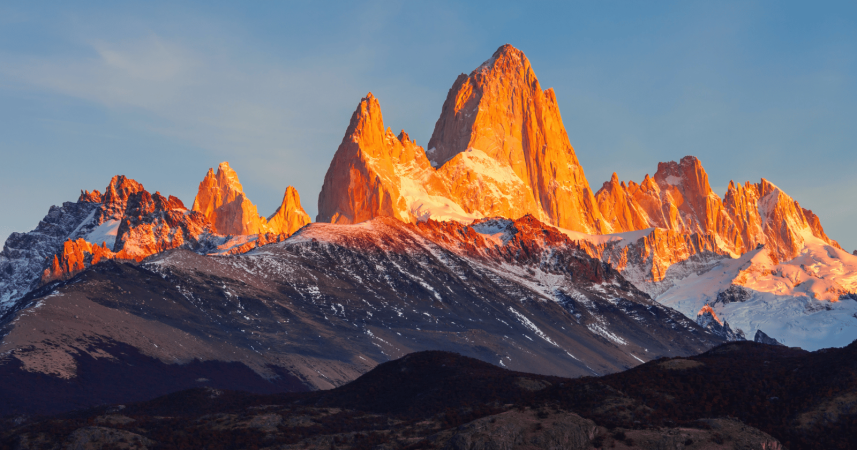
Patagonia does that to me. Granite spires. Wind that arrives like a personality. Lakes so blue they look edited, except your eyes are the editor.
Trails in Torres del Paine and around Fitz Roy aren’t just hikes; they’re lessons in pacing. I once slow-stepped a final climb in the dark, counting ten breaths at a time, and watched the towers blush pink at sunrise. No phone could’ve captured the feeling—and that was the point.
Try this: set a “breath landmark.” At every switchback or stream crossing, pause for three slow inhales and three slow exhales. Notice how your mind recalibrates without being told.
Practical bits: real wind layers, trained ankles, and one comfort ritual—a square of dark chocolate, a tiny journal, a favorite tea bag. Awe expands you; small comforts help you integrate it.
Best season? Southern Hemisphere spring and early fall for crisp days and fewer crowds. And if weather closes a trail, let it. Travel is better when we don’t try to out-macho the sky.
2. Iceland’s ring road & northern lights
“The mountains are calling and I must go.” John Muir said it about, well, mountains—but Iceland’s lava fields, waterfalls, and glaciers feel like the mountains’ wild cousin.
This is raw earth, still making itself. The first time I stood near a waterfall there, I felt like I was eavesdropping on the planet’s workshop. You learn quickly that weather has its own agenda; plans bend. That’s a good muscle to build if you tend to clutch at control.
Drive the ring road like a meditation. Give each day a single “anchor” (one waterfall, one hot spring, one black-sand beach). Everything else is bonus. You’ll end the trip proud of what you experienced instead of anxious about what you missed.
I keep a senses log: five quick lines at night—something I saw, heard, smelled, tasted, and felt. Icebergs clinking like glass; wind skimming moss; geothermal bread; steam on cold cheeks. It’s cheap therapy.
Mindset shift: if the aurora shows, wonderful. If not, let darkness be the show. That star-salted sky is medicinal. Also, soak often. A hot spring is basically an exhale your whole body understands.
3. Kyoto, Japan
Not all breathtaking moments are loud. Some arrive on padded feet.
Kyoto is the slow exhale of travel. Wooden machiya houses. Moss gardens. A thousand shades of green you don’t have names for. It’s also an invitation to practice attention, which is a form of love.
I like to start a temple morning with a question: what does “enough” look like today? Then I move at half-speed for the first hour—walking, sipping tea, reading placards like they’re poetry. By noon, my brain’s volume knob is turned down.
Visit Fushimi Inari early and let the torii gates frame your breath. Wander Arashiyama’s bamboo grove before breakfast; the sound of stalks touching in a breeze is a lullaby for adults. If you can, join a tea ceremony. The choreography of small gestures reminds you that simplicity is a kind of luxury.
Tiny tip: in any garden, choose a single element to follow for five minutes—the raked sand, the ripples in a pond, the way light lands on a maple leaf. That kind of noticing travels home with you.
As someone who once measured days in deliverables, Kyoto taught me to measure them in moments. My productivity didn’t suffer; my nervous system just stopped sprinting when a stroll would do.
4. The Namib Desert, Namibia
Ever felt your problems shrink to the size of grains of sand? Welcome to Sossusvlei.
Climbing the red dunes at dawn is a moving meditation. Your calves will file a complaint. Your inner critic will attempt a mutiny. Keep going. When you reach the ridge and look out over an ocean of dunes, you feel the healing math of perspective: same you, bigger context.
Then there’s Deadvlei—a white clay pan with fossilized camel thorn trees, stark as a charcoal drawing. It’s a reminder that beauty and barrenness can share the same address. Life is rarely either/or.
Grounding practice: when your thoughts spiral, place both palms on the sand and count five textures you can feel (fine, coarse, cool, warm, powdery). Your nervous system will take the cue.
Deserts teach economy. Water is precious; words, too. I found myself speaking softer, editing my presence the way wind edits a dune. The lesson that followed me home? Not every thought needs to be said. Not every email needs to be sent today.
Sustainability nudge: deserts are fragile. Stay on marked paths, pack out your trash, and resist the urge to carve new lines on a dune. If you’re at a lodge, ask about their water practices. Aligning choices with the land is part of the awe.
5. Petra and Wadi Rum, Jordan
Some places make you whisper without telling you to.
Walking the Siq toward the Treasury at Petra is one of those arrivals you never forget—narrow canyon, rose-red stone, that last turn where the façade appears like an inhale you’ve been saving. Then Wadi Rum takes you from crafted to cosmic: sandstone cliffs, red sand, night skies that remind you how young we are.
This is where I think about legacy—what we build, what endures, what returns to dust. It’s oddly freeing. As Mark Twain once wrote, “Travel is fatal to prejudice.” It’s also fatal to the idea that we’re the center of the story.
Spend a day climbing to the Monastery and a night in a Bedouin camp. Drink tea sweet enough to make conversation flow. Listen. The stories you hear about the desert are stories of patience, and patience is a muscle most of us undertrain.
Dialoguing with the place: bring a few index cards. On one side, write a belief you’ve outgrown. On the other, the new one you’re planting. Tuck them under a stone for a moment—symbolic, yes, but embodiment matters. Carry the card home and let it ride in your pocket until it feels true.
Pro tip: hire local guides. They know the light, the stories, and the best tea spots—and your money supports the communities stewarding these sites.
6. The Sacred Valley & Machu Picchu, Peru
There’s awe, and then there’s awe wrapped in altitude.
The Sacred Valley is more than a runway to Machu Picchu. Markets hum. Terraces curve like topographic lullabies. And the citadel itself? It’s a masterclass in building with—not against—the land.
If you can, take a multi-day approach (Inca, Salkantay, or a quieter route). Walking in gradually lets your mind arrive with your body. The final stretch—entering through the Sun Gate at sunrise—feels less like checking off a list and more like keeping a promise to your younger self.
Resilience exercise: treat every uphill as a three-part cycle—effort (count 20 steps), pause (five breaths), appreciate (name one detail you’d miss if you were rushing). It trains you to find micro-rewards inside big efforts.
Respect the place: altitude is real. Hydrate, acclimatize, and let humility—not hustle—set the pace. Tip porters well. Learn a few words of Quechua. And if you’re plant-based, you’ll eat like royalty: quinoa soups, corn, potatoes in more varieties than you knew existed, avocados that spoil you for grocery-store versions forever.
7. Fiordland, New Zealand
Some landscapes feel like they were built for scale. Fiordland is one of them.
Milford and Doubtful Sounds are cathedrals of water and stone. On a rainy day (the best kind here), waterfalls braid down cliffs in temporary ribbons. The stillness is thick enough to taste. If your thoughts tend to scatter like birds, this is where they settle on your shoulder and stay awhile.
I bring a small habit here: the “two-minute sit.” At any outlook, I put the phone on airplane mode, set a timer, close my eyes, and listen for layers—wind, water, birds, boat engines, silence within noise. When the timer ends, I open my eyes and look again. The second look is always richer.
If you can lace up for the Kepler or Routeburn, do it. The climbs are steady, the vistas feel earned, and the moss looks like it’s been rehearsing for centuries. Insect repellent is not optional. Neither is a sense of humor when the skies open and your plans shift like tides.
Small courage: book an overnight on the water. Night tightens the focus and expands the meaning. I slept more deeply there than I do in most hotels because the soundscape did the tucking-in.
How to travel like it’s a practice (and bring it home)
Awe changes us—our sense of time, our generosity, our tolerance for uncertainty. And the best part? You don’t have to wait for “big trips” to access it. Here’s how I keep the spirit of these places alive when I’m back to laundry and deadlines:
-
Choose an intention before you go. “I’m practicing patience,” or “I’m collecting quiet.” Let it guide daily choices and prune decision fatigue.
-
Design for presence. One anchor activity per day, then space around it. Margin isn’t laziness; it’s how memories form.
-
Keep an awe log. One sentence each evening: the moment that caught your breath and why. Don’t evaluate—witness.
-
Pack for presence. Earplugs, a soft scarf, a tiny notebook, and a pencil that won’t leak at altitude. Add your non-negotiables.
-
Learn local rhythms. Ask where people shop, walk, and rest. Awe is easier when you move at a place’s natural speed.
-
Set phone rules that make sense. For me: airplane mode during dawn and dusk, when the light is most generous.
-
Travel kindly. Refill bottles, respect wildlife, tip well, and leave everything a little better than you found it.
-
Bring home one small ritual. Maybe it’s the two-minute sit. Maybe it’s asking each morning, “What’s enough for today?”
Final thought? Travel doesn’t fix life, but it teaches it. These seven destinations can shake loose whatever’s stuck—not because they’re Instagrammable, but because they’re generous teachers.
Go with curiosity. Come home with capacity.
And when everyday life feels flat, remember: awe isn’t a location. It’s a way of looking.
If You Were a Healing Herb, Which Would You Be?
Each herb holds a unique kind of magic — soothing, awakening, grounding, or clarifying.
This 9-question quiz reveals the healing plant that mirrors your energy right now and what it says about your natural rhythm.
✨ Instant results. Deeply insightful.