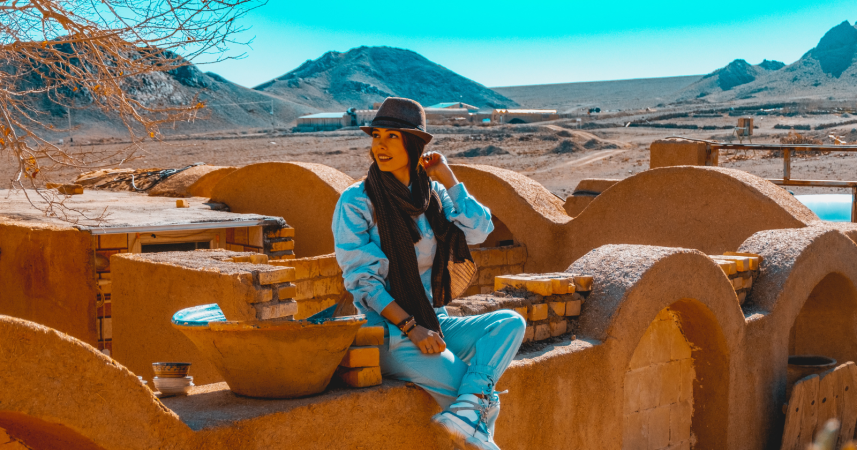
There's a world beyond the usual suspects that most American travelers never consider, and it's far more interesting.
I was scrolling through travel photos last night, looking at the usual suspects: Paris, London, Rome, Barcelona. Beautiful places, don't get me wrong. But also, completely predictable.
Here's what I've noticed after years of wandering around and talking to fellow travelers: most Americans stick to a remarkably narrow band of destinations. Western Europe, maybe Mexico or the Caribbean if they're feeling adventurous. Japan if they're really pushing their comfort zone.
But there's a whole world out there that remains largely unexplored by American tourists. Countries that offer incredible experiences, rich cultures, and perspectives you simply can't get from the well-worn tourist trail.
Today, we're looking at eight countries that signal you've got genuinely adventurous taste. Not because they're dangerous or difficult, but because they require a certain willingness to step outside the familiar and embrace the unknown.
If you've been to these places, you're already operating on a different level than most American travelers.
1) Ethiopia
Most Americans couldn't point to Ethiopia on a map, let alone tell you anything about traveling there.
Which is exactly why visiting makes you interesting.
Ethiopia offers something rare in modern travel: a place that feels genuinely different from anywhere else. The food, the culture, the landscapes, the history. It's not a slightly exotic version of something familiar. It's completely its own thing.
The rock-hewn churches of Lalibela are among the most impressive architectural achievements on earth. The coffee ceremony is a daily ritual that puts Starbucks to shame. The cuisine, with its injera bread and complex spice blends, is unlike anything in the American food landscape.
But here's what really sets Ethiopia apart: it was never colonized. That means its culture developed without the Western influence that shaped so much of the rest of the world.
The calendar is different. The time system is different. The entire framework of daily life operates on its own terms.
Americans who visit Ethiopia come back changed, with a genuinely expanded understanding of how diverse human civilization actually is.
2) Uzbekistan
When was the last time you heard someone say they were heading to Uzbekistan for vacation?
Exactly.
The Silk Road cities of Samarkand, Bukhara, and Khiva are architectural marvels that most Americans have never even heard of.
We're talking about mosques and madrasas covered in tilework so intricate and beautiful it makes European cathedrals look plain by comparison.
The country sits at the crossroads of Central Asia, where Persian, Turkic, and Mongol cultures collided and mixed for centuries. The result is something you can't experience anywhere else.
Tourism infrastructure has improved dramatically in recent years, but it's still far from overrun. You can wander through ancient cities without fighting through crowds of selfie-stick wielders.
The food is another revelation. Plov, lagman, samsa. It's hearty, flavorful, and completely absent from the American dining scene outside of a few neighborhoods in New York.
Choosing Uzbekistan shows you're willing to go where the guidebooks don't automatically recommend. That's adventurous by definition.
3) Laos
Thailand gets millions of American tourists every year. Vietnam has become increasingly popular. But Laos? Most Americans couldn't tell you the capital city.
Laos is what Southeast Asia used to be before mass tourism transformed it. It's slower, quieter, more traditional. The temples are just as beautiful, the food is just as good, but you're experiencing it without the infrastructure built specifically to cater to Western tourists.
Luang Prabang is one of the most charming cities in Asia, with French colonial architecture mixed with Buddhist temples, all set along the Mekong River.
The morning alms-giving ceremony, where monks walk through the streets collecting offerings, happens without the tourist circus you'd find in more popular destinations.
The country is poor, and that's visible. But it's also remarkably peaceful and welcoming. The bombings from the Vietnam War era are still present in the landscape and memory, giving the place a historical weight that most beach destinations lack.
Americans who visit Laos are usually looking for something beyond the typical Southeast Asian backpacker trail. They want authenticity, whatever that means in a globalized world. Laos delivers that better than most places.
4) Albania
Europe without the crowds, the prices, or the pretension. That's Albania in a nutshell.
The Albanian Riviera offers beaches that rival anything in Greece or Croatia, but you'll pay a fraction of the cost and deal with a fraction of the tourists. The mountains in the north are spectacular, with hiking trails that see maybe a dozen visitors a day.
Tirana, the capital, is weird in the best way. Communist-era buildings painted in bright colors, a nightlife scene that rivals any European capital, and food that blends Mediterranean, Ottoman, and Balkan influences.
But here's what makes Albania genuinely adventurous: it was closed to the outside world for decades under communist dictatorship. It only really opened up in the 1990s. The result is a country that's still figuring out tourism, which means the experience feels raw and unfiltered in ways that Italy or France simply can't match anymore.
Some of the most memorable travel experiences come from places that aren't trying too hard to impress you. Albania fits that perfectly.
5) Iran
Let's acknowledge the elephant in the room: most Americans think Iran is dangerous or off-limits.
It's not. Or at least, it wasn't for much of recent history, though political situations do shift.
Isfahan, Shiraz, and Persepolis are among the most historically and architecturally significant sites in the world. Persian culture gave us poetry, gardens, and artistic traditions that influenced everything from Islamic art to Western literature.
The hospitality is legendary. Iranians, particularly outside Tehran, are remarkably welcoming to American visitors, often going out of their way to show kindness despite the political tensions between governments.
The food is sophisticated and varied, far beyond the kebabs that most Americans associate with Middle Eastern cuisine. The tea culture, the bazaars, the mosques with their mirror work and tilework. It's all extraordinary.
Visiting Iran requires dealing with visa complications and accepting that you're going somewhere most Americans actively avoid. That's precisely what makes it adventurous. You're choosing to see a place for yourself rather than accepting the narrative you've been handed.
6) Bolivia
Peru gets the tourists. Everyone wants to see Machu Picchu and walk around Cusco. But Bolivia? That's where things get interesting.
The Salar de Uyuni, the world's largest salt flat, creates landscapes that look like another planet. The city of La Paz sits in a bowl surrounded by mountains, with cable cars connecting different neighborhoods at dizzying altitudes. Lake Titicaca's Bolivian side is less developed and more authentic than the Peruvian side.
Bolivia is also one of the poorest countries in South America, and that poverty is visible and confronting. It challenges your comfort zone in ways that more developed destinations don't.
The indigenous culture is strong and present in ways that have been diluted in neighboring countries. The markets, the traditional dress, the languages. You're not seeing preserved culture for tourists. You're seeing living culture that exists for its own reasons.
Americans who visit Bolivia are usually serious travelers, not casual vacationers. They're willing to deal with altitude sickness, basic accommodations, and long bus rides in exchange for experiences that feel genuine and unmediated.
7) Madagascar
If you've been to Madagascar, you're in a genuinely tiny minority of American travelers.
The island split from the African continent millions of years ago, which means the wildlife evolved in complete isolation. Lemurs, chameleons, birds, plants. Roughly 90% of the species are found nowhere else on earth.
The landscapes range from rainforest to desert, with baobab trees that look like they were planted upside down and limestone formations called tsingy that create otherworldly stone forests.
But it's not easy travel. Infrastructure is limited, roads are often terrible, and getting around requires patience and flexibility. You can't just show up and expect everything to work smoothly.
That's exactly why visiting Madagascar marks you as adventurous. You're choosing difficulty and uncertainty in exchange for experiencing something truly unique. Most Americans aren't willing to make that trade-off.
The cultural blend is also fascinating. African, Asian, and Arab influences mixed together in ways that exist nowhere else. The food, the music, the language. It's all distinctly Malagasy.
8) Kazakhstan
The largest landlocked country in the world, and most Americans know absolutely nothing about it beyond Borat jokes.
Which is a shame, because Kazakhstan is genuinely fascinating.
The landscapes are enormous and varied. Mountains, steppes, deserts, and Almaty, the former capital, sits against a backdrop of snow-capped peaks that rival anything in Colorado.
The country is rapidly modernizing while trying to maintain its nomadic heritage. You can stay in a yurt in the countryside and then visit Nur-Sultan (formerly Astana), a futuristic capital city that looks like something from a science fiction movie.
The Silk Road history is everywhere. The food blends Russian, Turkish, and Central Asian influences. And the hospitality culture is strong, with elaborate multi-course meals being standard when visiting someone's home.
Americans who visit Kazakhstan are usually either expatriates working there or travelers who've exhausted the more obvious destinations and are looking for something completely different. It's not on anyone's bucket list, which is precisely what makes it interesting.
The willingness to visit a place you've never heard anyone talk about requires a different kind of curiosity than following the standard travel influencer circuit.
Conclusion
Travel is personal, and there's nothing wrong with visiting Paris or Tokyo or wherever the guidebooks recommend.
But there's something to be said for going where the crowds aren't. For choosing destinations based on genuine curiosity rather than Instagram potential or cultural familiarity.
These eight countries represent a different approach to travel. They require more research, more flexibility, and more willingness to be uncomfortable. But they also offer experiences that simply aren't available in more popular destinations.
If you've been to even a few of these places, you're operating with a different set of assumptions about what travel should be. You're prioritizing experience and understanding over comfort and convenience.
And yeah, that makes you more adventurous than most Americans. Own it.
If You Were a Healing Herb, Which Would You Be?
Each herb holds a unique kind of magic — soothing, awakening, grounding, or clarifying.
This 9-question quiz reveals the healing plant that mirrors your energy right now and what it says about your natural rhythm.
✨ Instant results. Deeply insightful.