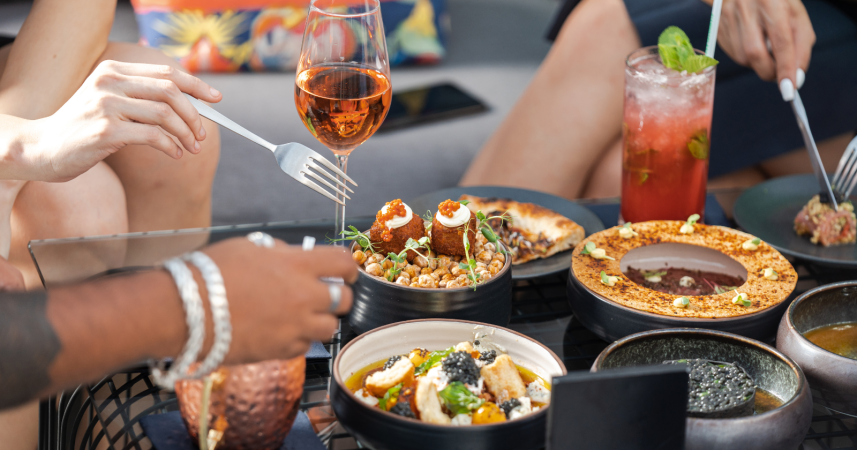
Vegan travel isn’t as tricky as it seems—these simple rules keep every trip delicious, no matter where you land.
Traveling as a vegan can feel like a test of creativity, patience, and resourcefulness.
On the surface, it seems simple enough—just avoid animal products. But when you’re navigating menus in foreign languages, catching overnight trains, or trying to find breakfast in an airport at 5 a.m., things can get tricky fast.
Over the years, I’ve learned that the key isn’t perfection but preparation and flexibility. You don’t need a suitcase full of dehydrated meals to eat well, and you don’t have to limit yourself to a handful of “safe” cuisines.
With the right habits, you can thrive on plants no matter where your passport takes you.
Here are eight rules I live by whenever I travel, each one tested through plenty of trial and error (and the occasional hunger pang).
1. Do my homework before I go
Every successful vegan trip begins long before I get on the plane. A little research saves me from awkward moments in restaurants where the only option might otherwise be a plate of fries.
I usually start with HappyCow, but I don’t stop there. Travel forums, vegan blogs, and even Instagram geotags often point me toward hidden gems that don’t always appear in the mainstream guides.
When I visited Budapest, for example, the most memorable meal wasn’t in the top tourist recommendations but in a tiny café I stumbled across thanks to a local vegan blogger.
They served a paprika-spiced seitan stew that felt like a plant-based love letter to Hungarian tradition. If I hadn’t dug deeper, I never would have found it.
The beauty of this preparation is that it doesn’t just guarantee food—it also builds excitement. Looking at menus, planning little food stops, and imagining the dishes I’ll try gets me hyped for the trip before I’ve even packed my bags.
2. Learn key food phrases in the local language
If you’ve ever stared blankly at a menu in a language you don’t understand, you know the feeling of panic that comes next.
That’s why I make a point to learn a handful of phrases before I go. Words like “vegan,” “no meat,” “no dairy,” or “vegetables only” have saved me countless times.
When I was in rural Japan, I quickly discovered that “vegetarian” and “vegan” didn’t always translate the way I thought they would.
But once I practiced how to say “no fish, no egg, no dairy,” doors opened. Suddenly, I wasn’t the confused foreigner—I was the curious traveler making an effort.
That effort was often rewarded with extra care from the staff, sometimes even a custom dish.
It’s also fun to see how proud people are when you use their language, even in small ways. A smile, a thank-you, and a few key food words can be as valuable as your passport when it comes to getting fed.
3. Pack emergency snacks
I can’t count the number of times a bag of nuts or a protein bar has saved me on a delayed flight or a long bus ride.
Traveling is unpredictable, and there’s nothing worse than being both hungry and unprepared. A small stash of snacks means I’m never at the mercy of whatever sad sandwich or mystery meal shows up at the next stop.
I learned this lesson the hard way during a layover in a small European airport where every kiosk sold nothing but ham sandwiches. I wandered for an hour, stomach growling, before realizing my only option was to peel a banana from my bag and make do.
Since then, I never travel without a backup supply.
Snacks also give you a sense of comfort. Even if you don’t end up needing them, knowing you have something reliable in your bag takes the stress out of travel.
4. Visit grocery stores and markets
Restaurants are fun, but grocery stores and markets are where the real discoveries happen.
I always make it a point to stop by the local supermarket as soon as I arrive. Fresh produce, bread, plant milks, and even regional snacks often give me insight into a culture that no fancy dinner could provide.
In Mexico City, for instance, I found mangoes so sweet they put every supermarket fruit I’d ever had to shame.
In Berlin, I stumbled across oat-based chocolate bars that became my nightly treat.
Markets, in particular, are full of surprises—spices, nuts, legumes, and freshly baked breads that cost a fraction of what you’d pay in a touristy restaurant.
Plus, there’s something liberating about knowing you can pull together a simple meal yourself. Even a loaf of bread, some hummus, and a pile of fresh veggies can be a feast when you’ve been running around all day.
5. Stay flexible with cuisine
The more I travel, the more I realize that every culture has dishes that are naturally vegan—or can be adapted with a small tweak.
Indian dals, Middle Eastern falafel, Ethiopian injera with vegetable stews, Mediterranean mezze spreads—there’s a treasure trove of vegan-friendly foods if you’re willing to explore.
When I was in Vietnam, I worried about all the fish sauce. But by asking for dishes “chay” (the Buddhist-inspired vegetarian way), I discovered a whole world of plant-based pho, noodle bowls, and spring rolls.
It wasn’t just delicious—it connected me to a tradition that had existed for centuries.
Approaching cuisine with curiosity instead of fear makes traveling far more rewarding. You’re not just looking for something to eat—you’re learning how plants are celebrated in different corners of the world.
6. Ask locals for advice
Locals are often the best resource when it comes to finding vegan options. Taxi drivers, tour guides, hotel staff, and even people you meet on the street can point you in directions no app or blog could predict.
In Lisbon, I asked a barista if she knew of any vegan-friendly places nearby. Instead of brushing me off, she lit up and told me about her favorite little spot hidden in an alley two streets over.
It turned out to be one of the best meals of my trip—a creamy mushroom risotto that still makes me smile when I think about it.
Vegans especially love helping other vegans. I’ve had total strangers draw me maps, write down phrases, or even walk me to their favorite spots once they hear I’m plant-based. That sense of community is one of the best parts of vegan travel.
7. Book accommodations with kitchens
I don’t always want to cook when I’m traveling, but having the option is a game-changer.
Even a small kitchenette in a hotel or Airbnb can make all the difference on nights when you’re too tired to search for a restaurant. A quick stir-fry or a bowl of pasta with veggies from the local market can feel like heaven after a long day.
Once, after three weeks of nonstop restaurant meals in Europe, I booked a place in Barcelona with a tiny kitchen.
Making myself a simple chickpea salad and eating it on the balcony while the city buzzed below was one of the highlights of my trip. It reminded me that comfort sometimes comes from the simplest meals.
Kitchens don’t just give you food security—they also help stretch your budget. A few home-cooked meals free up money to splurge on the vegan fine-dining spots you’ve been eyeing.
8. Keep my mindset adventurous
Perhaps the most important rule I follow is to stay curious.
Travel challenges your routines, and being vegan doesn’t change that—it enhances it. Every time I discover a new ingredient or adapt a recipe to make it plant-based, I’m reminded that food is one of the most exciting ways to experience culture.
There have been moments where I wasn’t sure what I was eating, but I trusted the process and came away with a new favorite dish. And there have been times where I laughed at myself for getting it wrong—but those stories are just as valuable as the meals.
When you approach vegan travel with an adventurous spirit, you stop worrying about what you might miss and start enjoying the surprises waiting for you. That mindset makes every bite taste better.
Final thoughts
Eating vegan while traveling doesn’t have to be stressful or restrictive.
With a little preparation, a few backup snacks, and a willingness to explore, you can enjoy some of the best food experiences of your life.
The rules I follow aren’t about building walls around what I can’t eat—they’re about opening doors to everything I can.
After all, travel is about connection: to people, to culture, and to flavor. And when you carry that perspective with you, eating vegan anywhere in the world becomes less of a challenge and more of an adventure.
If You Were a Healing Herb, Which Would You Be?
Each herb holds a unique kind of magic — soothing, awakening, grounding, or clarifying.
This 9-question quiz reveals the healing plant that mirrors your energy right now and what it says about your natural rhythm.
✨ Instant results. Deeply insightful.