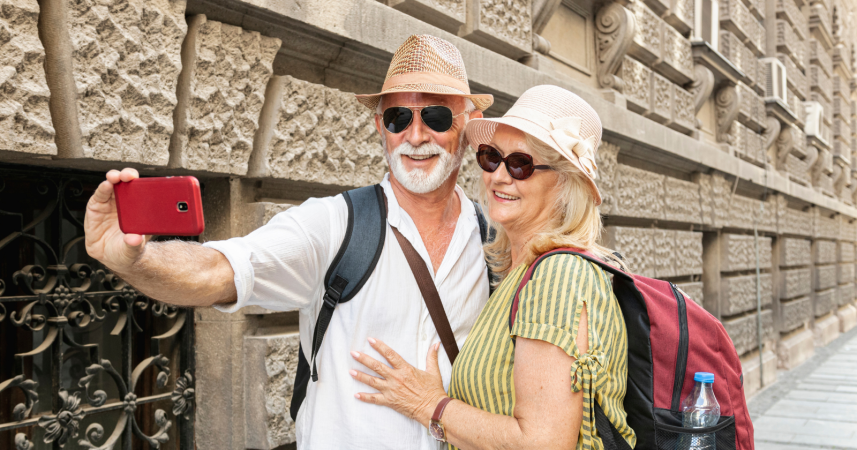
Travel styles have changed dramatically over the decades, and certain behaviors make generational differences crystal clear.
I was standing in line at a museum ticket counter in Rome last summer when I noticed something.
The couple ahead of me was having a full conversation with the clerk about the best way to see the Colosseum, asking about timing, asking about crowds, making sure they understood every detail.
Meanwhile, everyone under 40 in line was staring at their phones, probably already knowing exactly where they'd go next thanks to Google Maps.
It hit me then: you can spot generational differences everywhere when you travel, but boomers have some distinct tells that make them instantly recognizable.
And here's the thing. I'm not saying this to mock anyone. My parents are boomers, and I've traveled with them enough to see these patterns up close. Some of these habits come from a time when travel required more planning and less spontaneity. Others reflect values that maybe we've lost in our scroll-and-go era.
Let's look at what actually gives boomers away when they're on the road.
1) They talk to actual humans for travel advice
Boomers value the human factor in hospitality more than twice as much as other generations do, preferring personal interaction over technology services.
Walk into any hotel lobby and watch. Younger travelers will beeline for their rooms, maybe tapping their phone to unlock the door. Boomers? They're chatting with the front desk staff about restaurant recommendations, asking about the neighborhood, getting the full download.
Most boomers still use travel agents to book their trips, which seems wild in an age where you can plan an entire European vacation from your couch. But there's something to be said for having someone who knows what they're doing handle the logistics.
I watched my dad spend 20 minutes talking to a local shopkeeper in Barcelona about where to get the best paella. The guy drew him a map on a napkin. Could my dad have Googled it? Sure. But he got a story out of it, plus the paella was incredible.
2) They bring actual cash and use it regularly
Here's a stat that surprised me: nine in ten UK travelers aged 65 and over used cash abroad in the last 12 months.
While I'm tapping my phone or card for everything, boomers are still hitting up currency exchange counters at the airport. They've got envelopes of sorted bills. They know the exchange rates. They're not worried about transaction fees because they planned ahead.
There's a security in cash that digital natives don't quite get. You can see it, count it, budget with it. When it's gone, it's gone. No surprise charges three weeks later.
Plus, and this matters, exchanging currency is a habitual part of their travel routine, rooted in comfort and familiarity.
3) They actually print things out
Boarding passes. Hotel confirmations. Museum tickets. Maps. If it can be printed, boomers will print it.
I used to think this was overkill until my phone died in Prague and I had no way to prove I had a hotel reservation.
My travel companion, a boomer friend of my parents, pulled out a folder with every confirmation we needed. Suddenly, paper didn't seem so ridiculous.
It's a backup system from an era when technology wasn't reliable. And it comes in really handy during those times when technology still isn't reliable.
The printed itinerary is also something you can hand to a taxi driver or show to a confused hotel clerk without worrying about your phone screen timing out or being in the wrong language setting.
4) They're not afraid to spend money on comfort
Unlike younger travelers who hunt for cheap flights and hostels, baby boomers prioritize comfort over budget, often choosing four-star hotels, spacious flights, and private tours.
The generational difference in travel spending is stark. My generation will suffer through a 6-hour layover to save $50. Boomers will pay extra for the direct flight, the better seat, the room with the view.
Part of this is financial. They're in their peak earning years or living off decades of savings. But part of it is also philosophical. They're not trying to prove they can rough it because they've already done that. Now they simply want to enjoy themselves, and rightly so.
When I travel with older family members, I'm always struck by how much better the experience is when you're not constantly worried about pinching pennies. There's a lesson there.
5) They avoid QR codes like they're personally offensive
Baby boomers are less likely to embrace QR codes than their younger cohorts.
You see this everywhere now. Restaurants with QR code menus. Museums with QR code audio guides. Hotels with QR code check-in. And boomers? They're asking for the physical version.
"Do you have a paper menu?" becomes their rallying cry.
Part of this is about digital literacy, sure. But it's also about experience. They want to hold something, to not have to squint at their phone while trying to enjoy dinner.
I get it. Sometimes I'm tired of mediating everything through a screen too. There's something nice about just reading a menu without unlocking your phone, finding the WiFi, scanning the code, waiting for it to load.
6) They book way, way ahead
Baby boomers take the most time to plan their trips, often booking months in advance.
While younger travelers are booking trips three weeks out (or sometimes three days out), boomers have their summer vacation locked in by February.
This isn't just about being organized. It's about how travel used to work. Before last-minute flight deals and algorithm-optimized pricing, you booked early to get what you wanted. That hotel you liked? It would sell out. The good tours? Already full.
My mom has her entire year of travel planned by January 1st. She knows where she'll be for her cousin's birthday in August, what cruise she's taking in October, when she's visiting her sister in Arizona. There's a peace in that level of planning that I honestly envy sometimes.
Sure, it's less spontaneous. But it also means she never shows up somewhere and finds out everything's booked.
7) They prefer familiar chain restaurants over local spots
Here's something I've noticed: while younger travelers hunt for the most authentic local taco stand or the hidden ramen joint only locals know about, boomers are relieved when they spot an Olive Garden or Outback Steakhouse.
Almost half of US baby boomers plan to travel to destinations they've previously visited, and this preference for the familiar extends to where they eat.
I used to judge this hard. Why fly to Italy just to eat at places you could find at home? But I've softened on it after traveling with my parents.
For them, it's about reducing uncertainty in an already uncertain experience. When you're dealing with jet lag, language barriers, and unfamiliar streets, sometimes you just want a meal you know you'll like. No surprises. No translation confusion. No wondering if you're going to hate what you ordered.
My dad will research local restaurants before a trip, sure. But if we've been walking all day and everyone's tired and cranky? He's steering us toward whatever chain he recognizes.
There's also a practical element. Chain restaurants have consistent standards for cleanliness and food safety, which matters more when you're dealing with potential health issues or dietary restrictions. When you're 65 and your stomach isn't what it used to be, the adventure of street food loses some of its appeal.
Is it the most culturally immersive choice? No. But it's honest. And sometimes comfort wins over authenticity, especially when you're far from home.
Conclusion
These habits might seem outdated, but they come from a time when travel required more planning and less improvisation.
Are boomers obvious when they travel? Absolutely. But there's something to be said for their approach. They talk to real people, they plan ahead, they value comfort over saving a few bucks.
Next time you spot a boomer with printed boarding passes and a pocket full of local currency, remember they're working with strategies that got them through decades of travel before smartphones existed. And honestly, some of those strategies still work pretty well.
If You Were a Healing Herb, Which Would You Be?
Each herb holds a unique kind of magic — soothing, awakening, grounding, or clarifying.
This 9-question quiz reveals the healing plant that mirrors your energy right now and what it says about your natural rhythm.
✨ Instant results. Deeply insightful.