Living in Japan taught me that wisdom doesn’t always come from grand lessons. Sometimes it comes from tiny, quiet habits that seem ordinary at first.
When I first moved to Japan, I thought I was just going for the adventure.
New food, new language, new culture. That was enough of a draw.
But what I didn’t realize was how much the experience would quietly reshape the way I lived.
Japan has this way of weaving mindfulness into everything. From how people eat, to how they walk, to how they greet each other. Nothing feels rushed or careless.
Even now, years later, I still find myself living by the small lessons I picked up there.
Here are seven habits that stuck with me long after I came home.
1) Paying attention to the small stuff
In Japan, small details matter.
From the way a shopkeeper wraps your purchase, to how someone carefully folds a napkin at a restaurant, you can tell that attention is a form of respect.
It’s not about perfection. It’s about care.
When I came back home, I noticed how often we move through life on autopilot. We rush through emails, eat in front of screens, multitask like it’s a badge of honor.
But in Japan, even pouring tea is an act worth slowing down for.
I started practicing this by focusing on one thing at a time. Whether I’m cooking or editing photos, I try to be fully there. The difference it makes to your peace of mind is huge.
Because when you give small moments your full attention, they stop feeling small.
2) Taking shoes off at the door
This might sound minor, but it’s deeper than it looks.
In Japan, removing your shoes before entering a home (or even certain workplaces) is a sign of respect. You leave the dirt, noise, and rush of the outside world behind you.
I kept that habit when I returned home, and it became something symbolic.
Now, whenever I take off my shoes, I imagine I’m switching gears. The day might have been chaotic, but the moment I step inside, it’s a signal to slow down.
It’s my way of saying, “You’re home now. Breathe.”
And I’ve noticed that small ritual helps me mentally reset. It’s simple, but it makes a world of difference.
3) Practicing omotenashi
Omotenashi roughly translates to “selfless hospitality.”
It’s about giving without expecting anything in return.
When I lived in Kyoto, I once got lost trying to find a small music venue. A woman walking her dog stopped to help me. She didn’t just point the way; she walked with me for ten minutes to make sure I got there.
Then she bowed and left before I could even thank her properly.
That kind of quiet generosity changes you.
Now, I try to practice that wherever I go. I smile at strangers, help people carry heavy bags, or hold the door a few seconds longer. Not for recognition, but because it makes the world a little softer.
And funnily enough, when you give freely like that, you end up receiving more in return.
4) Eating mindfully
Food in Japan is rarely an afterthought.
Even the simplest meal feels intentional. A bowl of miso soup, some rice, a few pickled vegetables. Balanced, colorful, nourishing.
People take time to appreciate what’s on the plate. Meals aren’t just about feeding the body, they’re a moment to pause.
That shifted how I view eating.
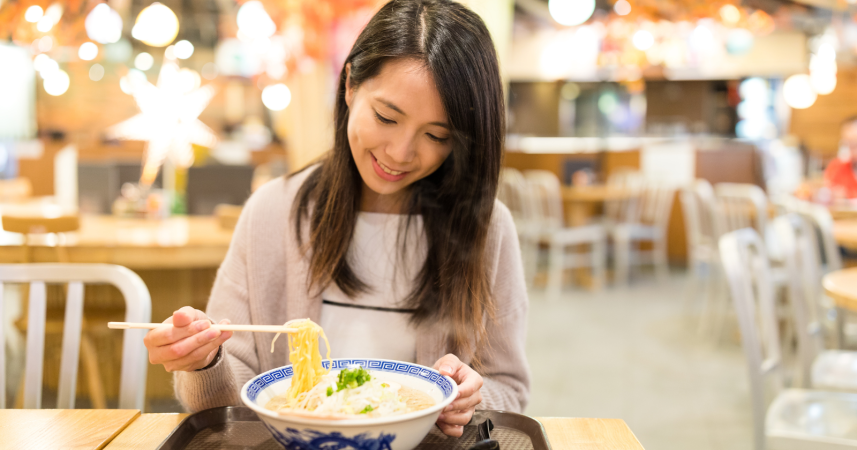
As a vegan, I already pay attention to what I eat, but Japan taught me to pay attention to how I eat. To chew slowly. To notice flavors. To feel grateful for where my food comes from.
These days, I eat with fewer distractions. No phone, no scrolling. Just me, the meal, and the moment.
It’s such a simple change, but it turns something ordinary into something grounding.
5) Respecting shared spaces

Japan is one of the cleanest places I’ve ever been.
Not because there are trash cans everywhere (there actually aren’t many), but because people take personal responsibility for public spaces.
You don’t see litter on the streets or graffiti on walls. Even in crowded train stations, people line up neatly and wait their turn.
It’s a kind of unspoken social contract: you take care of the space you share.
When I came back to California, I found myself cleaning up after others without even thinking about it. Picking up stray coffee cups, wiping down tables, keeping noise levels low in shared environments.
Not because anyone was watching, but because once you experience that collective respect, it’s hard to go back.
Psychologists call this “prosocial behavior.” When we see others contributing to a shared good, it encourages us to do the same.
That’s something worth spreading.
6) Finding beauty in simplicity
Minimalism is often associated with Japan, and for good reason.
From the architecture to the art, there’s a focus on clean lines, open space, and functionality. But what really stands out is the mindset behind it.
Simplicity isn’t about having less just for the sake of it. It’s about having what truly matters and letting go of the rest.
I used to hang onto things out of habit. Old clothes, stacks of paper, gear I thought I might use “someday.” But after living in Japan, I started decluttering bit by bit.
Now, when I look around my home, I want every object to earn its place. Either it’s useful, or it brings me joy.
That mindset spills into everything else too. Simplicity in schedule, simplicity in decisions, simplicity in expectations.
When you strip away the excess, what’s left feels more meaningful.
7) Being considerate in public
One of the first things I noticed in Japan was how quiet public spaces were.
Trains, buses, cafes. People spoke softly or not at all. Phones were silenced. There was this beautiful sense of calm even in the busiest cities.
It wasn’t about strict rules, it was about empathy.
Everyone seemed to move through the world with awareness that their behavior affected others.
That idea has stuck with me ever since.
Now, when I’m in line at the grocery store or sitting in a café, I try to be mindful of how I show up.
Am I adding to the noise or contributing to peace?
It’s not about being perfect. Just aware.
Small courtesies add up, and when more people start practicing them, the collective atmosphere shifts.
Final thoughts
Living in Japan taught me that wisdom doesn’t always come from grand lessons. Sometimes it comes from tiny, quiet habits that seem ordinary at first.
Pay attention. Show respect. Slow down.
These are things we all know deep down, but seeing them lived out every day changed how I view what it means to live well.
You don’t have to move across the world to practice them.
You can start today, wherever you are.
Because sometimes, the most powerful habits are the ones that feel almost invisible.