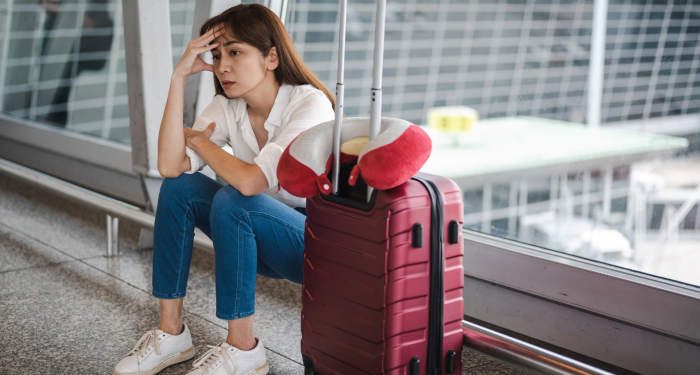
After years of travel mishaps and life lessons, boomers have mastered the art of staying calm when things go wrong. These seven vacation setbacks that once caused chaos now barely faze them.
Vacations are supposed to be fun, right?
But if you’ve ever found yourself standing at a baggage carousel with no suitcase in sight, or dealing with a sudden downpour that wipes out your carefully planned beach day, you know trips can test your patience just as much as they refresh your soul.
The truth is, what separates a stressful trip from a memorable one isn’t the absence of problems—it’s how we handle them.
I’ve noticed that some boomers, perhaps thanks to a lifetime of weathering financial swings, family drama, and career curveballs, are surprisingly resilient travelers.
How do you know when someone has reached that level of mental toughness where vacation hiccups don’t completely derail their mood? Let’s dive into seven telltale signs.
1) A flight delay no longer feels like the end of the world
Have you ever sat in an airport watching the departure board flicker from “On Time” to “Delayed” and felt your blood pressure rise? It’s easy to see lost time as wasted time.
But the boomers who’ve toughened up? They treat delays as an opportunity. I once met a retired teacher in Chicago O’Hare whose flight was pushed back five hours.
Instead of stewing, she struck up conversations with other passengers, discovered a local art exhibit in the terminal, and even jotted down a few reflections in her travel journal.
Her attitude reminded me that we can’t control the airlines—but we can control whether we sit in resentment or find something useful to do with those extra hours.
2) A lost suitcase doesn’t ruin the first few days
I’ll admit, the idea of showing up in Italy without my luggage used to send me into panic mode. How would I survive without my carefully chosen outfits and running shoes?
Yet, I’ve watched boomers handle this exact setback with impressive calm. They know it’s just “stuff.”
They buy a few essentials at a local shop, laugh about the absurdity of wearing touristy T-shirts, and trust that the airline will eventually deliver.
Psychologists call this “cognitive flexibility”—the ability to adjust quickly when things don’t go as planned.
It’s a skill you can cultivate, and once you do, the loss of a suitcase becomes more of a story for later rather than a mood killer.
3) Rain on a beach day becomes part of the adventure
You’ve saved for months, booked the perfect seaside spot, and then…the sky opens up. Younger me would have sulked in the hotel room.
But I’ve learned from older, wiser travelers that rain can actually spark some of the most memorable experiences.
One boomer friend once told me about a storm that canceled her snorkeling plans in Mexico.
Instead of giving up on the day, she wandered into town and stumbled on a family-run restaurant where she ended up talking to locals for hours.
To this day, she remembers that rainy afternoon more vividly than any sunny day by the shore.
That’s the thing: flexibility often turns a setback into serendipity.
4) Miscommunication in a foreign language is no longer embarrassing
If you’ve ever tried to order food abroad and ended up with something completely unexpected, you know how awkward it can feel.
In my twenties, I cringed when I butchered the pronunciation of “croissant” in Paris.
The boomers I admire? They lean into these moments. They laugh, gesture, use translation apps, and treat mistakes as part of the fun.
There’s a humility in accepting that perfection isn’t the goal—connection is.
I once watched a couple in Spain mix up “pollo” (chicken) with “pulpo” (octopus). Instead of sending the dish back, they shared it, laughed with the waiter, and discovered they loved octopus.
That kind of openness transforms potential frustration into delight.
5) A change of itinerary doesn’t spark frustration
There’s something comforting about planning every detail of a trip. But when tours get canceled, museums close unexpectedly, or buses don’t run on time, rigid schedules can become a liability.
Mentally tough boomers? They know when to pivot. They might swap a museum day for a hike, or use the “lost” afternoon to rest.
They understand that unstructured time isn’t wasted—it’s just different.
I once had to cancel a guided vineyard tour in Portugal due to bad weather.
A boomer couple on the same trip simply shrugged and said, “Guess we’re wine tasting at the hotel bar instead.”
By evening, they’d made friends with other guests, turning disappointment into camaraderie.
6) Tech troubles don’t send them spiraling
Imagine this: your phone dies in the middle of navigating a new city, or the hotel Wi-Fi refuses to connect. For many of us, panic sets in instantly.
But seasoned travelers—especially those who remember traveling without smartphones at all—take these hiccups in stride.
They ask locals for directions, grab a paper map, or simply wander. I’ve even had the joy of discovering hidden parks and cafés simply because Google Maps wasn’t working.
There’s a certain liberation in remembering we don’t always need constant connectivity to have a good trip.
7) Group travel conflicts don’t ruin the vibe
Traveling with friends or family sounds fun until everyone wants different things. One person wants to shop, another wants to sightsee, and suddenly tension builds.
Mentally tough boomers understand the value of compromise—and of alone time.
They’re comfortable splitting off for a few hours, then meeting back later. They don’t take it personally if someone else wants a different experience.
On a trip to Costa Rica, I saw a group of retirees handle this beautifully.
Half the group went ziplining, the other half visited a coffee farm, and they all met for dinner buzzing with stories. No drama, just balance.
That ability to avoid unnecessary conflict might be one of the clearest signs of real travel resilience.
Final thoughts
Vacations test more than your packing skills—they test your mindset.
What I’ve noticed is that the boomers who travel well aren’t necessarily the ones with the biggest budgets or the most meticulous itineraries.
They’re the ones who can roll with the punches, laugh at the unexpected, and see value in moments that don’t go according to plan.
Here’s the good news: these skills aren’t reserved for one generation. Anyone, at any age, can practice the art of reframing setbacks and focusing on the bigger picture.
The next time your flight is delayed, your luggage takes a detour, or the rain ruins your beach day—ask yourself: am I going to let this ruin my trip, or am I going to collect a new story?
Because in the end, the toughest travelers are the ones who know a setback is just part of the adventure.
What’s Your Plant-Powered Archetype?
Ever wonder what your everyday habits say about your deeper purpose—and how they ripple out to impact the planet?
This 90-second quiz reveals the plant-powered role you’re here to play, and the tiny shift that makes it even more powerful.
12 fun questions. Instant results. Surprisingly accurate.