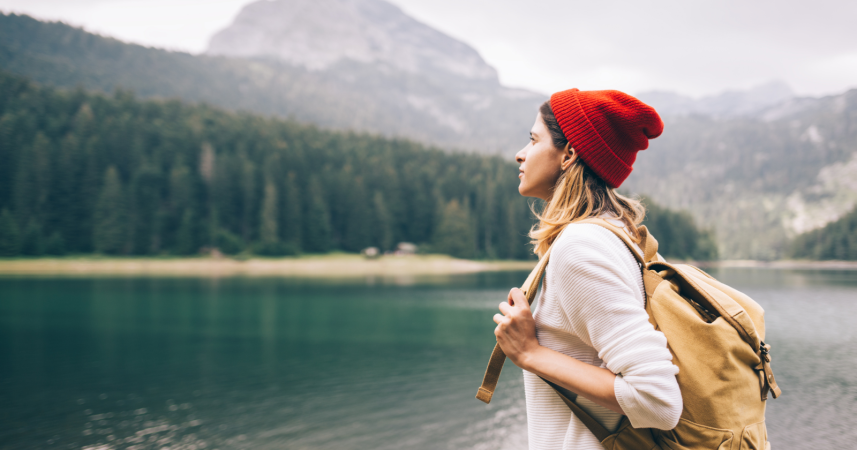
The best travel experiences happen not when you follow the guidebook, but when you're willing to get lost, eat the unfamiliar, and connect with strangers over shared meals.

Add VegOut to your Google News feed. 
I used to plan trips like I planned quarterly reports. Spreadsheets. Itineraries. Restaurant reservations made weeks in advance. Every minute accounted for, every experience optimized for maximum cultural value per dollar spent.
Then I watched Anthony Bourdain eat street food in Vietnam, and something shifted.
Bourdain understood something most of us miss: the best parts of travel are the ones you can't schedule. The moments that happen when you stop being a tourist and start being a person in a new place.
After years of traveling like a checklist-obsessed analyst, I finally started following his lead. And honestly? Those unplanned detours taught me more about connection, presence, and what it means to truly experience a place than any guidebook ever could.
Here's what Bourdain knew that most tourists miss.
1) Eat where the locals eat
Forget the restaurants with English menus and photos on every table. Bourdain was famous for seeking out the street carts, the family-run joints, the places where you point at what someone else is eating and hope for the best.
When I was in Thailand a few years ago, I finally ditched my list of "must-visit" spots and followed a group of construction workers to a noodle stall. The woman running it spoke zero English. I spoke zero Thai. But that bowl of soup, eaten on a plastic stool while trucks rumbled past, was better than anything I'd experienced at the tourist spots.
Here's what happens when you eat where locals eat: you taste what the place actually tastes like. Not the sanitized, toned-down version created for foreign palates. The real thing.
And yeah, sometimes your stomach might protest. But that's part of it too.
2) Skip the guided tours
Bourdain rarely joined the group tours, the ones where everyone wears matching lanyards and follows a person with a flag. Instead, he wandered. He got lost. He let the city reveal itself on its own terms.
Guided tours are efficient, sure. You hit all the highlights in three hours. But you're experiencing everything through someone else's script, seeing what they think you should see, learning the sanitized version of history.
I learned this the hard way in Barcelona. Spent a morning on a bus tour, checking off Gaudí buildings like items on a grocery list. Felt nothing. The next day, I got lost in the Gothic Quarter, stumbled into a tiny bookshop, and ended up having coffee with the owner who told me stories about the neighborhood that no tour guide would ever share.
That unscripted afternoon taught me more about the city than any narrated bus ride ever could.
3) Talk to strangers
This one makes a lot of travelers uncomfortable. We're taught to be cautious, to keep our guard up, to stick with our own group. But Bourdain's entire philosophy hinged on one simple idea: sit down with people and share a meal.
He believed that food was the universal language, the thing that broke down barriers faster than any amount of polite small talk.
I'm naturally introverted, so striking up conversations with random people doesn't come easily. But I started small. Asked the person next to me at a farmers' market about the weird fruit I'd never seen before. Chatted with the woman running the guesthouse about where she liked to eat breakfast.
Those conversations opened doors I never would have found otherwise. I got invited to a family dinner in Portugal. A farmer in Costa Rica showed me how to harvest coffee beans. A runner in Japan took me on her favorite trail route through the mountains.
These weren't transactions. They were connections. And they changed how I saw each place entirely.
4) Learn a few words in the local language
Bourdain wasn't fluent in a dozen languages, but he always made the effort. A few phrases. Thank you. This is delicious. Where is the bathroom? Please and excuse me.
It's not about perfect pronunciation. It's about showing respect, about acknowledging that you're the visitor here, and you're willing to meet people halfway.
I started doing this after years of assuming everyone would speak English. Just learning "hello," "thank you," and "I'm sorry, I don't understand" in the local language changed how people responded to me. Suddenly, there were more smiles. More patience. More willingness to help.
In my financial analyst days, I thought efficiency was everything. Why struggle through a phrase book when everyone speaks English anyway? But that mindset kept me separated from the places I visited. Language is more than communication. It's connection.
5) Venture beyond the tourist districts
Every city has its tourist zone. The carefully curated streets where everything is clean and English is the default language and you can buy the same souvenirs you could buy anywhere else.
Bourdain consistently left those areas behind. He went to the neighborhoods where actual people lived, shopped, and ate. The places that didn't show up in travel magazines.
When I finally started doing this, I realized how much I'd been missing. The real rhythm of a place exists outside the tourist bubble. It's in the morning markets where vendors are setting up at 5 a.m. It's in the neighborhood cafes where regulars come for their daily coffee. It's in the parks where families gather on Sunday afternoons.
Yes, you might feel more uncertain in these places. You won't always know where you're going or what you're looking at. But that discomfort is where the actual experience lives.
I spent an afternoon in a residential neighborhood in Mexico City, just walking. No agenda. No attractions. Just watching life happen. And it taught me more about the city than any museum visit ever could.
6) Embrace the uncomfortable moments
Bourdain didn't shy away from the messy, awkward, or challenging parts of travel. He ate things that made him nervous. He went places that felt unfamiliar. He sat through meals where he didn't understand the conversation happening around him.
Most tourists avoid discomfort at all costs. They stick to familiar foods, familiar routines, familiar ways of being. But comfort is the enemy of growth.
I used to be terrified of looking stupid. Of not knowing how things worked. Of making mistakes in public. But those fears kept me trapped in tourist mode, always playing it safe, never fully immersing myself in where I was.
The first time I ordered food in a language I barely spoke and got something completely different from what I expected, I wanted to disappear. But the family at the next table saw my confusion, laughed with me (not at me), and helped me figure it out. That moment of vulnerability became a connection.
Now I actively seek out the slightly uncomfortable experiences. The ones that push me past my need for control and certainty.
7) Stay longer in fewer places
Bourdain understood that you can't truly know a place in two days. You need time to settle in, to establish a routine, to watch the same street at different times of day.
The modern approach to travel is about maximizing: seeing as many places as possible, checking off as many countries as you can. But this creates exhaustion, not understanding.
I used to pride myself on how many cities I could fit into a single trip. Ten days, five cities, dozens of sites. I'd come home with hundreds of photos and almost no real memories.
Now I pick one or two places and stay. I find a local coffee shop and go there every morning. I walk the same neighborhoods repeatedly and notice how they change. I let myself get bored, because boredom is when you finally start seeing what's actually there instead of what the guidebook told you to look for.
Recently I spent two weeks in a small town in southern Spain instead of racing around the entire country. I got to know the woman who ran the vegetable stand. I found a trail I ran every other day. I watched the rhythm of the place reveal itself slowly.
That's the kind of travel Bourdain championed. Not the frantic consumption of experiences, but the patient attention to what a place actually is.
Final thoughts
Travel can be many things. An escape. An education. A chance to collect stories and photos. But if you approach it the way Bourdain did, it becomes something deeper: a practice in connection, in curiosity, in being willing to step outside your comfort zone and meet the world on its own terms.
I've been thinking about this a lot lately after reading Rudá Iandê's new book "Laughing in the Face of Chaos: A Politically Incorrect Shamanic Guide for Modern Life." One insight particularly resonated with my travel philosophy: "What if we could learn to embrace the discomfort of not knowing?"
That question captures everything Bourdain understood about meaningful travel. The willingness to not have all the answers, to not control every outcome, to let uncertainty be your guide rather than your enemy. His book inspired me to look at how I approach not just travel, but all the moments in life where I'm tempted to plan away the mystery.
Because ultimately, that's what these seven practices are really about: trading the illusion of control for the reality of genuine experience.
If You Were a Healing Herb, Which Would You Be?
Each herb holds a unique kind of magic — soothing, awakening, grounding, or clarifying.
This 9-question quiz reveals the healing plant that mirrors your energy right now and what it says about your natural rhythm.
✨ Instant results. Deeply insightful.

Avery White
Formerly a financial analyst, Avery translates complex research into clear, informative narratives. Her evidence-based approach provides readers with reliable insights, presented with clarity and warmth. Outside of work, Avery enjoys trail running, gardening, and volunteering at local farmers’ markets.
More Articles by Avery