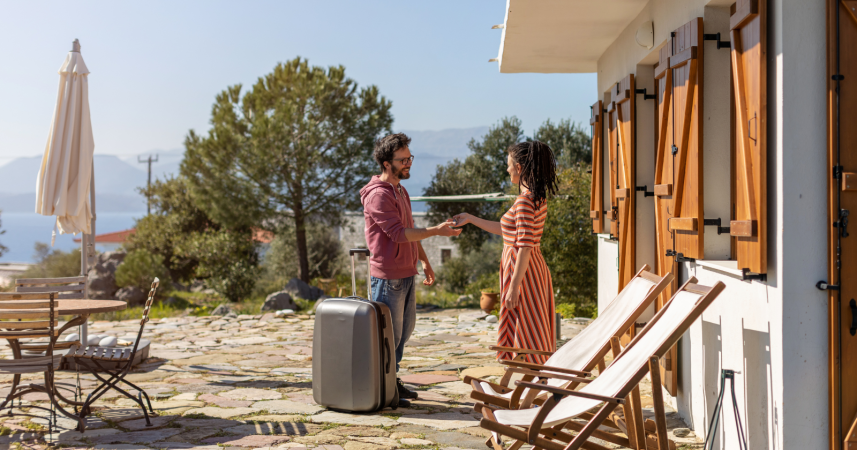
Real travel isn't about where you sleep, it's about how that choice connects you to place, people, and experiences you'd never have from behind a hotel door.
The first time I stayed in a hostel, I was 29 and felt too old.
I'd just started working as a financial analyst, making decent money, and I could have afforded a hotel. But something made me book a bed in a shared room in a hostel outside Barcelona.
That decision changed how I thought about travel entirely.
I met a teacher from New Zealand, a chef from Brazil, and a recent college grad from Ohio, all in one night. We cooked dinner together in the communal kitchen. We shared wine and stories until 2 AM. I learned more about the city from them than I would have from any guidebook.
When I worked in finance, I mostly traveled for business. Nice hotels. Room service. Everything sanitized and comfortable. I saw airports and conference rooms, not actual places.
Real travel happens when you step outside the comfort zone of standardized accommodations and choose something that connects you to the place and people around you. According to research from the Journal of Travel Research on authentic tourism experiences, the type of accommodation travelers choose significantly impacts their sense of cultural immersion and meaningful connection.
Here are eight types of accommodations that offer something hotels simply can't.
1) Hostels
Yes, even if you're past your twenties.
Hostels aren't just for backpackers on shoestring budgets anymore. Many offer private rooms alongside dorms. But the real value isn't the bed, it's the community.
Hostel common rooms are where solo travelers become groups. Where strangers share tips about hidden restaurants and local hikes. Where you meet people you'd never encounter in your regular life.
When I experienced burnout at 36 and started re-evaluating what mattered to me, I realized how isolated I'd become in my comfortable, expensive life. Hostels taught me that connection matters more than comfort.
They're also great equalizers. Everyone's doing their own dishes. Everyone's negotiating the same quirky shower situation. It strips away pretense.
2) Family-run guesthouses in small towns
These are the places where the owner greets you personally, remembers your name, and insists you try their homemade breakfast.
I stayed at a small guesthouse in rural Vermont during a solo trail running trip. The owner, a woman in her seventies, shared stories about the area over coffee each morning. She recommended trails I'd never have found on my own. She introduced me to neighbors.
That kind of local knowledge and personal connection doesn't happen in a chain hotel where staff rotates and guests are anonymous.
Family-run places have personality. Quirks. Stories. The rooms might not be fancy, but they're real. And you're supporting actual people, not corporations.
3) Farm stays or working farms
Spending a few nights on a working farm completely shifts your perspective on food, land, and daily rhythms.
At the farmers' market where I volunteer every Saturday, several vendors offer farm stays. Guests help with morning chores, learn about sustainable agriculture, and eat meals made from what's grown right there.
I transitioned to veganism at 35, and staying on farms helped me understand the ethics and practicality of food systems in ways reading about it never could.
There's something grounding about waking up with animals, seeing where your breakfast comes from, and participating in the work that sustains life. It's the opposite of being served in a hotel dining room.
According to research from Cornell University on agritourism, farm stays increase visitors' understanding of agricultural practices and strengthen their connection to food sources.
4) Monastery or retreat centers
I'm not religious, but staying at a Buddhist retreat center for a week was one of the most meaningful travel experiences I've had.
These spaces offer silence, simplicity, and structure. You follow the rhythms of the place. Meditation. Simple meals. Quiet contemplation.
I practice meditation for 20 minutes each morning now, something I initially thought was "too woo-woo" for my analytical mind. Staying at a retreat center taught me what that practice could offer.
Retreat accommodations aren't about comfort. They're about stripping away distraction so you can be present. The rooms are basic. The food is simple. The environment is intentionally bare.
It's not for everyone. But if you're looking to disconnect, reflect, and experience a completely different pace, these places offer something transformative.
5) Homestays with local families
This is immersion in its purest form.
You're not observing local life. You're participating in it. Eating family meals. Following household routines. Navigating language barriers and cultural differences in real time.
I met Marcus at a trail running event five years ago, and early in our relationship, we stayed with his friend's family in rural Mexico for a week. We helped cook. We played with their kids. We practiced our terrible Spanish. We experienced daily life, not tourist attractions.
Research in the Journal of Sustainable Tourism shows that homestays create deeper cultural understanding and challenge travelers' assumptions in ways hotel stays cannot. You're forced to adapt, communicate, and see the world from a different perspective.
It's vulnerable. You can't retreat to your private space easily. But that discomfort is where growth happens.
6) Tiny houses, yurts, or unconventional spaces
There's something about sleeping in a yurt on a mountainside or a tiny house in the woods that reconnects you to place.
These accommodations force you outside. You can't hide in a big room watching TV. You're engaging with the environment because that's the whole point.
I grew vegetables and native plants in my backyard garden now, and I love how these spaces emphasize relationship with land and natural surroundings. You're not insulated from weather or wildlife. You're part of it.
They also challenge your ideas about what you actually need. Most of us live in more space than necessary. A well-designed tiny space teaches you that less can be enough.
7) Couchsurfing or home exchanges
Staying in someone's actual home, whether through Couchsurfing or home exchange platforms, offers unmatched local perspective.
Your host can recommend the neighborhood spot tourists never find. They can explain local customs. They can introduce you to their friends.
I had a small, close circle of friends rather than the large network I maintained when networking was part of my job. When I traveled and stayed with strangers who became temporary friends, I remembered why authentic connection matters more than breadth of acquaintances.
The trust required for home exchanges is significant. You're literally swapping houses. That vulnerability creates a different kind of travel experience. You're living someone else's life temporarily, seeing their city through their daily routines.
8) Overnight trains or boats
The journey becomes the destination.
Overnight trains across Europe or sleeper trains in Asia turn travel time into experience. You meet other travelers. You watch landscapes change. You experience the in-between spaces, not just the endpoints.
I take regular digital detox weekends to reset my relationship with technology, and overnight trains offer that same unplugging effect. Limited wifi. Limited space. Just you, other passengers, and the movement.
Overnight boats in places like Southeast Asia or the Mediterranean create similar experiences. You're not just getting from point A to point B efficiently. You're experiencing the journey itself as part of the adventure.
Final thoughts
Here's what I've learned: the most memorable travel experiences rarely happen in comfortable, familiar settings.
They happen when you're slightly uncomfortable, slightly vulnerable, and fully engaged with your surroundings.
When I left my six-figure finance job at 37 to write, I had to confront my need for control and comfort. I'd built a cage of security around myself. Travel that pushed me outside that cage taught me I was capable of more than I believed.
According to psychological research on transformative travel experiences, discomfort and novelty are essential for personal growth through travel. When everything's familiar and comfortable, you're not really traveling. You're just sleeping in a different location.
Hotels have their place. Sometimes you need reliable comfort. Sometimes you're exhausted and just want a clean bed and a hot shower. There's no shame in that.
But if you only ever stay in hotels, you're missing something fundamental about travel. You're seeing places without really experiencing them. You're insulated from the very things that make travel transformative: unpredictability, cultural difference, genuine human connection.
Real travel isn't about checking destinations off a list. It's about being changed by where you go and who you meet. And that rarely happens through a hotel room door.
The accommodations on this list aren't necessarily comfortable. They require flexibility, openness, and willingness to adapt. But they offer something worth more than comfort: they offer connection, perspective, and authentic experience.
Try one. Stay in a hostel even if you're 50. Sleep on a farm. Exchange homes with a stranger in another country. Let yourself be uncomfortable.
You might discover that the discomfort is exactly what makes travel worth doing in the first place.
If You Were a Healing Herb, Which Would You Be?
Each herb holds a unique kind of magic — soothing, awakening, grounding, or clarifying.
This 9-question quiz reveals the healing plant that mirrors your energy right now and what it says about your natural rhythm.
✨ Instant results. Deeply insightful.