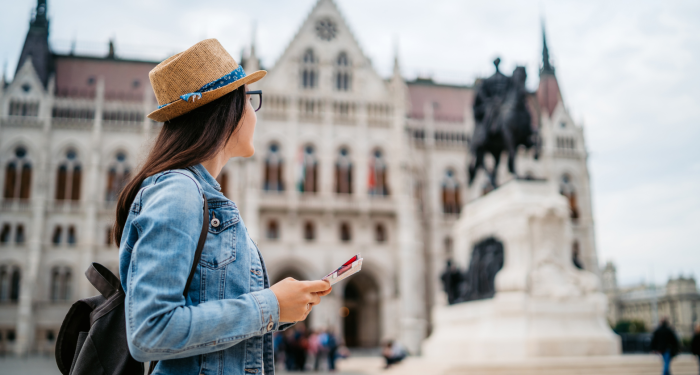
From overusing foreign phrases to turning vacations into photo shoots, these cringey habits reveal when someone’s trying too hard to look worldly.
Vacations are supposed to be about relaxing, exploring, and making memories.
But for some travelers, especially those in the upper-middle-class bracket, vacations become less about enjoyment and more about image.
Instead of simply soaking up the experience, they focus on appearing worldly, sophisticated, and well-traveled.
This usually isn’t malicious — it’s often about wanting to fit in, impress friends, or feel like they’ve reached a certain level of status.
Unfortunately, the result can come across as try-hard and, well… a little cringey.
Here are eight ways upper-middle-class people often try to look more cultured on vacation — and why these habits sometimes miss the mark.
1. Overusing foreign phrases incorrectly
A sprinkle of the local language is charming.
But some travelers take it too far, peppering every sentence with foreign words — even when they’re completely unnecessary.
They might say “grazie” at a sushi bar or “bonjour” to someone who just spoke to them in perfect English.
The intent is to seem worldly and respectful, but it often backfires.
Locals can immediately tell when someone’s pronunciation is off or when phrases are being misused.
What’s meant to be cultural appreciation ends up sounding like a bad language app demo.
It’s even worse when they correct other travelers while still getting it wrong themselves.
True sophistication comes from learning a few key phrases and using them naturally, not turning every interaction into a performance.
Sometimes, a smile and a simple “thank you” are more authentic than forced fluency.
2. Overly staged travel photos for social media
There’s nothing wrong with taking vacation photos — it’s part of the fun.
But some upper-middle-class travelers turn every outing into a photo shoot.
They spend more time positioning themselves for the perfect shot than actually experiencing the place they came to see.
You’ll spot them blocking foot traffic while arranging scarves, hats, and poses just so.
Every meal is carefully plated and lit for Instagram before anyone takes a bite.
The result? Their vacation looks flawless online but feels surprisingly hollow in real life.
Friends back home might be impressed by the curated feed, but locals and fellow travelers can see through it.
It’s a performance, not a genuine moment of discovery.
The irony is that by trying so hard to capture the perfect memory, they often miss making real ones.
3. Loudly critiquing local food like they’re experts
Trying new foods is one of the best parts of travel.
But some people mistake curiosity for expertise.
You’ll hear them loudly announcing how a dish compares to what they’ve “had in Paris” or “experienced in Tuscany.”
The comparisons are often inaccurate or wildly exaggerated, but that doesn’t stop the running commentary.
They may even give unsolicited tips to waitstaff about how a dish should be prepared.
This behavior comes across as condescending rather than cultured.
Locals don’t expect tourists to know everything — they just appreciate openness and respect.
The truly sophisticated approach is to enjoy the meal quietly, ask thoughtful questions, and leave the Michelin-star critiques to actual chefs.
No one’s impressed by a self-appointed food critic at the next table.
4. Overpacking designer “travel essentials”
There’s nothing wrong with nice luggage or clothing.
But some upper-middle-class travelers go overboard, treating the airport like a runway show.
Every item they bring is a recognizable luxury brand, often with logos front and center.
Matching luggage sets, designer handbags, and statement sunglasses become part of their “travel look.”
The goal is to signal status, but the effect can seem more performative than practical.
Other travelers — and locals — often notice the disconnect when someone dressed like a fashion ad struggles to drag their suitcase across cobblestones.
It’s not that quality items are bad.
It’s that they shouldn’t overshadow the actual experience.
Sometimes, the most cultured traveler is the one who blends in rather than stands out like a walking billboard.
5. Name-dropping destinations mid-conversation
You’ll know this habit immediately: the casual, unnecessary mention of past vacations in unrelated conversations.
Someone might say, “Well, when we were in Bali…” while talking about something as simple as ordering coffee.
It’s an attempt to establish worldliness through subtle bragging.
The problem is, it rarely comes off as subtle.
Most people can tell when a story is being told to genuinely share versus when it’s just about flexing.
There’s a difference between connecting over shared experiences and using travel like a résumé.
Ironically, the people who are truly well-traveled tend to talk less about where they’ve been and more about what they’ve learned.
The more casually and humbly you speak about your trips, the more authentic it feels.
Name-dropping does the opposite — it makes the experience about ego rather than exploration.
6. Rushing to collect “authentic” souvenirs
Souvenirs can be a wonderful way to remember a trip.
But some travelers treat them like trophies rather than mementos.
They rush through local markets grabbing anything labeled as “authentic” — often without understanding what they’re buying.
Sometimes these items aren’t even locally made but mass-produced elsewhere and marketed for tourists.
The intention is to seem cultured back home: handmade pottery, exotic spices, traditional textiles.
But without context or connection, these souvenirs lose their meaning.
The more meaningful choice is to buy slowly and thoughtfully, ideally from local artisans with whom you’ve had a real conversation.
Otherwise, you’re just accumulating stuff — and maybe even contributing to the very tourist traps you wanted to avoid.
It’s not about what you bring back, but the story behind it.
7. Forcing “local” experiences that don’t feel natural
There’s a fine line between immersing yourself in local culture and performing it for show.
Some upper-middle-class travelers cross that line without realizing it.
They insist on doing everything “the way locals do,” even when it feels forced or awkward.
This might mean dramatically changing how they dress, eat, or speak — not out of respect, but to appear authentic.
The effort often comes off as cosplay rather than genuine appreciation.
Locals can sense when someone is participating with sincerity versus just playing a role.
It’s perfectly fine to try new things, but it doesn’t need to be theatrical.
The most respectful approach is to engage naturally and let experiences unfold without turning them into a performance.
Culture is lived, not staged.
8. Posting every moment to prove they were there
Vacations are personal experiences — but in the age of social media, they’ve become public performances.
Some travelers document every second of their trip, from boarding the plane to the final airport selfie.
It’s not just about sharing memories; it’s about proving they were there.
Every landmark, meal, and sunset becomes content for their online audience.
The constant posting can disrupt the flow of the trip for everyone involved.
Travel companions might feel like extras in someone else’s highlight reel.
Worse, the traveler often ends up viewing the vacation through a screen instead of their own eyes.
True cultural connection happens in quiet, unposted moments.
The less you focus on broadcasting, the more you can actually experience the world.
Closing reflection: travel as connection, not performance
The desire to seem cultured comes from a natural place — the wish to belong, to grow, to be seen as worldly.
But when appearances take priority over authentic connection, travel loses its magic.
The most meaningful trips aren’t about perfect photos or impressive stories.
They’re about the small, unfiltered experiences you carry in your heart long after you return home.
The next time you travel, focus less on looking cultured and more on being present.
You might find that authenticity is the most impressive quality of all.