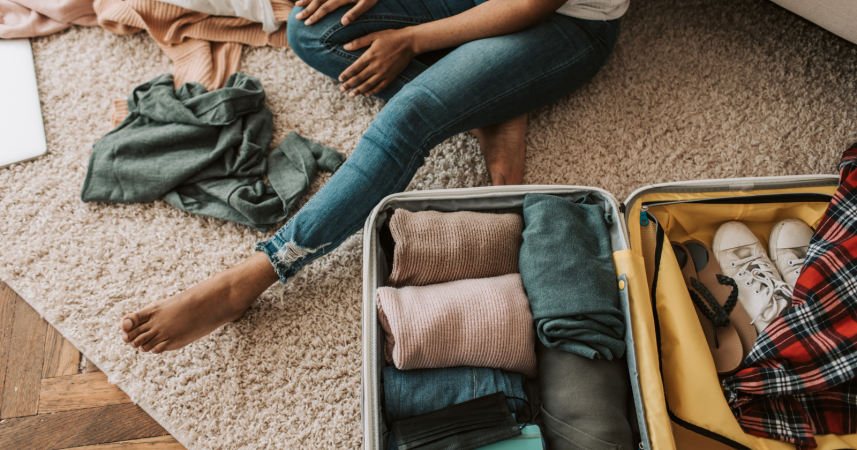
How you pack reveals more about your travel experience than your destination ever could.
I can spot inexperienced travelers instantly by their luggage alone.
Working in luxury hospitality, you see thousands of people arrive.
The wealthy travelers who'd been everywhere would show up with barely anything.
One small bag for a week-long stay. Meanwhile, families and first-time travelers would arrive with multiple checked bags, overstuffed carry-ons, and stressed expressions.
The difference wasn't how much money they had. It was how much travel experience they had.
During my three years in Bangkok, I watched this pattern constantly. Experienced expats and frequent travelers would move through Southeast Asia with tiny backpacks. Tourists would arrive hauling massive suitcases they'd never fully unpack.
After years of traveling and observing travelers, I've identified items that inexperienced, often lower-middle-class travelers consistently overpack. Not because they're stupid, but because travel anxiety makes you prepare for every possible scenario rather than trusting you'll figure it out.
Here are seven things experienced travelers stopped packing years ago.
1) Multiple outfit options for every day
Inexperienced travelers pack like they won't have access to laundry or the ability to wear things twice.
Three shirts for every day because what if you spill something? Multiple pants options because what if the weather changes? Backup outfits for backup outfits. Their bag is 80% clothes they'll never wear.
Experienced travelers pack maybe five shirts for a two-week trip. They wear things multiple times. They do laundry in the sink if needed. They understand that no one cares if you wear the same thing twice, and if they do, you're never seeing them again anyway.
I learned this living in Bangkok. I'd see tourists sweating through different outfits every day while expats wore the same rotation of clothes all week. Nobody cared. The tourists just made travel harder for themselves.
Pack less clothes than you think you need. You'll be fine.
2) Full-sized toiletries
This one drives me crazy at airport security.
People with full bottles of shampoo, conditioner, body wash, lotion. Trying to stuff them in plastic bags or worse, checking luggage purely because they can't part with their specific products.
Experienced travelers figured out years ago that hotels have soap. Stores everywhere sell toiletries. You can buy travel sizes or just use what's provided. Your hair won't fall out if you use different shampoo for a week.
Working in resorts, I watched guests arrive with entire bathroom cabinets worth of products. They'd use the hotel toiletries anyway because unpacking all their stuff was too much work.
Bring a small container of face wash if you're picky about that. Maybe travel-size deodorant. Everything else exists wherever you're going. Stop hauling full-sized bottles around the world.
3) Just-in-case electronics and adapters
Lower-middle-class travelers pack like they're setting up a mobile office.
Laptop, tablet, phone, chargers for each, multiple adapters, backup batteries, cables for devices they might not even bring. Their carry-on is half electronics and accessories for scenarios that won't happen.
Experienced travelers bring a phone and maybe a laptop if they're working. One universal adapter. One charging cable that works for everything. That's it.
I travel with a phone, a charging cable, and a small adapter. That's covered every trip for years. You don't need backup devices. You don't need charging stations for seven things. Simplify.
The anxiety that makes people overpack electronics is rooted in fear of being disconnected. Experienced travelers understand that's usually the point of travel. Being less connected, not more.
4) Guidebooks and printed materials
This one has mostly died out, but you still see it.
People arriving with physical guidebooks, printed itineraries, maps, folders of confirmation emails. Carrying around kilos of paper that could be on their phone.
Experienced travelers have everything digital. Restaurant recommendations, maps, bookings. All accessible from their phone without carrying physical materials.
During my Bangkok years, I'd see tourists with massive guidebooks to Thailand, flipping through them at restaurants while locals rolled their eyes. Everything in those books was on their phone already, just easier to access.
If you're still printing things or carrying guidebooks, you're making travel harder than it needs to be. Save the paper, use your phone.
5) Excessive first aid and medication
Lower-middle-class travelers pack medical supplies like they're going somewhere without pharmacies.
Full bottles of pain relievers, cold medicine, stomach medication, bandages, antibiotic ointment. Preparing for medical emergencies that almost never happen and could be handled easily if they did.
Experienced travelers bring maybe a small container of ibuprofen and any prescription medications they actually take. That's it.
You're not going to the wilderness. You're going to cities and tourist areas with pharmacies and stores. If you get a headache, you can buy aspirin there. If you get a cold, medicine exists in other countries.
This overpacking comes from anxiety about being sick or hurt away from home. But you're more likely to waste space in your luggage than to need 75% of what you packed.
6) Special travel gear that solves problems you don't have
Travel stores make money selling solutions to problems inexperienced travelers don't actually have.
Neck pillows that take up half your bag. Special packing cubes that add weight. Travel blankets, special water bottles, complicated organizational systems. Gear that promises to make travel easier but actually just adds bulk.
Experienced travelers have figured out what they actually need, which is usually very little. A good bag, comfortable shoes, weather-appropriate clothes. The minimalist approach works better than any amount of specialized gear.
Working in Austin, I see people shopping at travel stores buying elaborate packing systems for their first big trip. They come back and never use half that stuff again. The learning curve is expensive.
Skip the gear. Or if you must buy something, buy it after you've traveled enough to know what you actually need, not what stores tell you you need.
7) Comfort items from home
This is the most telling overpacking habit.
Bringing familiar snacks, favorite coffee, comfort foods, items that make you feel at home. Packing anxiety in the form of physical objects meant to soothe homesickness that usually doesn't materialize.
Experienced travelers understand that adapting to local food and culture is part of travel. They don't need taste-of-home items to get through a week in another place.
I saw this constantly at resorts. Guests who'd packed granola bars and instant coffee, paranoid they wouldn't find anything they liked. They'd end up leaving it all behind because the local food was fine, sometimes better than what they brought.
Trust that you'll find food you can eat. Trust that you'll adapt. Bringing comfort items is insurance against discomfort you probably won't experience, and if you do, that discomfort is part of what makes travel valuable.
Why this matters
Overpacking isn't just about carrying extra weight. It's about approaching travel with anxiety instead of confidence.
Every unnecessary item represents a fear. Fear you won't have the right clothes. Fear you'll get sick. Fear you won't be comfortable. Fear the place you're going won't have what you need.
Experienced travelers have learned those fears are usually unfounded. Most places have stores, laundry, pharmacies, food. You can solve problems as they arise rather than preventing every possible problem through overpacking.
The shift from overpacking to light travel happens after you've done a few trips and realized you didn't need half of what you brought. You learn what actually matters and what's just security blankets.
Lower-middle-class travelers tend to overpack more because these trips are rarer and feel higher stakes. When you're traveling twice a year instead of monthly, each trip feels like it needs to be perfect, which leads to preparation anxiety.
But ironically, overpacking makes travel harder. You're hauling more stuff, spending more on baggage fees, dealing with logistics instead of being present in your destination.
The most freeing thing I learned from frequent travel was that I could survive and enjoy trips with very little. One bag, versatile clothes, minimal toiletries, just my phone and a way to charge it. Everything else was optional.
Next time you pack, try removing half of what you think you need. You probably won't miss any of it. And you'll have a much easier time moving through airports, hotels, and destinations without all that extra weight.