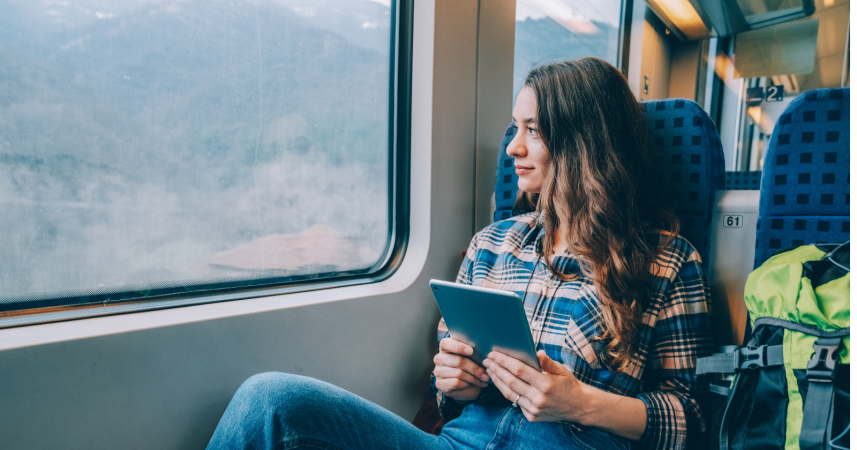
I bought a one-way ticket for freedom and ended up in a windowless room, learning that being alone isn’t liberation—it’s a mirror.
I left because I wanted to feel light.
I’d been carrying the same backpack of shoulds for years—should get promoted, should say yes to after-work drinks, should love the apartment with the thin walls because “the location is unbeatable.” When my last relationship cracked like a pane of sugar glass, I decided to be someone else. I ate up videos of women striding through airports in linen pants, hair in effortless buns, captions about “finding myself” in places where the alphabet looks like a secret. Solo travel looked like a door with clean hinges. I thought if I walked through it, the noise would fall away.
On the plane to Lisbon I celebrated by deleting three group chats and the weather app, as if disconnection were the same as freedom. The flight attendant poured me a plastic cup of wine and I wrote a list called “Things I’ll Become,” which included: light sleeper, late-night person, good with uncertainty, someone who eats anchovies. I was convinced transformation was an itinerary.
In the beginning, the spell almost worked. Lisbon wears sunlight like a loose shirt; even the tiles look like they’re humming. I rented a tiny room with a balcony over a street that sloped into the river, and at night men wheeled carts of roasted chestnuts past my door. I took a photo of the brown paper cone in my hand and wrote, “I could live on this,” which is the kind of sentence you only write before you learn what it means to be alone in a city that isn’t expecting you.
The loneliness arrived on the third day, not like a storm but like fog—you don’t notice it until the church across the square has disappeared. I woke up happy, ate a pastel de nata with my coffee, and then found myself trying to teach a café table to care about me. I kept glancing at the couple beside me, listening to them argue gently about whether the azulejos were overhyped. I had a thought that felt like a laugh turned inside out: I miss being annoyed by someone I love.
These were small things. Manageable, I told myself. You’re just adjusting. I decided to do what solo travelers do when the silence feels loud: motion. Move until your feet are louder than your thoughts. I bought a 24-hour public transport card and rode the tram to Belém and back twice, just to be rattled. I walked to the end of a pier and held onto the railing and tried to decide if the wind was a friend.
It’s funny the lies you tell yourself when you’re trying to be brave. I told myself eating alone in restaurants was a radical act of self-love and not a small humiliation. I told myself decision fatigue was glamour. I told myself the soft panic I felt when I couldn’t find my subway stop wasn’t panic at all—just “expanded awareness.”
There was the night I stood outside a fado bar where the singer had a voice like a bruise and decided not to go in because I didn’t know where to put my hands. There was the morning I almost cried in the grocery store because I couldn’t translate the phrase for “oat milk” and a man behind me had somewhere to be. There was the afternoon I hiked along the cliffs at Cabo da Roca and the wind tore the cap off my water bottle and sent it skating out of reach, and I thought, ridiculous and immediate, I should not be allowed to keep myself alive.
I kept moving. The movement worked like a trick you know is a trick: you love it anyway because, for a second, the coin disappears. Madrid, Granada, Tangier. A alley cat pressed its entire warm body against my shin in a Moroccan courtyard, and I thought, Thank you for choosing me, which was not what a person with healthy boundaries thinks about a stray. I ate oranges that tasted like they were still attached to the sun. I learned the trick of greeting shopkeepers first in their language, then switching to English when my brain blanked and my tongue clanged—both gestures were accepted in the same generous way, a kind of world hospitality I had mistaken for a personal achievement.
I learned how to carry everything I owned in such a way that none of it could slide off my shoulder when I ran between platforms. I learned how to keep my passport in a pocket I could touch every five minutes. These were skills, but they weren’t the ones I thought I was flying toward when I clicked “book.” Freedom didn’t feel like yes. It felt like maybe, all the time, everywhere.
In Seville a woman named Lila sitting next to me at a cooking class asked where I was from, and when I said “New York, sort of, but I’m traveling,” she made a face I couldn’t read and said, “For how long?” As if length were the only measure of intention. I said for a while and she said, “Sometimes I think I love the idea of being alone more than I love being alone,” and the words slid into me like an arrow you only notice when you reach for your mug and your arm doesn’t work.
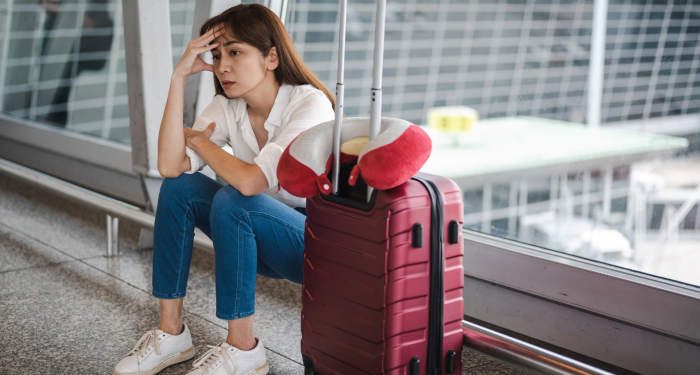
I wanted to keep moving until “for a while” turned into a fact even I believed. But money is a clock that doesn’t care what you wanted to learn, and I was tired in an expensive way—tired of being new at every table. Lyon, then Milan, then a cheap flight to Athens because the ad looked like a door in a hillside. In Athens I found the room I think about when I try to explain the phrase “darkest place.” It wasn’t dangerous. It wasn’t haunted. It was beige and windowless, down a hallway whose lights were on motion sensors and so went out while I fumbled with keys. The bedspread was a pattern of squares trying to be cheerful. The shower had a curtain that wanted to be part of my body.
I’d booked it because I needed to save money and because, in the photo, the overhead light made a halo on the tile floor. In reality the bulb buzzed like a mosquito and the door stuck. My brain looked at a door that stuck and decided: we are trapped. I lay on the bed and listened to the couple upstairs roll a suitcase back and forth for twenty minutes and thought: That’s not a suitcase. That’s an animal. Something is wrong. You can talk to yourself in exactly the rational voice you think therapists want you to have and still be convinced the ceiling is holding a secret and the secret is you.
There are practical reasons solo travelers spiral—decision fatigue, looking for the bathroom in an unfamiliar café while your bag holds the only things that prove you exist. There are less practical ones—your internal narrator gets bored and becomes a saboteur. In the beige room I met a part of myself that had been sending me small notes for months and was tired of my unread messages. It said: You left because you thought being alone would mean being free from disappointing anyone. But now every disappointment belongs to you.
I didn’t sleep. I counted the tiles. I read the Airbnb reviews and took furious comfort in the one that said “great value” as if anything anyone ever said about the room would change it into another room. I tried a meditation app and the woman’s voice sounded like a polite hostage. At 3 a.m. I texted Lila from the cooking class because she’d given me her number “for recipes” and said, in a stripped way, “I’m not okay,” and when she didn’t respond, because normal people sleep, I thought: I did this to myself.
No one tells you how faint your body can feel when it hasn’t eaten real food in a day because the thought of leaving the room and choosing a place makes your hands shake. No one tells you how suspicious you’ll become of your own instincts when your instincts are exhausted. No one tells you that loneliness, like dehydration, will convince you water is a bad idea.
I didn’t call my sister because I didn’t want to be the kind of person who calls her sister from a bathroom floor. The next morning I became that person. The bathroom floor was cool; that was its only virtue. She answered on the second ring like she’d been standing by a phone for a year.
“What’s wrong?” Her voice was the exact temperature water should be.
“Nothing,” I said, which was both a joke and a prayer, then: “Everything.”
“Are you safe?”
“Yes,” I said, “but also no,” and then told her about the door that stuck and the light that buzzed and the animal upstairs and how my kitchen counter at home had more windows than this entire building.
She said, “Okay. You’re leaving that room. Pack. I’ll stay on.”
I could write an essay only about the logistics of mercy—how someone else’s voice can keep your hand moving toward the zipper of a suitcase when your brain believes zippers were invented to shame you. I put on the same jeans I’d worn for three days. I walked down the hallway with the motion-sensor lights failing to recognize my humanity and told my sister the color of the exit sign. I left the key on the wobbly table and the table made a sound like it had always been waiting to fail. I handed the host a lie about an emergency and he shrugged like he’d seen better lies. I stepped into Athens air and thought: this is what oxygen feels like. I cried a little because the city wasn’t asking me to be anything but a body that moved.
My sister booked me a different room across town with a balcony and too many curtains, the kind of place that indicates a life someone would live here if they were a character I’m not. I bought a peach from a man who put it into my hand like an apology he didn’t owe me. I showered and fell asleep in the afternoon wearing a towel as if I had arrived at my own life at a strange angle and would straighten later. When I woke up, the light had shifted across the floor in a pattern that made my brain say: time is happening again; you’re inside of it.
This should be the place in the story where I promise myself to travel differently. But I didn’t know how yet. I had built a mythology out of motion. The problem wasn’t travel; it was the religion I’d made out of the idea that moving is the same as healing. You can grind your feet down to smooth stones and still be the person who believed righteousness lived in a boarding pass.
In Istanbul I spent a week without trying to be transformed. I walked along the Bosphorus every morning with the old men holding hands behind their backs like professors pacing a lecture about the sea. I ate simit from a cart and drank tea that dyed my tongue the color of rust. I didn’t go into the grand mosques because I wasn’t in the kind of shape to be impressed by grandeur without turning it into a mirror. I watched kids break-dance on cardboard in a square and felt a very small joy that didn’t demand anything from me. I made two rules: call someone I love every day; choose one anchor in each place (a café, a bench) and return to it until the staff recognized me and I could have the fake conversation that becomes a real one if you let it.
One afternoon I went to a hammam because the idea of letting someone else scrub me until I was a new person felt like an honest metaphor. The woman who worked there had arms like bread dough and eyes like she could see through the marble. She said, “First time?” and I said yes, and she smiled like she had seen a thousand first times and only one ending: you come out with your edges softened. When she poured the first bowl of water over my head, I cried again, but in a way that felt like my body knew something my brain did not. Like: you’re not a machine; you’re an animal; you need tending that is not intellectual.
I booked a ticket home.
I wasn’t giving up. That’s what I told myself on the plane where my seat didn’t recline and my neighbor wanted to talk about cryptocurrency. I was changing terms. I would travel again, but slower, with language that did not promise transcendence. I would stop turning place into penance. I would allow boredom. I would let the part of me that likes grocery stores be the leader because grocery stores are a way to participate in a country that doesn’t care about your narrative.
At home I did the thing I’d been too proud to do before I left: I found a therapist who didn’t use the word journey unless I said it first. I started lifting weights at a community gym where a woman in her seventies could deadlift twice mine and corrected my form with a tenderness I would call maternal if that didn’t make it sound like a smallness. I kept calling my sister. I didn’t become a light sleeper or a late-night person, but I did learn how to make dinner at 6 p.m. and call it a life rather than a holding pattern between flights.
I also learned to tell the truth with fewer adjectives. When people asked about the trip, I said, “It was beautiful and hard. I met parts of myself I didn’t want to travel with.” If they wanted the Instagram version, they could look at the photos of grapes on a white plate on a white table. If they wanted the real version, I told them about the beige room and the door that stuck and the way a stranger’s voice on a phone can hold you together long enough to be a person who can hold herself.
A year later I returned to Lisbon. I booked the same block but a different room with windows that opened. I went to the fado bar and stood in the doorway until a server looked directly at me and made a space with his hand. The singer didn’t have a voice like a bruise; she had a voice like a road after rain.
When the first song ended, everyone at the tables breathed out at the same time and the room felt like a lung. I looked around and realized I had become exactly the sort of traveler I used to think was cheating: the kind who comes back to places and knows where the spoons are kept. I did not feel light. I felt held.
Freedom, as it turns out, was not the absence of attachments. It was the presence of the right ones: sisters who answer at 3 a.m., strangers whose work is to pour water over your head until your skin sheds a layer, a bench in a foreign city where the pigeons have decided you are not a threat to bread. It was owning a body that gets scared and needs to be fed and also happens to look very good under a November sun. It was learning that travel doesn’t rescue you from yourself. At best, it introduces you to a part you forgot to include in the packing list.
I still watch videos of linen-clad women gliding through terminals and feel a bloom of yearning in my throat. I don’t judge them anymore. I hope they have balconies with too many curtains. I hope they know who to call if the lights go out on a motion sensor and refuse to recognize they are there. I hope they learn what I learned the long way: that liberation without a witness feels like a math problem solved in an empty room. That you can love being alone and also not want to be.
Sometimes I think about the peach the man in Athens put into my hand—a small, golden planet. I can still feel the weight of it, the way he looked at me like, Here is the world. I ate it leaning against a wall, juice on my wrist, as traffic moved around me in the precise chaos only a city understands. I didn’t become new in that moment. I didn’t even become better. But I did become honest enough to say: This is the life I have. I want to be inside of it.
And that, more than a stamp in a passport or a selfie under a cathedral, is the only freedom that didn’t vanish when the plane touched down.