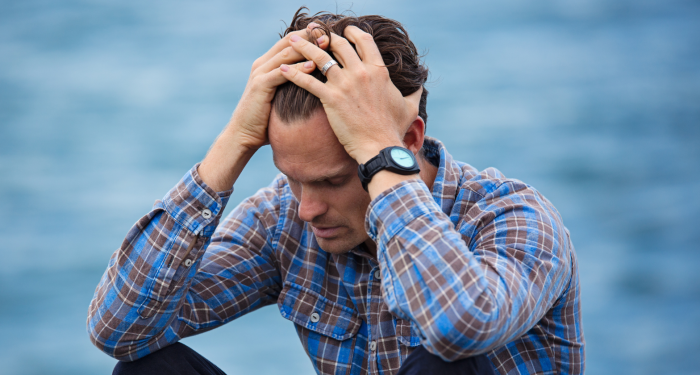
Half a world away, a cracked heart taught me to make small plans, keep moving, and let ordinary kindness do the heavy lifting
I didn’t plan on crying in a foreign grocery store, but there I was—staring at a pyramid of oranges like they were responsible for my entire life falling apart.
The breakup hit three days into a trip I’d booked months before. Different time zone, same ache. My phone lit up with a speech I’d heard coming for weeks and still wasn’t ready for. I’d built this vacation as a reset; it started as a free fall.
Here’s what I learned about resilience while carrying a cracked heart and a rolling suitcase through a city that didn’t know my name.
The body breaks first, then the brain follows
Heartbreak is hilariously physical. Jet lag plus no appetite plus fifteen hours of checking my phone turned my body into a committee that wanted to vote “lie down” on every item.
I tried to outthink it. Pro-con lists. Overanalysis. Narratives about fate. None of it helped until I did the boring things first: sleep, water, food, sunlight, movement.
That first night I set an alarm for a short, non-heroic routine: drink a full bottle of water, eat something warm (lentil soup from a cafe that didn’t ask questions), take a ten-minute walk in the direction of the sea, shower hot, then sleep with the curtains cracked so morning would drag me back.
It wasn’t profound. It was plumbing. But after sleep, my brain stopped eating itself long enough to make a plan that didn’t involve texting paragraphs I’d regret.
Resilience starts in the body, not the TED Talk. Not sexy, wildly effective.
Make tiny plans the size of a day
Big plans felt insulting. “Find peace,” “Get closure,” “Become the evolved version of yourself.” Thanks, Instagram. I could barely decide between stairs and elevator.
So I made tiny plans: one museum, one neighborhood, one meal. If I completed those three, the day counted. If I only managed the meal, the day still counted.
This did two sneaky things. It gave my nervous system a narrow corridor to walk instead of a stadium to panic in. And it made improvement measurable.
If Monday’s victory was “ate,” Tuesday could be “ate and walked,” and Wednesday could be “ate, walked, texted a friend back.” Stacking is resilience disguised as logistics.
Let strangers carry some of the weight
I’m not great at asking for help. On vacation I didn’t have my usual lifelines, which accidentally forced me to practice.
I told the barista I was having a rough day and asked for her favorite drink.
She made me something with cinnamon and handed me a napkin with a smiley face drawn on it like we were in middle school. I asked the front desk if they had a quieter room because my brain was rattling; they moved me without an eyebrow raise.
I joined a free walking tour and, when the guide asked where everyone was from, I also said, “and I’m here to not text my ex.” The group laughed.
Two people lingered after to ask if I wanted to get falafel. We ate on a curb and traded non-epic stories about small heartbreaks: missed trains, messed-up emails, pepper shakers that look like salt.
Strangers don’t fix anything. But they carry ten percent of the day for you without knowing that’s what they’re doing. Ten percent is a lot when you’re carrying too much.
Remove your triggers like you’re packing light
Vacations come with built-in minimalism. I leaned in.
I put photos in a hidden album. I muted notifications. I moved the chat thread into an archive so my thumb couldn’t find it in muscle memory. I changed my lock screen to a picture of the ocean I’d taken that morning so I wasn’t ambushed by our faces every time I checked the time.
It felt cold at first. Then it felt like mercy. It wasn’t denial; it was bandwidth triage. If resilience is a bridge, you have to stop driving trucks across it while you’re still building.
Move until your thoughts have to follow
I walked the city so much my shoes developed a personality. Not to “clear my head”—that phrase has never worked on me—but to tire out the part of my brain that wanted to replay the break-up in 4K.
Movement changed the quality of my thoughts.
On the bed, they were loud and in charge.
On the street, they had to take a number and wait behind honking, crosswalks, and a woman selling roses who complimented my ridiculous tourist hat.
By the waterfront, the thoughts got quieter and more spacious—less “why did this happen to me” and more “what can I do with today.”
I’m a big believer that your feet can teach your mind a tone it can’t access from a chair.
Build a temporary routine so the days don’t blur
Vacation is supposed to be freedom, but heartbreak needs rhythm. Without one, the hours turned to soup.
I set a loose schedule: morning walk + coffee at the same place + one “thing” + one rest + sunset somewhere new + early night. I know, thrilling. But the barista learned my order, the front desk guy started recommending parks, and the city stopped being a wallpaper I stared at through tears. It became a place I could move inside.
Resilience likes structure. The structure doesn’t have to be fancy. It just has to exist so your brain can stop negotiating every single decision with your grief.
Curate your inputs like your heart depends on it (because it does)
My feed was a minefield: couples in front of sunsets, wedding videos edited within an inch of their lives, people announcing engagements with captions that sounded like press releases. I don’t begrudge any of it. I just didn’t need it in my eyes right then.
I curated hard. I followed local photographers. I watched cooking videos. I downloaded a language app and learned how to order bread properly. I read short stories because novels felt like a commitment I couldn’t keep.
A friend once told me, “Protect your attention like it’s the last clean glass in the house.” On this trip, that advice was the difference between spiraling and slowly re-entering the world.
Eat like a person who wants a future
Appetite and heartbreak are enemies. Add jet lag and you start convincing yourself that coffee counts as food because feelings are calories, right?
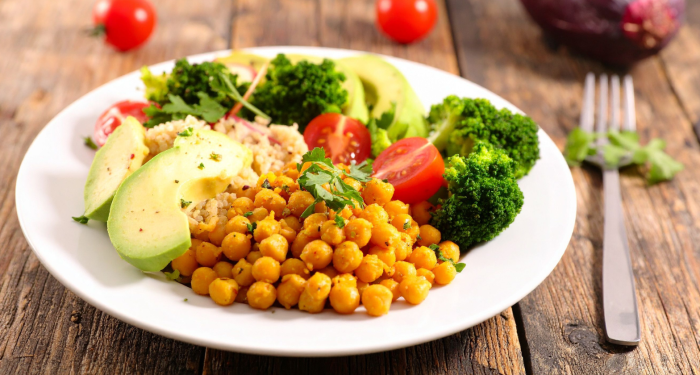
I ate anyway. Mostly simple bowls—rice, vegetables, beans—because I’m vegan and because warmth helps. I brought snacks in my bag so I wouldn’t weaponize hunger against my own mood. I drank more water than seemed reasonable. I saw a fruit stand and bought the oranges I’d cried at on day one because we deserved a redemption arc.
Food is not a cure, but it’s a vote. Every time I sat down and ate like a person who expected to be alive tomorrow, some tiny corner of my nervous system took notes.
Don’t make the breakup the main attraction
It’s tempting to give heartbreak the starring role. “We broke up” can become your name tag.
I tried a different script: I’m a person on a trip who also happens to be sad. The sadness got space—mornings, walks, long showers. But it wasn’t my whole itinerary.
I went to a museum and let one painting hold me still for ten minutes. I took a ferry and stared at neighborhoods I’ll never live in. I read plaques like they were going to be on a test.
I let a street musician ruin “Stand by Me” and smiled anyway. Life kept sneaking in between the cracks. It didn’t fix anything, but it kept the sorrow from becoming the only lens.
Say the truth out loud, once a day
I’m a writer. I can narrate my life into oblivion. On this trip I limited the words to a daily truth said out loud, even if it was only to the shower.
Day three: “I miss them.”
Day four: “I didn’t like who I was at the end.”
Day five: “I’m angry.”
Day six: “I want to be kinder to myself than I was last week.”
Day seven: “I can do today.”
The trick was not talking about the truth. Just saying it, listening for the small relief that follows, and moving into the day. Truth reduces static. It also makes it harder to send a 1 a.m. text that starts with “What if…”
Make something with your hands
At home I’d have reached for my laptop. On the road I bought a cheap sketchbook and a pen and drew badly in public. Fruit stands, dogs, my shoes, buildings I couldn’t name.
There’s something about making a tangible thing that interrupts self-pity. It doesn’t have to be art. It can be a sandwich, a postcard, a list of words in a language you don’t speak.
Your hands remind your brain that you are here, not just in the cinema of your memories.
I mailed two postcards to friends. I didn’t describe the breakup. I wrote about the sea and a cat that followed me for two blocks and the way the city smells like diesel and bread in the morning.
Saying “wish you were here” to someone who loves you is, in itself, resilience.
Let the place change you a little
I like to be the same person in every city. This time I tried being changed.
In this place, people took their evening walk seriously. They did laps with gelato like it was a civic duty. So I walked after dinner because that’s what the city wanted.
In this place, the ocean was an actual character. So I said goodnight to it because superstition plus salt air is a reasonable religion when your heart is loud.
Resilience isn’t just inner work. It’s surrendering to outer cues that are wiser than your mood. If a city whispers “try this,” try it.
Allow your story to be less cinematic than you hoped
I wanted a sweeping lesson. A stranger says one sentence that rearranges me. A sunrise that delivers closure straight to my inbox. Some grand, symbolic act like tossing a letter into the sea, and then I’m okay.
What actually happened: a lot of small, not-pretty choices that slowly added up. The oranges, the walk, the soup, the muting of notifications, the sketchbook, the ferry, the bedtimes.
A couple of ugly cries. Two new friends. A playlist I’m embarrassed to admit is now emotionally important. Three days where I felt nothing but the weather, which felt like a miracle.
I came home with a quieter story: I’m good at being a person even when I’m bad at romance. I can build days that treat my nervous system like a friend. I can let a place help.
The souvenir I brought back
No trinket. A ritual.
Back home I kept the vacation schedule in miniature—morning light on my face, a small plan for the day, a walk after dinner, a shower before bed, phone on “do not disturb” while I sleep with the curtains a little open.
I texted the two friends I’d messaged from overseas and told them I’d keep doing daily truths for a while. I apologized to myself for the unkind stories I’d told in the spiral. I made a pot of soup and wrote “for you” on two containers and left them with neighbors because doing a small kindness is a shortcut to remembering you’re part of a world.
The breakup didn’t un-happen. The ache didn’t vanish. But it stopped being the only thing my life was about. That’s what resilience felt like—room for other things.
If you’re halfway across the world with a broken heart, here’s the least poetic and most useful checklist I can offer:
-
Eat warm food.
-
Walk in one direction for twenty minutes and then turn around.
-
Tell the truth out loud once.
-
Make a tiny plan.
-
Ask a stranger for their favorite thing in the city.
-
Put the phone on “do not disturb” and let morning do some heavy lifting.
-
Don’t do anything dramatic after 10 p.m.
-
Repeat tomorrow.
And if you’re home reading this with a heart that isn’t broken right now, maybe make the list anyway. Build some resilience before you need it.
Buy the oranges. Learn the walk. Practice the truth. Not because it will keep you from getting hurt, but because it will make you a softer place to land when life does what it always does—surprise you.
The grocery store still gets me sometimes. I see something we used to buy and my chest does the quick math of what’s gone.
But then a city I loved once told me to take a breath and keep moving, and a barista drew me a smiley face on a napkin like it was a prescription. I kept both. I’m keeping going.