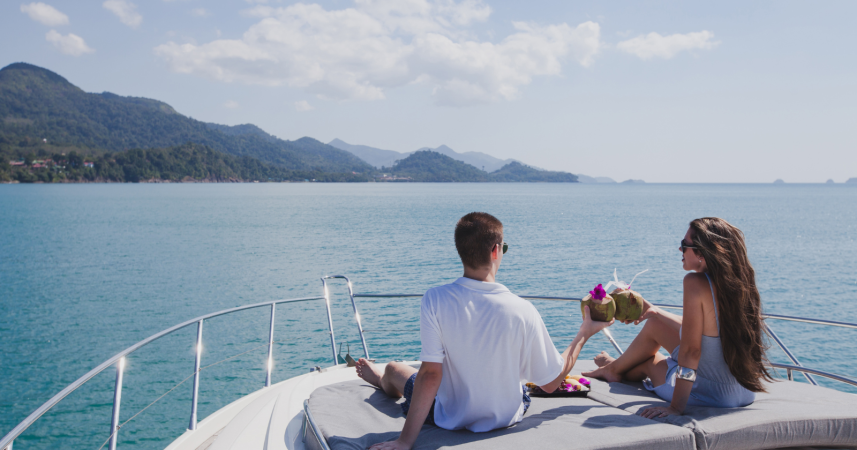
Real luxury isn’t the rooftop selfie - it’s shoulder season, small-scale stays, and quiet corners where no one needs a camera.
I was sitting in a marble lobby that looked like it had been built to impress a drone. You know the kind. Vaulted ceiling, designer chairs no one wants to sit in, a fountain that drowns out conversation.
A pair of influencers in coordinated linen were filming a “candid” check-in while a real line of tired travelers zigzagged behind them.
A staffer asked if I wanted a welcome photo. I asked for water. He smiled, handed me a flute, and whispered, “The quiet restaurant is two blocks away, turn left at the little bakery.” I took the hint.
That night, over a simple plate of grilled vegetables and a glass of mineral-y white, I watched three actual locals argue about soccer and a honeymoon couple relax into their first real laugh of the day.
It struck me that Instagram keeps selling us a glossy idea of luxury, and more and more, the people with options are buying something else entirely. Real quiet. Real privacy. Real time.
Here are ten “luxury” darlings of the feed that many upper-class travelers quietly skip, plus where they actually go when they want the good life to feel good.
1) The postcard-perfect cliff town at peak season
You know the shot. Pastel houses stacked over a glittering sea. Narrow lanes. A lemon spritz balanced on a balcony rail. It is an undeniable beauty. It is also, in July and August, gridlocked with day trippers, rolling suitcases, and dinner reservations that require a personal miracle.
Why the skip: privacy is impossible, service is strained, and moving from point A to B takes heroics.
What they do instead: shoulder season on a nearby peninsula village with a working harbor, or a restored farmhouse fifteen minutes inland with a driver on call. You still see the cliff town. You sleep where the stars return.
2) The overwater bungalow with a party next door
A bungalow surrounded by turquoise water is the hero shot of a thousand honeymoons. It can be magical. It can also be a loud deck three doors down, jet skis at noon, and a drone that pops up just when the sky turns sherbet.
Why the skip: the fantasy assumes solitude, and at many popular resorts, solitude is rare.
What they do instead: small, owner-run lodges on quieter atolls or a villa tucked back on the beach with reef access, kayaks, and real space to breathe.
If they want the platform-over-water feel, they book it for two nights, then move to the private cove with trees and a breeze.
3) The infinity pool on a roof everyone photographs
Rooftop pools sell rooms. The view is spectacular. The experience, in reality, often includes selfie sticks, a strict time slot, and a soundtrack that never quite lets up.
Why the skip: the “wow” is visual, not sensory. The pool becomes a photo studio, not a place to exhale.
What they do instead: a ground-level lap pool set in a garden, private plunge on a terrace, or access to a quiet members’ club where phones are politely pocketed. They value water you can actually swim in and conversations you can hear.
4) The “secret” sandbar brunch with seven other boats
The drone shot is irresistible. Champagne flutes on a table set in shallow water, a linen canopy, footprints like calligraphy. Then three speedboats arrive and suddenly the secret is a scene.
Why the skip: staged scarcity with a crowded reality.
What they do instead: breakfast on a boat at anchor before the tour schedules begin, or a chef’s picnic on a private patch of coast with the tide chart in hand. They let the sandbar be an image and choose an experience that does not depend on everyone else behaving.
5) The desert bubble tent under a highway of headlights
Translucent domes in the dunes are a feed favorite. The night sky is real. The sense of isolation often is not. Many sites sit within sightline of roadways, with tour groups rotating through like clockwork and generators keeping everything humming.
Why the skip: light pollution, predictable programming, and thin walls.
What they do instead: a low-impact desert camp run by guides who grew up on that land, timed for off-peak moon phases. Or a traditional mud-brick guesthouse with thick walls, a proper bed, and silence that resets your nervous system by dinner.
6) The party island that masquerades as wellness
Some destinations promise both sunrise yoga and sunrise clubs. The algorithm loves that fusion. Travelers with options remember how their bodies feel on day three.
Why the skip: split identity vacations create mixed results. Service toggles between party logistics and wellness talk, and neither truly lands.
What they do instead: they separate the aims.
If they want recovery, they book a small mountain or coastal retreat with actual quiet hours and a food philosophy that respects local producers.
If they want a great night out, they do a city with one legendary bar, then sleep in a suite with blackout curtains and breakfast that arrives when they say.
7) The ice-blue thermal spa that is 90 percent tripod
Milky water. Steam rising. White silica masks. It looks like a dream. It can also be a queue for lockers, staged photos on repeat, and conversations that feel like they are happening at a trade show.
Why the skip: it is lovely for a dip, not a day, and crowds change the chemistry.
What they do instead: a small, less-publicized bath away from the city, or a boutique hotel with a proper hammam and steam circuit. They slip in at odd hours, leave the phone in the room, and treat the ritual like a ritual.
8) The “historic” quarter with two cruise ships in port
Cobbled lanes and ornate balconies are pure romance. Add thousands of passengers funneling through the same alleys and the charm flattens. Lunch becomes logistics and every shop becomes a mirror of the last.
Why the skip: saturation. Over time, real life moves out and a set piece moves in.
What they do instead: small cities whose bones are intact and whose daily rhythms remain. They book a guide who knows which courtyards still smell like stew and which markets sell more than magnets. They build their visit around mornings and nights, then head back to a quiet base by water or trees.
9) The viral “hidden” bar you can find in 10 seconds
Password. Unmarked door. Velvet banquette. Everyone in the room found the same listicle. It is still fun, but the magic is not the secret. It is the way the bartender remembers what you like and the glassware fits your hand.
Why the skip: performance has replaced hospitality at many hotspot bars. The line is long and the drink is average when the camera leaves.
What they do instead: neighborhood bars that look plain on the outside and hold an organ for the regulars on the inside. Hotel lounges with pianists who play standards like they still love them. They value conversation, not clout.
10) The “best sunrise spot” with elbows at the railing
Sunrise is church for a lot of travelers, me included. Guidebooks and feeds point everyone to the same hill, the same cliff, the same temple platform. The result is a gorgeous view shared with two dozen tripods and a drone or three.
Why the skip: beauty does not need proof. Intimacy does.
What they do instead: they ask a driver or housekeeper where they go on their day off. A back road turnout. A low dock. A farmer’s field that frames the mountain like a painting. They bring coffee, sit in hoodies, and watch without narrating it to anyone who is not there.
A few patterns behind the skip, and how to travel like someone who has learned the hard way:
Privacy beats performance.
Spaces designed for the camera are built to be seen, not to be lived in.
Book places that look a little under-photographed and read recent, detailed reviews that talk about sound at night, light in the morning, and staff who know your name on day two. If the photos are perfect and the words are thin, be wary.
Season beats scene. Shoulder season is the oldest luxury trick in the book. The sea is still the sea in May. The hills are greener in October. Many “avoid” lists become “absolutely” lists if you shift your dates by three weeks.
Scale beats sparkle. Where possible, go smaller. Smaller ships, smaller inns, smaller restaurants with handwritten menus. When teams are tiny, service becomes human again. You are not a content opportunity. You are a guest.
Proximity beats address. The famous square is fun for an hour. Sleep in the neighborhood where people buy bread. You can walk to the square after a nap and return to a street where the only camera belongs to someone photographing their dog.
Local time beats posted time. Ask the front desk when the view is empty. Ask the diver which reef breathes between tour boats. Ask the baker what sells out first and what comes out of the oven at 4 p.m. Luxury is often a schedule, not a chandelier.
Texture beats theme. A place that lives for a single vibe can feel thin after breakfast. Choose properties and towns with layers. Market and museum. Forest and sea. Cafe where the owner knows the beans and a pub where the game is always on. Your brain will thank you by day three.
If this sounds snobby, that is not my aim.
I spent years choosing by photo and ended up in beautiful places that made me feel oddly absent from my own trip.
As a former analyst, I have a soft spot for small data. The good questions are not “Is it famous” or “Will it photograph well.” They are “Will I sleep” and “Will I be able to hear the people I am with” and “Will the details make my nervous system glad to be here.”
A quick story to close the loop. On that same city break where the lobby wanted a photo more than it wanted me, I moved two nights to a family-run inn above a bakery.
My room had a little balcony that looked at rooftops, not the cathedral. In the morning I woke to the clink of cups and the sound of someone laughing in the kitchen.
I carried a plate of still-warm bread to a tiny table, wiped confetti crumbs from the edge, and watched the light move across a patch of wall. No one would have believed it was “luxury” from a single square on a grid. My body knew better.
Final thoughts
Instagram sells spectacle because spectacle sells. Upper-class travelers, especially the ones who travel often, learn to buy the opposite.
They avoid the cliff town in peak heat, the bungalow with a drone soundtrack, the rooftop pool that is really a set, the sandbar that’s a parade, the desert bubble on a busy road, the party island dressed as wellness, the tripod spa, the cruise-day “old town,” the viral speakeasy, and the sunrise with elbows. They choose privacy, seasonality, scale, proximity, local time, and texture.
You do not need a platinum card to borrow that playbook. You need a shift in questions. Ask where the staff would go on their day off.
Ask when the quiet happens. Ask what is beautiful here that never trends. Travel toward that. The photos may be fewer. The memories will not be.