Turns out Instagram filters can't hide the fact that your dream destination is actually just a crowded, overpriced street with questionable plumbing and aggressive souvenir vendors
Three years ago, I spent an entire evening scrolling through photos of Venice. Gondolas gliding through crystal-clear canals, sunlight bouncing off centuries-old architecture, couples stealing kisses on romantic bridges. I booked my flight that night.
Six months later, I was standing in Piazza San Marco, sweating through my shirt in oppressive humidity, dodging aggressive selfie stick vendors, and watching tourists literally elbow each other for photo ops. The canal water was murky. The streets smelled like stagnant water mixed with sewage. My romantic vision collided hard with reality.
Here's the thing about travel in the Instagram age: we're not just fighting jet lag anymore. We're battling the gap between curated perfection and actual human experience. And some cities, no matter how gorgeous they look online, simply cannot deliver on the fantasy we've built in our heads.
1) Paris might require actual psychiatric care
There's a real medical condition called Paris Syndrome. I'm not making this up.
Approximately 20 Japanese tourists annually experience symptoms so severe that they need medical intervention, sometimes requiring hospitalization or immediate repatriation with medical escorts. The condition was identified by Japanese psychiatrist Hiroaki Ota in the 1980s after observing recurring patterns among patients who experienced complete psychological breakdowns when the City of Light didn't match their romanticized dreams.
The reality? Paris is crowded, littered, and according to one survey, ranked as the unfriendliest city in the world. Street vendors aggressively hawk souvenirs near every monument. The metro can be dirty and confusing. Parisians themselves often seem annoyed by the constant tourist presence.
Does this mean Paris is terrible? No. But if you're expecting a fairy tale where everyone looks like a fashion model and speaks poetic French while accordion music plays in the background, you're setting yourself up for serious disappointment.
2) Venice feels more like a theme park than a living city
Overtourism has transformed Venice into something that feels manufactured rather than authentic, with prices skyrocketing especially near Piazza San Marco. The famous canals? They can smell pretty rank during hot, humid summers when the water becomes stagnant.
I love the architecture and history, but walking through Venice in peak season feels like navigating a human traffic jam. You're never more than arm's length from another tourist. The narrow streets become bottlenecks. And good luck finding an affordable meal anywhere near the main attractions.
The city has been so overwhelmed by visitors that authorities have actually started charging entrance fees and limiting daily tourist numbers. That's not the sign of a thriving cultural destination. That's damage control.
3) Hollywood Boulevard is basically just a dirty sidewalk
The Hollywood Walk of Fame appears glamorous in movies. In reality, it's often dirty and overcrowded, surrounded by pushy street performers, with graffiti and heavy traffic creating an atmosphere that lacks any actual movie magic.
Growing up in Sacramento and later moving to LA, I've walked Hollywood Boulevard more times than I can count. The brass stars are cool for about five minutes. Then you realize you're surrounded by people in knock-off superhero costumes demanding payment for photos, aggressive panhandlers, and tourists looking equally confused about why they came.
The stars themselves are often cracked, dirty, or covered in gum. Many belong to people you've never heard of. And the surrounding area? It's not the glamorous entertainment district you're imagining. It's a mix of tourist traps, souvenir shops, and mediocre chain restaurants.
4) Times Square is sensory overload in the worst way
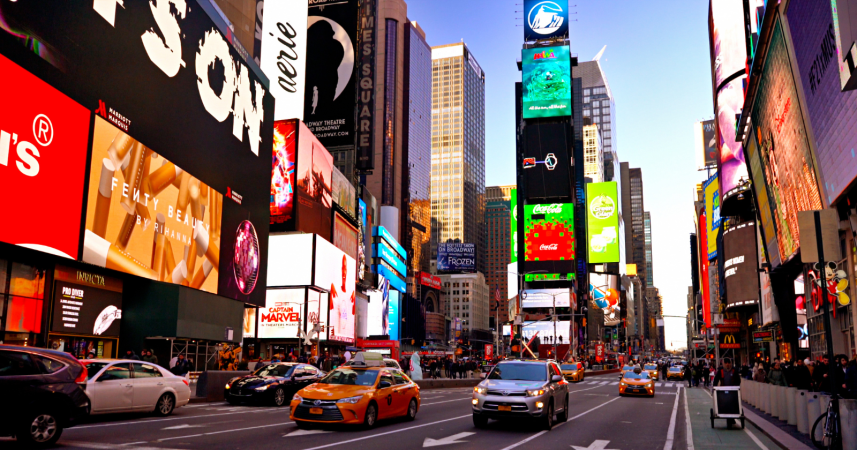
Times Square has the distinction of being called the world's most stressful tourist trap, with over 1,700 reviews describing it as overrated or underwhelming. The flashing billboards create visual chaos. Aggressive costumed characters demand tips for photos. The crowds are so dense that simply walking in a straight line becomes a challenge.
I've been twice, both times regretting it within minutes. It's loud, overwhelming, and feels aggressively commercial. There's nothing authentic about the experience. You're not seeing New York. You're seeing a manufactured spectacle designed to extract money from tourists.
The worst part? Many first-time visitors to New York spend precious hours here when they could be exploring neighborhoods with actual character and culture.
5) The Taj Mahal sits near a massive garbage dump
The photographs show a pristine white marble masterpiece symbolizing eternal love. What they don't show is the context.
The Taj Mahal is located near a huge garbage dumping ground, and at peak times receives up to 50,000 tourists per day. The crowds are suffocating. Authorities have imposed a three-hour visit limit to combat overcrowding. The surrounding area suffers from extreme poverty and pollution that stands in stark contrast to the monument's beauty.
The building itself remains architecturally stunning. But the experience of visiting it can be exhausting, stressful, and sobering in ways you don't anticipate from the glossy travel magazine spreads.
6) Dubai feels like a manufactured playground for the wealthy
Dubai strikes many travelers as overly manufactured and lacking the authenticity of older cities, with extreme heat for much of the year and everything coming with a hefty price tag. The man-made islands and indoor ski slopes feel gimmicky rather than genuinely impressive.
Everything in Dubai is designed to impress, which ironically makes it feel hollow. The city lacks the organic development and cultural depth that makes other destinations feel alive. Instead, it's a collection of superlatives: the tallest building, the biggest mall, the most luxurious hotel.
For some people, that's exactly what they want. But if you're seeking authentic cultural experiences or trying to travel on a budget, Dubai will leave you feeling empty-walleted and underwhelmed.
7) The Blue Lagoon is basically a crowded hot tub
Iceland's famous geothermal spa looks magical in photos. The reality? The artificially created lagoon charges premium prices for what amounts to a crowded hot tub experience surrounded by a geothermal power plant, with visitors never floating more than a few feet from the nearest person.
Mandatory advance reservations eliminate any spontaneity. The milky blue water that looks so pristine in photos feels more like a tourist factory when you're actually there. And the overpriced amenities add insult to injury.
The irony? Iceland has numerous more authentic and cheaper hot springs scattered throughout the country. But they don't have the Instagram clout, so most tourists never seek them out.
8) Stonehenge is just rocks behind a rope
Despite the hefty entrance fee, visitors can't even get close to the stones at Stonehenge, and for many who aren't history buffs, the novelty wears off in minutes. The stones themselves are around 13 feet tall, which sounds impressive until you're standing there realizing you drove hours to look at them from a distance.
The mystery and history are fascinating if you're into that sort of thing. But visually? It's a circle of rocks in a field. The experience lasts about as long as it takes to walk the perimeter path, snap a few photos, and wonder if you should have just looked at pictures online.
9) Las Vegas looks way better at night
The Strip photographed at sunset with all the neon glowing looks electric and exciting. Visit during the day and you'll see it for what it really is: more strip mall than glamorous entertainment destination. The buildings look cheap and dated in sunlight. The streets are littered and smell faintly of cigarettes and desperation.
Rising from 11% to 15.3% disappointment in recent years, Las Vegas has been increasingly criticized for being unsuitable for families and having extremely loud noise levels. The Fremont Street experience, once considered a must-see attraction, now ranks as one of the most disappointing.
The heat is oppressive for much of the year. Everything costs more than it should. And the constant sensory assault gets exhausting fast. Vegas works best in very specific circumstances: short visits, clear expectations, and a solid budget for overpaying for everything.
10) Cancún has lost its soul to resort development
Tourists in Cancún, Mexico are most likely to experience disappointment, with the city having the highest proportion of visitors left underwhelmed in recent studies. What was once a Caribbean paradise has been overtaken by massive all-inclusive resorts that create a bubble experience disconnected from actual Mexican culture.
The beaches are still beautiful, but they're packed wall-to-wall with tourists. The hotel zone feels sterile and artificial. And if you venture into the actual city, the contrast between resort luxury and local poverty can be jarring.
I've mentioned this before, but travel expectations shape our experiences more than we realize. Rudá Iandê explores this in his book "Laughing in the Face of Chaos: A Politically Incorrect Shamanic Guide for Modern Life." One insight that stuck with me: "Your body is your wisest teacher," meaning those gut feelings of disappointment or disconnection are valuable data, not failures.
The book helped me understand that my Venice letdown wasn't about Venice being bad. It was about me projecting an impossible fantasy onto a real place with real problems.
The bottom line
Look, I'm not trying to ruin your travel dreams. I've loved many of these cities despite their flaws. The point is this: manage your expectations.
Every city exists in reality, not in the carefully curated frames of Instagram or the sanitized versions shown in movies. They have traffic, garbage, crowds, smells, and local people just trying to live their lives who are tired of tourists treating their home like a theme park.
The gap between expectation and reality creates disappointment. The wider that gap, the more likely you are to feel let down. So before you book that flight based on a stunning photograph, do yourself a favor: look up what real travelers say about the experience. Check out the one-star reviews. Search for videos showing the crowds and the context.
The best trips happen when you show up curious about what actually exists rather than attached to what you hoped would exist. That shift in mindset makes all the difference between Paris Syndrome and genuine discovery.
What’s Your Plant-Powered Archetype?
Ever wonder what your everyday habits say about your deeper purpose—and how they ripple out to impact the planet?
This 90-second quiz reveals the plant-powered role you’re here to play, and the tiny shift that makes it even more powerful.
12 fun questions. Instant results. Surprisingly accurate.