Some childhood memories feel sweet for a reason—and the places that trigger them might say more about your upbringing than you think.
Nostalgia is a funny thing. It doesn’t always come from the big milestones—graduations, birthdays, major wins.
Sometimes it’s the smell of chlorine in the air, the crunch of popcorn underfoot, or the sound of a parade band warming up.
But here’s the truth: some places only feel nostalgic if you were lucky enough to experience them in the first place.
This isn’t about guilt. It’s about perspective.
If your childhood memories are tied to these places, it may be a sign you grew up with a kind of privilege—financial, emotional, or both—that shaped your early world in ways you didn’t fully see at the time.
Let’s take a trip back.
1. Disneyland
If walking down Main Street USA brings a warm, inexplicable flutter to your chest—you were probably one of the lucky ones.
For most kids, Disneyland wasn’t just a theme park. It was magic come to life. The characters, the fireworks, the thrill of space-themed coasters and spinning teacups—it was a dream dropped into reality.
But let’s be real: getting there took a lot of behind-the-scenes effort (and money).
Tickets. Travel. Hotels. Food. Time off work for your parents. It wasn’t a quick Saturday outing—it was a full-on family investment.
If you went once, you were lucky. If you went often enough to have “favorite rides,” chances are your childhood came with a financial cushion and parents with the flexibility to take time off for memories.
And beyond the money, there’s something else at play here: presence. Parents who take you somewhere like Disneyland aren’t just spending money—they’re spending time, energy, and attention.
That’s a kind of emotional privilege too.
2. A ski resort or mountain cabin
If the smell of pine trees and the crunch of snow under rented boots makes you smile, that says a lot about your upbringing.
Ski trips are one of those childhood experiences that often go hand-in-hand with financial stability. We’re talking lift passes, gear rentals, warm-weather clothing, hotel stays, and enough time off during school breaks to make it happen.
For many families, this kind of vacation wasn’t even on the radar.
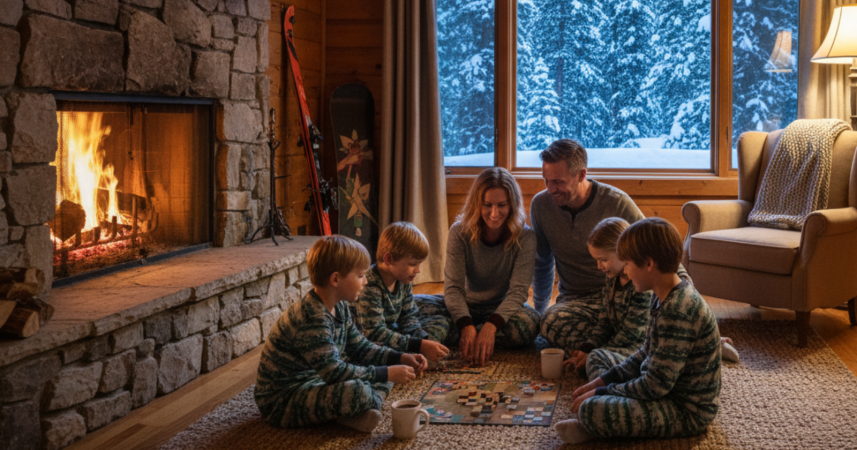
But for those who had it? It wasn’t just about skiing. It was the hot chocolate after, the board games by the fireplace, and the way the world felt simpler when the only goal was making it down the hill without wiping out.
If you grew up in a family that made space for that kind of seasonal tradition, you probably experienced a level of calm and connection that not every child gets.
And here’s something worth mentioning: time in nature—especially unstructured time to roam, play, and explore—has a lasting impact on childhood development.
Research shows that play not only supports brain growth and stress relief, but also helps build executive function and stronger bonds between kids and parents.
In other words, those snowy memories weren’t just fun. They were formative.
3. The family beach house
There’s something about the sound of waves at night or the creaky pull of a sliding screen door that hits you right in the chest.
If you hear seagulls or smell sunscreen and instantly think of lazy mornings and sand-covered floors, there’s a good chance your childhood included a family beach house—or regular access to one.
And that’s no small thing.
Whether it was owned outright or shared with extended family, the very concept of a vacation home is deeply tied to privilege.
It meant your family had extra resources—money, yes, but also time. It meant you probably had parents who could take time off, pack up the car, and hit the road with coolers and boogie boards in tow.
But beyond the obvious luxuries, there’s something subtler here too.
It’s about rhythm. Traditions. The kind of predictability that makes kids feel safe.
Going to the same place every summer builds a sense of continuity—and often, a deep connection to nature. You start to recognize the same tide pools, corner stores, ice cream flavors. That repetition becomes part of your identity.
Sociologist Annette Lareau calls this kind of developmental investment “concerted cultivation.” It’s when upper-class families actively create opportunities to enrich a child’s world—often through structured, intentional activities and spaces.
A beach house might just seem like a backdrop for relaxation. But for many kids, it was where they learned to exhale, explore, and just be.
4. The local country club or swim club
If the smell of chlorine and the clink of ice in a plastic cup takes you back to summers by the pool, you probably spent a few childhood afternoons at the local country club or swim club.
This kind of nostalgia often comes dressed in wet towels, snack bar french fries, and the low hum of adult conversations happening under umbrellas. It’s carefree—but it’s also curated.
Country clubs and swim clubs weren’t just places to swim. They were social spaces. If your family had a membership, you weren’t just gaining access to a pool—you were stepping into a world that prioritized leisure, community, and often, social capital.
From a psychological lens, these environments tend to offer more than recreation. They create structure. Routine. A safe, contained place where kids can play freely while parents relax.
That kind of setup isn’t a given—it’s an indicator that your family had both the means and the mindset to provide supervised freedom.
It’s not that every kid who went to a swim club had an easy life. But having access to a private place to cool off, stretch out, and spend long afternoons doing nothing much at all?
That’s not just nostalgic. That’s privilege, plain and simple.
5. Summer camp
If the sound of a metal bunk bed creaking or the scent of bug spray and bonfire sparks a smile, there’s a good chance summer camp was part of your childhood.
And that? That says a lot.
Whether it was a sleepaway camp in the mountains or a local day camp with color wars and archery, the experience of going to camp isn’t just about fun and games. It’s about being sent to a space designed for growth, connection, and independence.
But let’s be honest—camp isn’t cheap. Tuition, gear, transportation, and sometimes even donations to keep the place running—these costs add up.
If you were able to go year after year, it likely meant your family had the resources and the planning skills to make it happen.
Even more than that, it meant your parents trusted the world enough to send you off into it for a week—or several—without them. That kind of trust often grows from a foundation of emotional security.
Summer camp also tends to reinforce skills we don’t always associate with childhood privilege: leadership, collaboration, resilience.
Those campfire songs and talent shows? They’re often how kids first learn to stand up in front of others, to take a risk, to be goofy, and still feel accepted.
And as noted earlier, experts have found that play, exploration, and freedom in childhood have deep impacts on brain development and stress regulation.
If you still remember the names of your cabinmates or get teary when you hear “Leaving on a Jet Plane,” you didn’t just go to camp—you got something that shaped who you are today.
6. The family minivan on road trips
If your heart does a little flip when you hear a cassette tape click or see a roadside diner with sticky menus and bad coffee, you probably logged some serious hours in the backseat of a family minivan.
There’s something uniquely bonding about road trips. Long drives. Snack negotiations. Fighting over window seats. Watching the landscape change mile by mile while your parents argued with the map or called out trivia from the front seat.
But here’s the thing—those seemingly simple memories are rooted in something deeper: choice.
A family road trip might feel low-budget compared to airfare and resorts, but it still required gas money, a reliable vehicle, and most importantly—time.
Time off from work. Time to plan. Time to just be together without a specific goal other than seeing the world (or at least a few roadside attractions).
Growing up in a family that prioritized those kinds of slow experiences? That’s a privilege.
Because it meant there was space for curiosity. Flexibility. And boredom—the good kind. The kind that forces you to get creative in the backseat, make up games, or simply stare out the window and think.
These kinds of enriching, deliberate experiences often correlate with a specific style of parenting found more often in upper-class families.
That minivan wasn’t just a mode of transport. It was a rolling childhood time capsule.
Final thoughts
It’s easy to think of nostalgia as just a sweet ache—a highlight reel of childhood innocence and fun.
But the truth is, when certain places make us feel especially wistful—Disneyland, ski lodges, beach houses, summer camps, country clubs, long road trips—they’re often pointing to something more than just a good time.
They reflect the presence of safety, structure, and opportunity. Things not every child had access to.
If these places feel like home to you, that’s beautiful. But it’s also worth pausing to recognize the layers of privilege wrapped up in those memories—whether it came from emotional support, financial comfort, or simply being given the space to explore.
And if you didn’t grow up with those experiences? That doesn’t mean you missed out on everything that matters.
Sometimes the most important childhood memories come from completely ordinary places—the corner store, the public library, the neighbor’s porch swing.
What matters most is how we carry those early experiences into who we are now.
Lately, I’ve been reading Laughing in the Face of Chaos by Rudá Iandê—a book I’ve mentioned before, but it keeps giving me something new each time I sit with it.
One quote, in particular, stuck with me this week:
“When we let go of the need to be perfect, we free ourselves to live fully—embracing the mess, complexity, and richness of a life that's delightfully real.”
Nostalgia can tempt us to idealize the past. But I think the real magic is in using it as a mirror—to understand what shaped us, what we value, and how we want to create meaning in the present.
Whether your childhood included all six of these places or none at all, you’re not stuck with the version of life you were handed.
You get to keep evolving. You get to choose what feels like home now.
And that, in its own way, is a kind of privilege too.
If You Were a Healing Herb, Which Would You Be?
Each herb holds a unique kind of magic — soothing, awakening, grounding, or clarifying.
This 9-question quiz reveals the healing plant that mirrors your energy right now and what it says about your natural rhythm.
✨ Instant results. Deeply insightful.