Discover how minimalist travelers find more freedom, meaning, and joy by carrying less and experiencing the world with mindful simplicity.
Ever notice how some travelers move through airports effortlessly while others seem to be dragging their entire lives behind them?
That difference doesn’t come down to luck or personality. It’s the way they choose to travel.
Minimalist travelers move through the world with clarity. They let go of excess, focus on what truly matters, and make space for presence.
Their approach is grounded in intention and ease rather than the pursuit of perfection or fancy gear.
Here’s what they do differently and how you can borrow their secrets for a calmer, more meaningful journey.
1. They pack with purpose, not panic
Most people pack for their fears. What if it rains? What if I go somewhere fancy? What if…? Those two words, “what if,” are the enemy of calm.
They lead to overstuffed suitcases, frantic decisions, and baggage in more ways than one.
Minimalist travelers start with clarity. They ask, What do I know I’ll use? and stop there. It’s a form of self-trust, a quiet confidence that they’ll figure things out along the way.
When I started traveling this way, I noticed something unexpected. The fewer items I brought, the more freedom I felt. Packing light wasn’t just practical, it was peaceful.
2. They value experiences over souvenirs
Minimalists understand that memories last longer than trinkets. They don’t fill their bags with magnets and keychains; they fill their minds with stories.
They pay attention to the smell of a local bakery, the laughter spilling out of a neighborhood bar, the rhythm of a city waking up.
These are the real keepsakes, the ones that don’t require dusting or decluttering later.
Souvenirs can be lovely, but when they replace real presence, they turn travel into consumption.
Minimalist travelers know that the best proof of a good trip is how it changes you, not what you buy from it.
3. They plan just enough (and leave room for spontaneity)
I used to be a chronic over-planner. I’d have entire spreadsheets of places to go and times to be there. And yet, those trips always left me more exhausted than inspired.
Minimalist travelers plan loosely. They map out key logistics but leave wide open spaces for curiosity to take over. Because when every minute is scheduled, there’s no room for wonder.
As Winston Churchill once said, “The farther backward you can look, the farther forward you are likely to see.”
Reflecting on past trips, I realized that my best moments were always unplanned. The café I stumbled into, the stranger I met after missing a train, the sunset I hadn’t expected to see.
Structure helps, but magic needs freedom.
4. They choose quality over quantity
Minimalists know that more doesn’t mean better. They’d rather have one solid backpack than three cheap ones, one comfortable pair of shoes than five trendy pairs that pinch.
The same applies to destinations. Instead of racing through ten cities, they choose one or two and explore deeply.
They walk the same street at different times of day. They notice how light shifts, how sounds change, how their perspective evolves.
There’s a richness in that kind of attention. When you stop rushing, you stop skimming over life.
5. They embrace discomfort as part of the journey
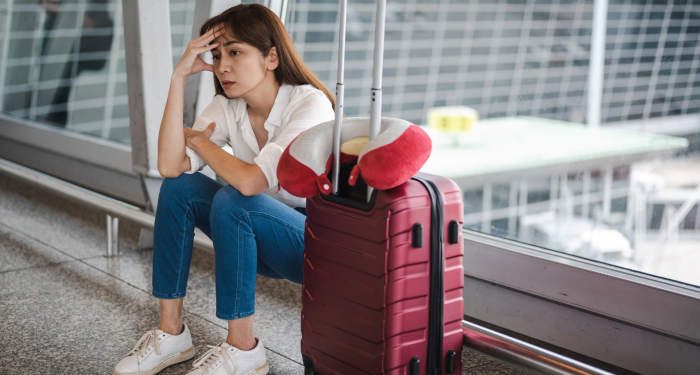
We often treat travel stress, like delays, missed connections, or confusing languages, as something to avoid. But the truth is, it’s part of the adventure.
As Susan David, Ph.D., reminds us, “Discomfort is the price of admission to a meaningful life.”
Minimalist travelers understand this deeply. They don’t crumble when things go wrong. They adapt, laugh, and adjust. They see discomfort not as failure, but as a teacher.
It’s in the unexpected moments that we grow, when we realize we’re far more resourceful and resilient than we thought.
6. They stay connected to their bodies and emotions
Here’s something I wish I’d learned earlier: your body is your best travel companion. It tells you when to rest, when to explore, and when to pause.
But most of us ignore it, pushing through jet lag or fatigue in the name of “making the most” of our trip.
Lately, I’ve been reading Laughing in the Face of Chaos by Rudá Iandê, and one line hit me right in the gut:
“The body is not something to be feared or denied, but rather a sacred tool for spiritual growth and transformation.”
That one sentence shifted how I travel. I stopped treating my body as an obstacle to overcome and started listening to it as a guide.
When I’m tired, I rest. When curiosity strikes, I follow it. The result? Less stress, more connection, and a far richer experience of being alive.
7. They skip the “must-see” mindset
There’s so much pressure to “see it all.” But trying to do everything often means experiencing nothing fully.
Minimalist travelers don’t chase checklists. They focus on what genuinely resonates.
Sometimes that means skipping the top attraction to linger at a small café or wander through a side street with no plan at all.
Tourist traps thrive on the fear of missing out. Minimalists move from a different place, one of trust.
They trust that what draws them in is enough, even if it’s not on anyone’s “Top 10” list.
That’s where the real memories live, in the places you choose, not the ones you’re told to see.
8. They travel slowly
Slow travel goes beyond being a lifestyle choice; it’s a way of thinking about how we move through the world.
When you stop rushing from one attraction to another, something beautiful happens. Time expands.
You begin to notice the texture of daily life, the way people greet each other, the subtle rhythms of a place.
Minimalist travelers take their time. They savor. They understand that the goal of travel isn’t to consume as many experiences as possible but to truly inhabit the ones you have.
And in doing so, they eliminate one of the biggest sources of travel stress, the relentless rush to do it all.
9. They reflect and recalibrate often
Minimalist travelers make time to pause and check in with themselves. They ask, What’s working for me right now? What’s draining me?
Sometimes that reflection happens in a quiet café. Sometimes it’s during a bus ride. But it always happens. And it’s what keeps them aligned with what really matters.
This kind of mindful recalibration isn’t just useful for travel, it’s essential for life. It’s how you grow. It’s how you make sure your days are filled with choices that feel like yours.
Because in the end, minimalism isn’t about deprivation. It’s about awareness, of your surroundings, your needs, and your limits.
Final thoughts
Minimalist travelers aren’t necessarily trying to prove anything.
They’ve just learned that letting go creates space for connection, curiosity, and calm.
When you stop obsessing over what to bring, where to go, or what to see, travel becomes what it’s meant to be, a mirror reflecting who you are and what you value.
So before your next trip, try asking yourself: What can I leave behind, physically, mentally, emotionally, to make room for what really matters?
You might be surprised how light you can feel when you stop trying to carry it all.