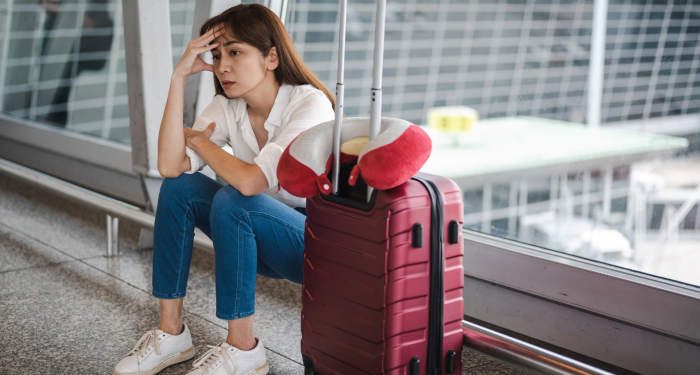
Some travel habits look harmless on the surface—but seasoned travelers know they can quietly ruin a trip before it even begins.
We’ve all been there—squeezing every dollar, juggling credit cards, and trying to make memories without breaking the bank.
For many families in the lower-middle class, travel isn’t about luxury; it’s about making it happen at all.
But here’s the tricky part: the habits that help stretch a budget sometimes end up creating experiences that seasoned travelers can’t help but cringe at.
Not out of judgment, but because they see the long-term costs—financial, emotional, and even cultural.
As the American Psychological Association noted, adults with household incomes under $50K are far more likely to report that their biggest source of stress is simply covering daily expenses—72% compared to just 48% of higher earners.
When money is already tight, travel choices often come from a place of stress, not strategy. And that stress shows.
So, what are the things families do on the road that make experienced travelers wince?
1. Relying too heavily on “cheap deals”
We all love a bargain, right? But sometimes “cheap” comes with hidden costs—cramped buses that break down, hotels with surprise fees, or package tours that leave little room for flexibility.
I’ve seen families get pulled into the mindset that the lowest price always equals the best value.
But when every choice is made based on what saves a few dollars in the moment, the whole trip can feel like a string of inconveniences.
And often, you end up spending more trying to fix those problems.
Experienced travelers know that value isn’t just about cost. It’s about comfort, safety, and peace of mind. A slightly higher upfront price often means fewer headaches later on.
It’s a shift in perspective: instead of asking, “What’s the cheapest option?” start asking, “What’s the smartest use of our money?”
2. Putting everything on credit
I get it. Vacations are expensive, and sometimes the only way to make it happen is to swipe the card and worry about it later.
But here’s the problem: when the trip ends, the debt doesn’t.
I’ve spoken with friends who admitted they were still paying off last summer’s getaway when the next one rolled around. That kind of cycle not only keeps families stuck financially but also takes away from the joy of the trip itself.
How much fun can you really have if you know you’ll be feeling the sting months later?
Seasoned travelers cringe at this because they know travel doesn’t have to mean going into debt.
They’ve learned the art of planning ahead, saving little by little, and choosing trips that fit their current reality—not one they can only afford with interest attached.
3. Skipping cultural experiences to “play it safe”
Here’s something I’ve noticed: when money and comfort are tight, families sometimes stick to what they know—fast food chains, familiar stores, and activities that feel safe and predictable.
The irony is that those choices often strip away what makes travel worth it in the first place. Why fly to a new city only to eat at the same restaurant you have down the street?
Researchers have found that in the U.S., a child born into the bottom 20% income bracket has just a 7.5% chance of making it to the top 20% as an adult.
That statistic isn’t just about money—it’s about exposure. The fewer new experiences you have, the fewer opportunities you see for yourself and your family.
Experienced travelers cringe at missed opportunities because they know food, art, and local customs don’t just make a trip more interesting—they expand your perspective.
And sometimes, stepping into a new experience is the richest part of the journey.
4. Overpacking “just in case”
Have you ever watched a family at the airport juggling three oversized suitcases, two carry-ons, and a pile of shopping bags? It’s stressful just to look at.
Overpacking comes from a good place—wanting to be prepared. But the result is usually exhaustion, baggage fees, and frustration when you can’t find what you need.
Experienced travelers cringe at this because they know that traveling light isn’t just about luggage weight—it’s about mental clarity.
Every extra item is another thing to keep track of, wash, or drag from place to place.
The real pros have learned that you rarely miss what you leave behind, and the freedom of moving through airports and cities without a mountain of stuff is priceless.
5. Packing itineraries so tight there’s no breathing room
This one makes me smile because I’ve been guilty of it myself. When you’ve invested so much in getting away, the temptation is to squeeze in every landmark, every attraction, every possible activity.
The problem? You return home more exhausted than when you left.
Families often end up rushing from one place to another, barely pausing to enjoy the moment.
Experienced travelers know that the best memories often happen in the unscheduled moments—wandering a side street, chatting with a local, or stumbling into a small café you didn’t read about on TripAdvisor.
When the schedule is too rigid, there’s no space for surprises. And isn’t that what makes travel worth it in the first place?
6. Treating travel as a status symbol
For some families, vacations become less about the experience and more about proving something—snapping photos for social media, buying souvenirs to show they’ve been there, or booking the “fancier” hotel just to keep up appearances.
Here’s the catch: when travel turns into a performance, the meaning of it gets lost. Instead of building memories, families often return with little more than credit card debt and a camera roll of staged moments.
Experienced travelers cringe at this because they’ve learned that travel doesn’t have to be flashy.
It doesn’t matter if you stayed at a five-star resort or in a modest guesthouse. What matters is whether you actually connected with the place, the people, and each other.
7. Ignoring rest and self-care
Travel is supposed to restore us. Yet many families push themselves to the point of burnout—long drives without breaks, early flights after late nights, or kids skipping naps just to keep up with the schedule.
It’s easy to forget that rest is not a luxury. In fact, it’s what allows you to enjoy the trip at all.
Seasoned travelers understand this balance—they know when to slow down, when to call it a day, and when to let go of the checklist.
I was reminded of this recently while reading Rudá Iandê’s book, Laughing in the Face of Chaos. One of his insights struck me deeply:
“When we let go of the need to be perfect, we free ourselves to live fully—embracing the mess, complexity, and richness of a life that's delightfully real.”
That line reminded me that travel doesn’t have to be flawless. The moments of rest, even the imperfect ones, often hold the most beauty.
Final thoughts
If you’ve seen yourself in a few of these points, don’t worry—you’re not alone. Most of us have fallen into these habits at one point or another. I certainly have.
The truth is, many of these patterns come from a place of stress and scarcity, not intention.
Families often want to make the most of their time away, but in doing so, they sometimes sacrifice the very joy travel is meant to bring.
The encouraging part is that small shifts can change everything.
A lighter suitcase, a looser itinerary, or the choice to savor local experiences instead of chasing perfection can transform a trip from draining to deeply fulfilling.
In the end, what matters most isn’t how much you spent or how much you crammed in—it’s how present you were with the people you love.
What’s Your Plant-Powered Archetype?
Ever wonder what your everyday habits say about your deeper purpose—and how they ripple out to impact the planet?
This 90-second quiz reveals the plant-powered role you’re here to play, and the tiny shift that makes it even more powerful.
12 fun questions. Instant results. Surprisingly accurate.