Sometimes the hardest years don’t break us—they lead us somewhere unexpected, where pieces of ourselves quietly wait to be found again.

Add VegOut to your Google News feed. 
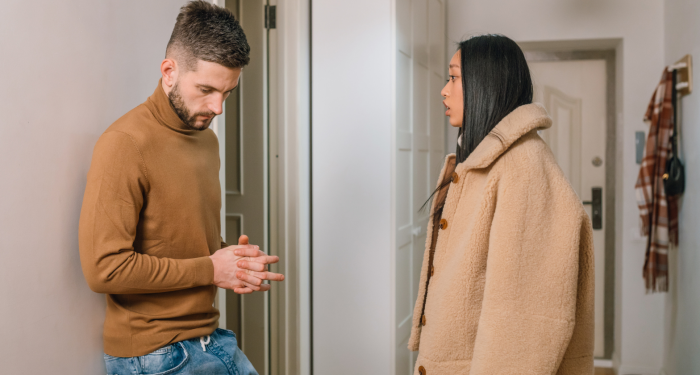
There are years that leave you bruised, and then there are years that strip you down to your bones. The year before I boarded a plane to Portugal was the second kind.
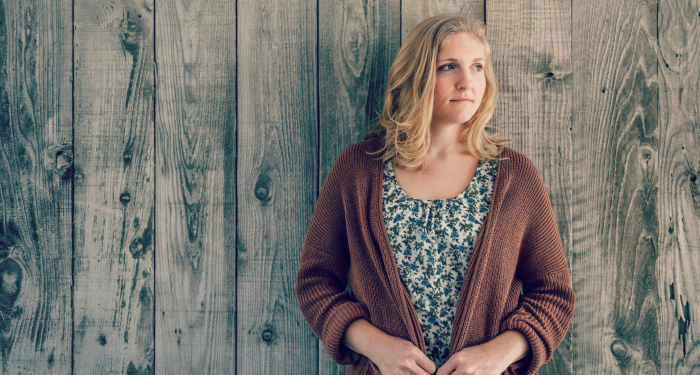
I won’t spill every messy detail, but let’s just say it was a collision of personal heartbreak, professional uncertainty, and a creeping sense that I’d misplaced the stronger, lighter version of myself I used to know. The version that once greeted challenges with curiosity instead of dread.
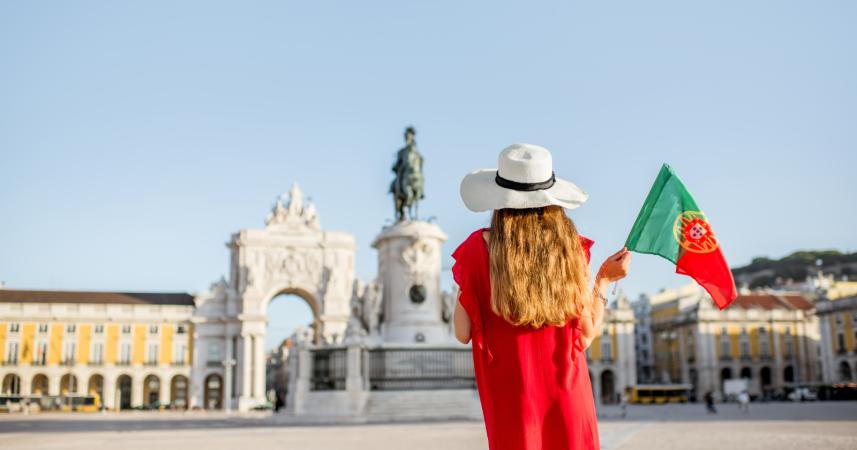
By December, I was running on fumes. That’s when I did something completely uncharacteristic: I booked a one-way ticket to Lisbon.
I didn’t go searching for an escape so much as a reset. And what I found on cobbled streets, windswept coastlines, and in quiet moments of reflection was something deeper.
I found pieces of myself I thought were gone for good.
Here’s what the trip taught me.
Hitting rock bottom can be a beginning
J.K. Rowling once said, “Rock bottom became the solid foundation on which I rebuilt my life.”
That line echoed in my head as I sat on the plane, staring out the window somewhere over the Atlantic.
For so long, I’d been terrified of my own collapse—as if admitting things had fallen apart meant I was permanently broken.
But walking through the Alfama district, hearing the melancholic fado singers spill their sorrows into the night air, I realized that collapse also clears the ground.
In Portugal, I gave myself permission to see rock bottom as a foundation, not a failure.
Every wrong turn in Lisbon’s winding alleys reminded me that even when you’re lost, you can stumble on something unexpectedly beautiful.
Change isn’t optional—it’s survival
There’s a quote from Viktor Frankl that stuck with me during my travels: “When we are no longer able to change a situation, we are challenged to change ourselves.”
That felt painfully relevant. I couldn’t undo the heartbreak or rewind the professional setbacks of my past year. But what I could do was shift my perspective.
Each morning, I walked to a small café near my rented apartment and practiced something I’d abandoned back home: stillness. No multitasking. No rushing. Just sipping strong Portuguese coffee and listening to the hum of strangers’ conversations.
At first, I was restless. Then I noticed how this small change began softening the edges of my anxiety.
Frankl was right—when life forces your hand, growth isn’t a luxury. It’s the only way forward.
Beauty can grow out of suffering
Kahlil Gibran once wrote, “Out of suffering have emerged the strongest souls; the most massive characters are seared with scars.”
I didn’t fully understand that until I wandered through Sintra’s misty hills, my legs aching from the climb. Each step felt like a metaphor for the year I had endured—slow, heavy, but carrying me somewhere higher.
Looking out from the stone walls of the Castelo dos Mouros, I thought about how my scars weren’t just reminders of pain. They were proof of survival.
They were the maps of where I had been. And maybe, like Gibran suggested, they were also the beginnings of my strength.
It’s strange, isn’t it? The very experiences that break us can end up carving out space for something sturdier, more enduring, more real.
Slowing down helps you hear yourself again
When was the last time you really listened to yourself? Not the critic in your head or the to-do list voice, but the quieter one underneath?
In Portugal, I finally did. I spent hours by the sea in Cascais, just letting the waves crash without distraction. I noticed how the rhythm of the ocean matched something in me—something I hadn’t paid attention to in years.
At home, I was always rushing: work deadlines, social obligations, the constant hum of busyness.
But by stepping away, I remembered that my inner voice doesn’t shout. It whispers. And you can only hear it if you slow down enough to listen.
Discomfort is often a doorway
I’ll be honest—traveling alone scared me. I fumbled with the language, got lost on winding trams, and ate dinners by myself while couples filled the tables around me.
But here’s the thing: every time I leaned into that discomfort, something shifted. A kind stranger helped me navigate the metro. A quiet meal alone turned into a chance to reflect without interruption.
Discomfort wasn’t punishment—it was a doorway. And walking through it showed me that fear and growth often live side by side.
New places remind you that you’re not stuck
One of the hardest parts of my “worst year” was feeling trapped—like my life had narrowed into a corridor with no doors.
But standing in Porto, watching the sun sink over the Douro River, I realized how untrue that was.
Life is bigger than the box we put ourselves in. Travel shakes up our perspective, reminds us the world is vast, and that our problems aren’t the whole picture.
It doesn’t erase the struggles, but it helps you see them in proportion. And sometimes, that shift in scale is enough to breathe again.
Wholeness comes from acceptance, not perfection
One evening in Lisbon, I was journaling about everything I wanted to “fix” in myself.
The failures. The regrets. The messy emotions I had been trying to push away.
That’s when a passage from a book I’d recently read came back to me. In Laughing in the Face of Chaos, Rudá Iandê writes, “When we let go of the need to be perfect, we free ourselves to live fully—embracing the mess, complexity, and richness of a life that's delightfully real.”
His insight landed differently as I looked out at the tiled rooftops. I didn’t need to be polished or put-together to deserve joy. I just needed to stop fighting myself and accept the wholeness that was already there.
This book has been a powerful reminder that growth isn’t about becoming flawless—it’s about dropping the masks we’ve worn for too long.
And honestly, it inspired me to see my time in Portugal less as a quest for reinvention and more as a chance to remember who I already was.
Connection heals in surprising ways
I didn’t expect connection to be such a big part of my trip. I thought it would be a solitary reset. But conversations with strangers—an older woman who showed me the best pastel de nata bakery, a fellow traveler who swapped stories on a long train ride—were healing in ways I didn’t see coming.
These brief connections reminded me that even when you feel untethered, you’re never really alone.
Sometimes it’s the small kindness of strangers that helps you reorient to yourself.
Your strength shows up when you least expect it
I thought I was fragile heading into this trip. But I surprised myself. I navigated crowded markets, drove winding roads on the Algarve coast, and even hiked trails I would have avoided back home.
Each time I did something I thought I couldn’t, I felt a piece of myself return.
The truth is, resilience doesn’t always announce itself. Sometimes it sneaks up on you in small victories—the kind you only notice when you’re pushed outside your usual boundaries.
Portugal reminded me that I was stronger than the story I had been telling myself.
The version of you that’s lost isn’t gone
By the time I flew back, I realized something important: I hadn’t discovered a “new” me in Portugal. I had reconnected with the version of myself that had always been there—buried under exhaustion, fear, and self-doubt.
The late-night music in Lisbon, the quiet cliffs of the Algarve, the taste of strong coffee on slow mornings—they didn’t create a new identity. They peeled back the layers that had been hiding the real me.
And isn’t that the point of starting over? To realize that what you thought was lost was never gone—it was just waiting for you to notice it again.
Final thoughts
Looking back, Portugal didn’t hand me a brand-new life. What it gave me was perspective.
It reminded me that broken chapters don’t erase who we are—they invite us to meet ourselves in a deeper way.
The hardest seasons in life can make us believe we’re permanently diminished.
But the truth is, the parts of us that feel lost are often just waiting for stillness, courage, or a change of scenery to resurface.
If this past year taught me anything, it’s that healing isn’t about outrunning pain or reinventing yourself into someone unrecognizable.
It’s about peeling away the noise, leaning into discomfort, and allowing what’s real in you to rise again.
So when you find yourself standing at your own crossroads, consider this: maybe the “you” you’re searching for was never gone at all.
Maybe she’s just waiting for you to notice her again.
If You Were a Healing Herb, Which Would You Be?
Each herb holds a unique kind of magic — soothing, awakening, grounding, or clarifying.
This 9-question quiz reveals the healing plant that mirrors your energy right now and what it says about your natural rhythm.
✨ Instant results. Deeply insightful.

Avery White
Formerly a financial analyst, Avery translates complex research into clear, informative narratives. Her evidence-based approach provides readers with reliable insights, presented with clarity and warmth. Outside of work, Avery enjoys trail running, gardening, and volunteering at local farmers’ markets.
More Articles by Avery